How to Get a Cat to Eat Again: 10 Vet-Backed Tricks
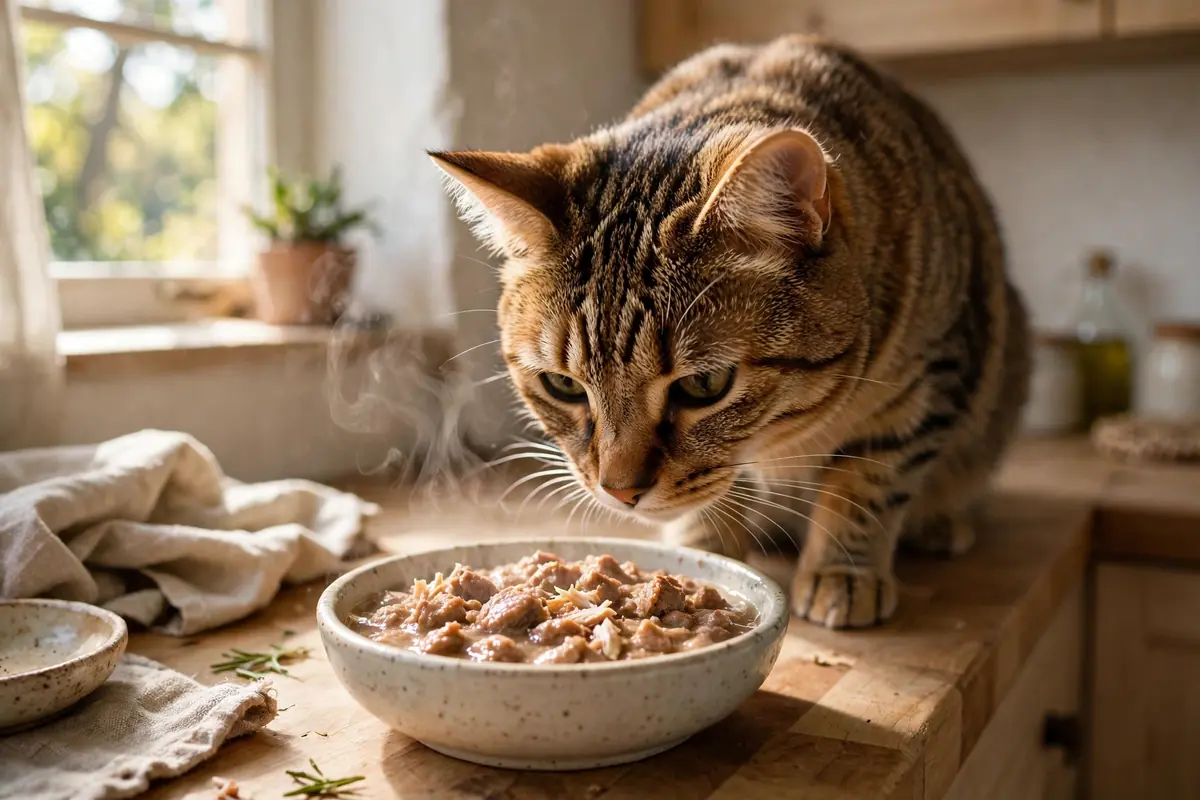
If your cat has gone off food, start with the simplest fixes first: warm the food slightly, offer small amounts often, and feed in a quiet spot. Most short appetite dips respond to aroma, temperature, and calm within a day. But appetite loss is also one of the earliest signs of illness in cats, so the tricks below come with clear limits — if your cat refuses all food for more than 24 hours, or a kitten for more than 12 hours, it is time to call the vet rather than keep trying new foods.
Cats stop eating for many reasons: a mild stomach upset, stress from a house move or a new pet, a sore mouth, a change of food they dislike, or pain and illness they are hiding. The goal of these tricks is not to disguise a medical problem with tastier food. It is to remove the small barriers — cold food, a noisy bowl location, a dirty dish — so you can quickly tell whether this is a fussiness problem or a vet problem.
1. Warm the Food Slightly
Cats eat with their noses first. Food straight from the fridge smells like almost nothing, while food warmed to roughly body temperature releases far more aroma. Microwave wet food for just a few seconds, then stir well and test it on the inside of your wrist — it should feel lukewarm, never hot. This single trick solves more appetite dips than any other, especially for cats who have just come home from the vet or a cattery stay.
2. Offer Small, Frequent Meals
A full bowl can be overwhelming to a cat who feels unwell, and food that sits out for hours goes stale and loses its smell. Offer a tablespoon or two at a time, several times a day, and throw away uneaten wet food after 30 minutes. Fresh, small portions stay aromatic, and you get a much clearer picture of exactly how much your cat is eating — information your vet will ask for.
3. Try a Different Texture or Flavor
Some cats refuse pâté but will eat shredded meat in gravy, or vice versa. If your cat normally eats kibble, try a little wet food, and if they normally eat wet food, try a different protein, such as chicken instead of fish. Change only one thing at a time so you learn what worked. Avoid opening five new flavors in one day — a cat with a sensitive stomach does not need a buffet.
4. Add a Tempting Topper
A spoonful of warm water, a little low-sodium broth made for cats, or a sprinkle of freeze-dried meat crumbled over the usual food can tip a hesitant cat into eating. Keep toppers simple and plain: no onion, garlic, or heavy seasoning, which are unsafe for cats. If your cat eats only the topper and leaves the rest, that still tells you something — their appetite is present, but the base food is the problem.
5. Move the Bowl Somewhere Quiet
Cats prefer to eat where they feel safe, away from washing machines, busy hallways, and other pets. A bowl next to the litter box is a common mistake — no cat wants to eat beside their toilet. Try a calm corner, a raised surface if your cat likes height, and a separate bowl for each cat in a multi-cat home. Sometimes the food was never the issue; the dining room was.
6. Clean the Bowl and Try a Different Dish
Cats can smell old food residue and stale water that humans barely notice. Wash food bowls daily with hot soapy water, and rinse well so no soap smell remains. Some cats dislike deep bowls because their whiskers touch the sides — a condition owners call whisker fatigue — and eat far better from a wide, shallow plate. Plastic bowls can also hold odors; ceramic or stainless steel is usually a better choice.
7. Hand-Feed a Little, Gently
Offering a few pieces by hand, or dabbing a little wet food on your cat's lips, can restart eating in a stressed or mildly unwell cat. Keep it gentle and brief: if your cat turns away, stop. Hand-feeding is a nudge, not a force-feeding session. Never syringe food into a reluctant cat's mouth at home unless your vet has shown you how — food can accidentally enter the lungs.
8. Reduce Stress Around Mealtimes
Stress is one of the most common causes of short-term appetite loss. A new baby, a house move, building work, a visiting dog, or even rearranged furniture can put a cat off food. Keep mealtimes predictable, play with your cat before feeding to work off nervous energy, and give them a safe hiding spot they can retreat to. If the stressor is temporary, appetite often returns on its own within a day or two once the house calms down.
9. Check Water, Not Just Food
A cat who is not eating may also be drinking less, which raises the risk of dehydration. Refresh water bowls daily, try a second bowl in another room, and consider a cat water fountain — many cats prefer moving water. Adding a little water to wet food also helps. If your cat is eating nothing and drinking nothing, that is more urgent than eating nothing alone, and deserves a vet call the same day.
10. Know When Tricks Are Not Enough
- Refusing all food for more than 24 hours in an adult cat, or more than 12 hours in a kitten.
- Vomiting, diarrhea, drooling, or difficulty breathing alongside the appetite loss.
- Drinking far more or far less than usual, or not drinking at all.
- Weight loss you can see or feel, a dull coat, or sudden hiding and lethargy.
- A cat who is overweight and stops eating entirely — this carries a risk of fatty liver disease, so do not wait it out.
Most appetite dips are short and fixable: warm food, a quiet bowl, and a calm house will bring many cats back to the bowl by tomorrow. The tricks above help you sort the simple cases from the serious ones quickly. If your cat is still not eating after a day of trying, or if any red flag appears, stop experimenting and call your vet — early help is always easier than late help.
Frequently Asked Questions
How long can a cat go without eating before it is dangerous?
An adult cat refusing all food for more than 24 hours should see a vet, and a kitten after 12 hours. Overweight cats are at risk of fatty liver disease if they stop eating, so do not wait several days to see if appetite returns.
Should I warm up my cat's food?
Yes, slightly. Warming wet food to around body temperature releases more aroma, which is the main thing that tempts cats to eat. Heat it briefly, stir well, and check it feels lukewarm, never hot.
My cat will only eat treats — is that okay?
For a day or two while you tempt them back, treats are better than nothing, but they are not a balanced diet. If your cat eats treats but refuses all real food for more than a day, call your vet rather than living on treats.
Can stress make a cat stop eating?
Yes, very commonly. Moves, new pets, visitors, building work, or even rearranged furniture can put a cat off food. Keep mealtimes calm and predictable, and appetite usually returns once the stress passes.
Should I force-feed my cat with a syringe?
No, unless your vet has shown you how and prescribed it. Forcing food into a reluctant cat risks food entering the lungs. Offer food gently by hand instead, and get veterinary guidance if your cat will not eat.