What to Feed a Sick Cat: Bland Diet Guide
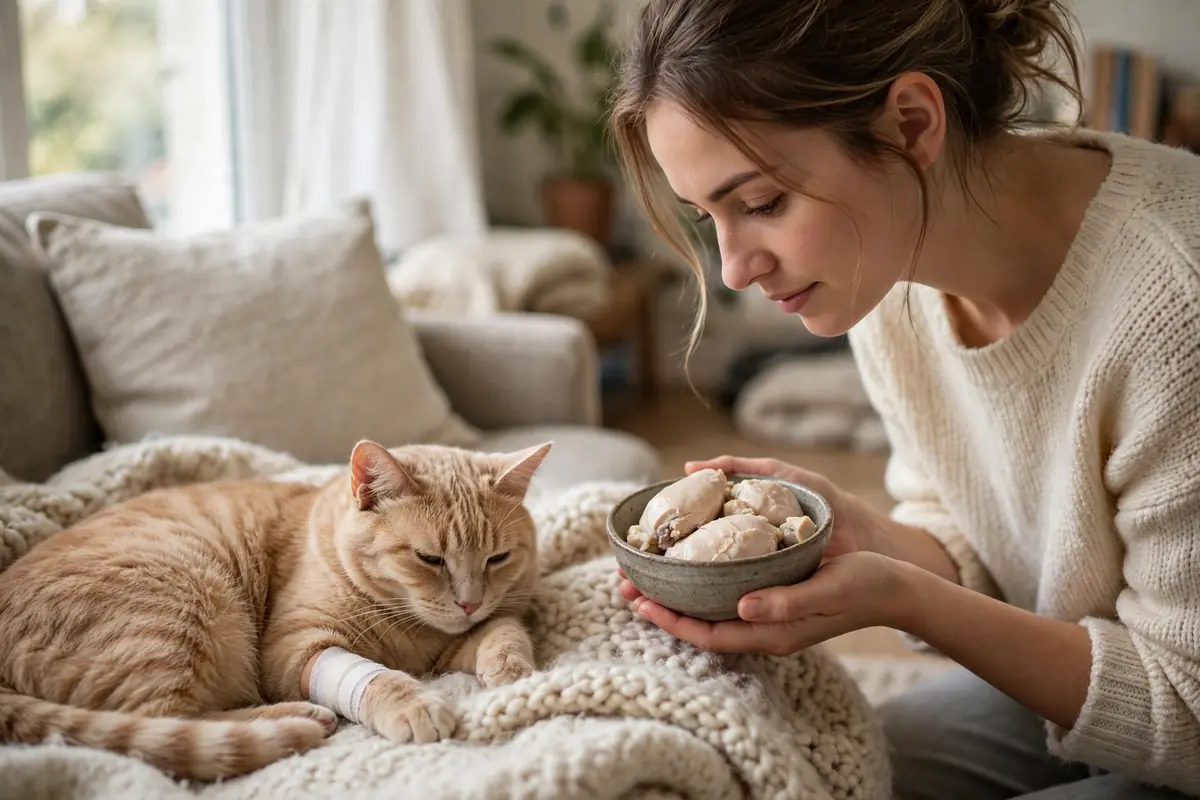
For a cat with a mild stomach upset, the safest short-term diet is plain, easily digested food in small, frequent meals — typically plain boiled chicken or turkey, or a veterinary bland diet, offered little and often for a couple of days. A bland diet is not a cure, and it is not a long-term diet: it is a gentle bridge that rests the stomach while you watch whether your cat improves. If vomiting or diarrhea continues beyond 24–48 hours, or if your cat stops drinking, the vet — not the diet — is the next step.
Cats get stomach upsets for ordinary reasons: a too-fast food change, a scavenged snack, a hairball, or mild stress. In those cases, a day or two of bland food often settles things. But the same symptoms can also signal infections, urinary blockages, swallowed objects, or organ disease, which no diet can fix. The art of feeding a sick cat is knowing which situation you are in, and this guide draws that line clearly.
What Counts as a Bland Diet for Cats?
A bland diet is low in fat, low in fiber, and made from a single easily digested protein with a simple carbohydrate. The classic home version is plain boiled or poached chicken breast, shredded, with no skin, bones, or seasoning, sometimes mixed with a little plain cooked pumpkin or a small amount of plain cooked white rice. Some cats tolerate plain boiled white fish instead of chicken. Veterinary bland diets, available from your vet, are a more complete option and are often the better choice if your cat needs bland food for more than a day or two, because home-cooked chicken alone is not nutritionally complete.
Keep portions small — a tablespoon or two every few hours is better than a full bowl at once, since a large meal can restart vomiting. Serve the food lukewarm, not cold from the fridge, and always have fresh water nearby. If your cat eats the bland food eagerly and keeps it down, that is a good sign; if they refuse it entirely, do not force it, and reassess with your vet.
What to Avoid While Your Cat Is Sick
- Rich, fatty foods — including fatty meats, dairy, and oily treats, which irritate an already sensitive stomach.
- Raw food and bones — raw meat carries bacterial risks that a sick cat is less able to handle, and bones can cause blockages.
- Milk and dairy — most adult cats cannot digest lactose well, and milk commonly worsens diarrhea.
- New flavors, toppers, and treats — a sick stomach needs simplicity, not experimentation.
- Human medicines and supplements — never give a sick cat a human stomach remedy, painkiller, or anti-diarrhea medicine unless your vet prescribes it.
- Onion, garlic, and seasoned foods — toxic to cats even in small amounts, and especially unhelpful for a sore stomach.
How Long Should a Bland Diet Last?
For a mild, one-off upset, two to three days of bland food is usually enough. If your cat's stools firm up and vomiting stops within that time, transition back to their normal food gradually over three to four days: mix a little normal food into the bland food, increasing the normal share each day. A sudden switch back can undo the progress, so patience matters at both ends of the process.
If symptoms have not clearly improved within 48 hours, or if they worsen at any point, stop relying on diet and call your vet. A bland diet that drags on for a week or more is also a problem on its own: plain chicken is low in calcium, essential fatty acids, and several vitamins, so it is not a complete diet for any cat, and kittens and senior cats are affected fastest. Long bland feeding needs veterinary supervision and usually a complete veterinary recovery diet instead.
Hydration Matters More Than Food
A sick cat who is vomiting or has diarrhea loses water fast, and dehydration becomes dangerous before hunger does. Encourage drinking with fresh water in multiple spots, a water fountain if your cat likes moving water, and a little water mixed into the bland food. Ice chips are sometimes accepted by cats who refuse a bowl. Watch for dry gums, sunken eyes, lethargy, and skin that stays tented when gently pinched — all signs of dehydration that deserve a vet call.
Do not try to rehydrate a sick cat by syringing large amounts of water into their mouth at home; a cat who resists can inhale fluid into their lungs. If your cat will not drink at all, or cannot keep water down, that is a same-day vet situation, because dehydration often needs intravenous or subcutaneous fluids that only a clinic can provide.
When a Bland Diet Is Not Enough
- Vomiting more than twice in 24 hours, or vomiting that returns after stopping.
- Diarrhea lasting more than 48 hours, or diarrhea with blood.
- Refusing all food for more than 24 hours (12 hours for kittens), or refusing water entirely.
- Straining to urinate, crying in the litter box, or no urine at all — a possible blockage, and an emergency.
- Lethargy, hiding, collapse, or a swollen or painful belly.
- Kittens, senior cats, or cats with diabetes, kidney disease, or other chronic illness — these cats deteriorate faster and should be seen sooner.
A bland diet is one of the most useful tools in a cat owner's kit: simple, gentle, and often exactly what a mildly upset stomach needs. Use it briefly, keep portions small, watch hydration closely, and transition back slowly. And remember its limit — when symptoms persist, worsen, or come with any red flag, the kindest thing you can do for a sick cat is to let your vet take over.
Tempting a Sick Cat Who Will Not Eat Bland Food
Some sick cats refuse even plain chicken, and that refusal needs a gentle response rather than a richer one. Try warming the food slightly, offering it on a flat plate rather than a deep bowl, and sitting quietly nearby while your cat investigates — a calm presence helps a stressed cat eat. A little warm water stirred into the food releases more aroma, and offering food in a favorite resting spot, away from noise and other pets, removes another barrier. If your cat licks a little and stops, that still counts as progress, and you can offer another small amount in an hour. What you should not do is escalate to strong-smelling treats, seasoned meats, or human foods to force interest, since those can worsen the stomach upset you are trying to settle. If gentle tempting fails for a full day, or your cat refuses water too, call your vet: appetite stimulant medicines exist, but they are prescription-only and must be chosen for your cat's specific condition.
Frequently Asked Questions
What is the best bland food for a sick cat?
Plain boiled chicken breast, shredded, with no skin, bones, or seasoning, sometimes with a little plain cooked pumpkin. Veterinary bland diets are a more complete option, especially if bland feeding lasts more than a day or two.
How long should I feed my cat a bland diet?
Usually two to three days for a mild upset, then a gradual transition back to normal food over three to four days. If symptoms have not improved within 48 hours, call your vet instead of continuing the diet.
Can I give my sick cat milk?
No. Most adult cats cannot digest lactose well, and milk commonly worsens diarrhea. Offer fresh water instead, and mix a little water into the bland food if your cat will drink it that way.
My cat will not eat the bland food — what should I do?
Try warming it slightly and offering a very small amount. If your cat refuses all food for more than 24 hours, or refuses water too, call your vet rather than trying more foods at home.
Is plain chicken alone a complete diet for cats?
No. Plain chicken lacks calcium, essential fatty acids, and several vitamins cats need, so it is only a short-term diet. Longer recovery feeding needs a complete veterinary diet and veterinary supervision.