What to Feed a Cat That's Vomiting: Safe Foods
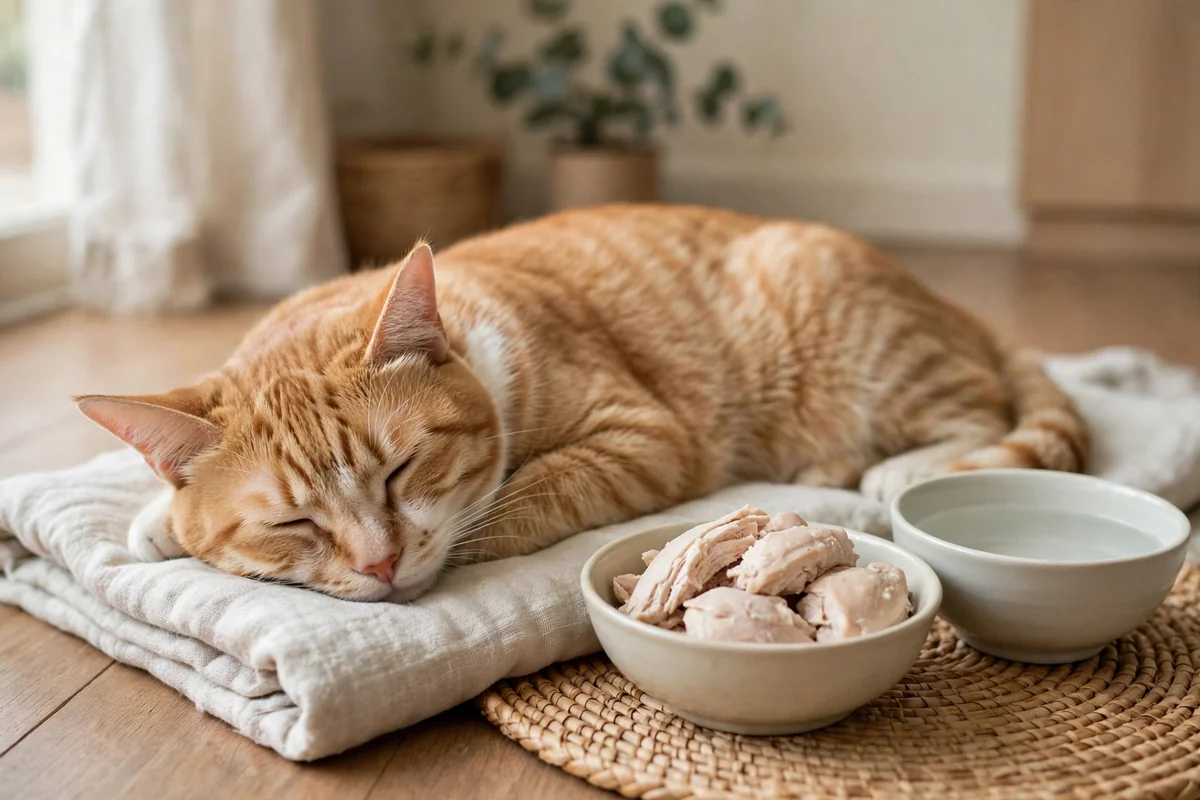
When a cat is actively vomiting, the first step is not food at all — it is a short pause: withhold food for a few hours while offering small amounts of water, then reintroduce tiny portions of plain, bland food if the vomiting stops. Rushing a full bowl to a cat who has just vomited usually brings it straight back up, which dehydrates the cat further and makes the stomach more irritated. The plan below gives you the timing, the safe foods, and the point at which home feeding should stop and the vet should take over.
Occasional vomiting is common in cats — hairballs, eating too fast, or a scavenged snack can all trigger a single episode. Repeated vomiting is different. It can signal infections, urinary problems, swallowed objects, kidney disease, or poisoning, and no food choice fixes those. Your job in the first hours is to rest the stomach, protect hydration, and watch the pattern closely enough to know which kind of vomiting you are dealing with.
Step 1: A Short Food Pause
For an otherwise healthy adult cat who has vomited once or twice, a food pause of about 4 to 6 hours lets the stomach settle. Keep fresh water available in small amounts — a full bowl gulped at once can trigger vomiting again, so offer a little at a time. Do not fast a kitten, a senior cat, a diabetic cat, or an overweight cat for this long without veterinary advice: kittens and diabetic cats can become dangerously low in blood sugar, and overweight cats risk liver problems if they go without food. If any of those cats is vomiting, call your vet first rather than fasting them at home.
During the pause, note what came up — food, bile, hair, or something unusual — and how often it happens. That detail is genuinely useful to your vet, and it helps you judge whether things are improving or worsening. Clean the area calmly and keep your cat somewhere quiet and comfortable; stress makes nausea worse.
Step 2: Safe Foods to Reintroduce
Once vomiting has stopped for several hours, offer a very small amount — a tablespoon or two — of one of these plain foods, lukewarm, and wait an hour before offering more:
- Plain boiled chicken breast, shredded, with no skin, bones, or seasoning. The classic bland protein for cats.
- Plain boiled white fish, such as cod, with all bones removed — a good alternative if your cat dislikes chicken.
- A little plain cooked pumpkin (not pumpkin pie filling), which adds gentle soluble fiber and can help firm stools.
- Your cat's usual wet food, in a tiny portion, if they refuse bland options entirely — a small amount of familiar food is better than continued fasting for a healthy adult cat.
- A veterinary recovery or bland diet, if your vet has recommended one — these are nutritionally complete, unlike plain chicken alone.
Feed small amounts every few hours through the first day rather than returning to normal portions. If your cat keeps the small meals down for 24 hours, gradually increase portion size and mix the normal food back in over two to three days.
Foods to Avoid After Vomiting
- Dry kibble in large amounts — it swells in the stomach and is harder to keep down when the stomach is irritated. If you use kibble, offer only a few pieces, or soak them briefly.
- Rich, fatty, or spicy foods, including fatty meats, dairy, and seasoned leftovers.
- Raw meat and bones, which add bacterial risk and blockage risk to an already upset stomach.
- Milk, which most adult cats cannot digest well and which commonly worsens vomiting and diarrhea.
- New treats, toppers, or flavors — now is the time for boring and familiar, not exciting.
- Grass — many cats eat grass and then vomit, so keep indoor cat grass out of reach until the stomach has settled.
Hydration: The Real Priority
Vomiting loses water and electrolytes, and dehydration is what makes vomiting dangerous fastest. Encourage drinking with fresh water in several spots, a fountain if your cat prefers moving water, and a little water mixed into the bland food. Watch for dry or sticky gums, sunken eyes, lethargy, and skin that stays tented when pinched gently. A cat who vomits up water as well as food, or who will not drink at all, needs veterinary fluids and should be seen the same day.
Do not give human anti-nausea medicines, antacids, or stomach remedies to a vomiting cat unless your vet prescribes them. Doses and drugs that are safe for people can be toxic or simply wrong for cats, and masking the symptom can delay diagnosis of the real cause.
When Vomiting Is an Emergency
- Vomiting more than twice in 24 hours, or vomiting that continues into a second day.
- Blood in the vomit, or vomit that looks like coffee grounds.
- Straining to vomit with nothing coming up, especially with a swollen belly — a possible emergency.
- Vomiting plus diarrhea, lethargy, hiding, or refusal to drink.
- Suspected poisoning, swallowed string, or a foreign object.
- Kittens, senior cats, diabetic cats, or cats with chronic illness — see a vet sooner, not later.
Most single vomiting episodes settle with a short rest, small sips of water, and a day of small bland meals. The foods above are safe precisely because they ask so little of an irritated stomach. Use them briefly, watch hydration like a hawk, and let your vet step in the moment the pattern breaks the rules above — that is how a minor upset stays minor.
Hairballs vs Vomiting: Knowing the Difference
Not everything a cat brings up is vomit, and the distinction changes what you do next. A hairball usually arrives with retching and a sausage-shaped clump of fur, often with a little fluid, and the cat typically returns to normal immediately afterwards, eating and playing as usual. True vomiting involves abdominal heaving, brings up food or yellow-green bile, and often leaves the cat subdued, hiding, or refusing the next meal. Occasional hairballs, especially in long-haired cats or during shedding season, are normal and are helped by regular brushing and, if your vet agrees, a hairball-control diet or paste. Frequent hairballs — more than once or twice a month — deserve a vet conversation, since they can signal over-grooming from stress or skin problems, or a stomach motility issue. If you are unsure which you are seeing, note the frequency and what came up, and describe it to your vet; that detail helps far more than simply reporting that your cat "threw up."
Frequently Asked Questions
What should I feed my cat after vomiting?
After a short food pause of a few hours and once vomiting has stopped, offer tiny portions of plain boiled chicken or white fish, lukewarm, every few hours. Increase portions gradually over a day if the food stays down.
Should I withhold food from a vomiting cat?
For a healthy adult cat, a short pause of about 4 to 6 hours helps the stomach settle. Do not fast kittens, senior cats, diabetic cats, or overweight cats without veterinary advice — call your vet first for those cats.
Can I give my vomiting cat milk?
No. Most adult cats cannot digest lactose well, and milk commonly worsens vomiting and diarrhea. Offer small amounts of fresh water instead.
My cat vomited once and seems fine — should I worry?
A single episode after eating too fast or bringing up a hairball is common and usually not a concern. Return to small, bland meals for a day and watch for repeat vomiting, diarrhea, or appetite loss.
When should a vomiting cat see the vet?
If vomiting happens more than twice in 24 hours, continues into a second day, contains blood, comes with diarrhea or lethargy, or affects a kitten, senior, or chronically ill cat — see a vet promptly.