Lykoi: Complete Breed Guide
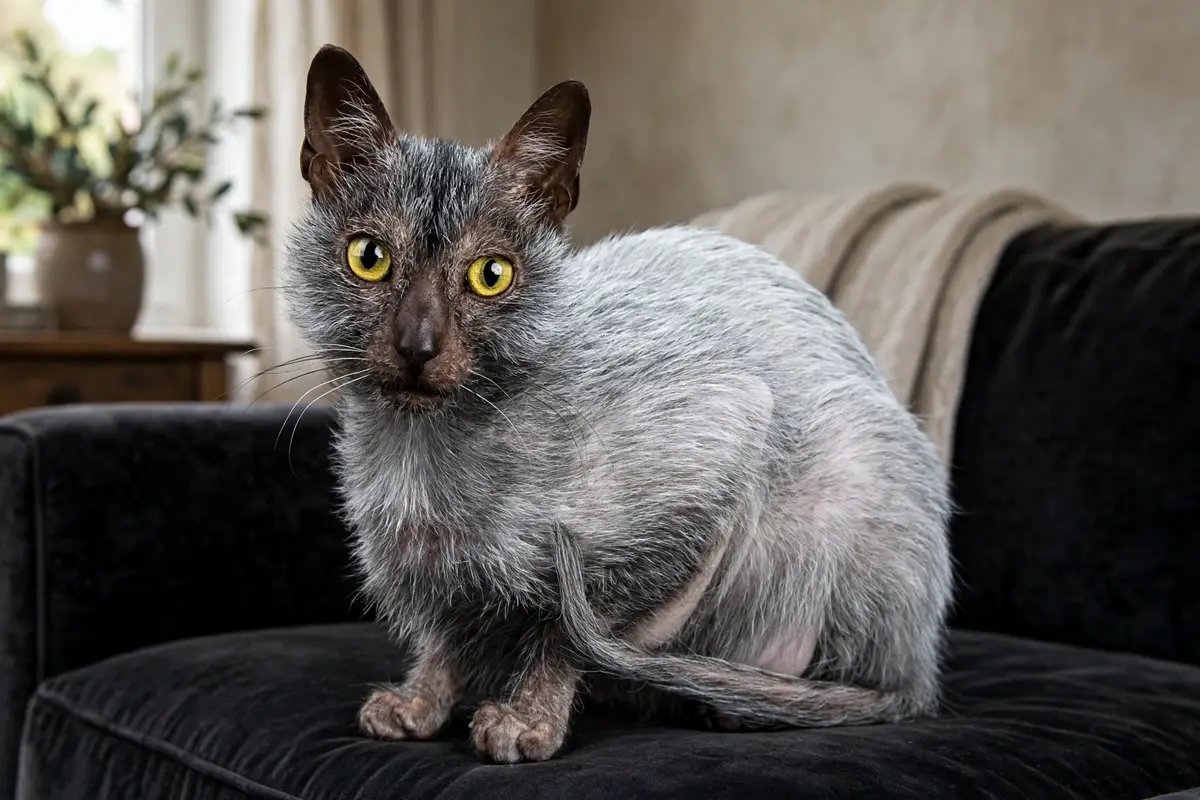
The Lykoi is the most unusual-looking cat breed you are likely to meet: a patchy black roan coat, sparse fur around the eyes and muzzle, and a face that reminds people of a little werewolf. The name comes from the Greek word for wolf, and the nickname werewolf cat has stuck. But behind that wild, spooky look is a loyal, playful, and deeply affectionate cat that behaves more like a dog than a cat.
The Lykoi is a natural breed, not a designer cross: its look comes from a spontaneous mutation found in ordinary feral cats. If you want a cat that turns heads everywhere, with a loyal heart and a playful spirit, and you understand its special skin and sun care needs, the Lykoi may be your perfect match. This guide covers its origins, appearance, temperament, grooming, health, and whether it fits your home.
Lykoi at a Glance
The Lykoi is a medium-sized cat, usually weighing between 4.5 and 6 kilograms, with a slender, athletic build and a patchy black roan coat, a mix of black and white hairs that gives it a grizzled, wolf-like look. The fur is sparse around the eyes, muzzle, and ears, which adds to the werewolf appearance, and the eyes are usually a striking gold or yellow.
Lykoi cats are loyal, playful, and very attached to their people. They are cautious with strangers but devoted to their families, and they love games, fetch, and exploring. With good care they typically live 12 to 15 years.
Origin and History: A Natural Mutation
The Lykoi story began in 2011 in Tennessee, when a feral domestic shorthair gave birth to kittens with an unusual patchy coat and sparse facial fur. Breeders investigated and found the same mutation appearing in unrelated feral cats in different places, which showed it was a natural mutation, not the result of crossing with another breed.
Genetic testing confirmed the Lykoi's coat comes from a natural mutation affecting hair follicles, and breeders worked to establish the breed while keeping its health and temperament sound. The breed was recognized by TICA, and it remains rare and in demand, with long waiting lists for kittens.
Appearance: The Werewolf Look
The Lykoi coat is black roan: a mix of solid black hairs and white hairs with no undercoat, which gives the cat a grizzled, frosted appearance. The coat is patchy by nature, and it is thin or absent around the eyes, muzzle, chin, and ears, which creates the werewolf face that gives the breed its name. The skin underneath is dark, which adds to the effect.
One of the breed's quirks is that Lykoi cats molt heavily at times, sometimes losing much of their coat and looking almost bald, then regrowing it over weeks or months. Breeders call this wolfing out, and it is normal for the breed, though it can surprise new owners. The body is slender and muscular, with large pointed ears and a long tail.
Personality and Temperament: Loyal and Playful
Lykoi cats are loyal, intelligent, and very playful. They are often described as dog-like: they follow their owners around, greet them at the door, play fetch, and enjoy learning tricks. They bond deeply with their families and can be quite demanding of attention once they trust you.
With strangers, Lykoi cats are cautious and may hide until they are sure a visitor is safe. This wariness is part of the breed's character, not a flaw. They are usually good with children who play gently and with other pets, once introductions are done slowly. They do not enjoy being left alone for long hours, and they need daily play and interaction.
Grooming and Skin Care
Grooming a Lykoi is gentle work. Brush the coat once a week with a soft brush to remove loose hair, and be careful during heavy molting periods, when the coat may thin dramatically. This is normal for the breed and the coat usually regrows on its own, but if the skin looks red, sore, or irritated, have a vet take a look.
The sparse coat means the skin needs protection from the sun: Lykoi cats should live indoors, and they should not be allowed to sunbathe for long periods, since they can sunburn more easily than a fully coated cat. Keep the skin clean and check it during grooming. As usual, keep up nail trims, ear checks, and dental care.
Lykoi Health and Lifespan
Lykoi cats are generally healthy, typically living 12 to 15 years. Because the breed comes from a natural mutation in ordinary domestic cats, it has a broad genetic base, and no major breed-specific disease is widely reported. Responsible breeders still screen their cats and are happy to discuss health history, so always ask.
The main health notes are skin-related: watch for sunburn, check the skin during grooming, and ask a vet about any persistent redness or sores. The heavy molting some Lykoi cats go through is normal and not a sign of illness, but sudden bald patches with irritated skin should always be checked. Beyond that, the usual advice applies: a good diet in measured portions, an indoor lifestyle, dental care, and a vet check at least once a year.
Is the Lykoi Right for You?
The Lykoi is ideal if you want a loyal, playful, and truly unusual cat, and you are happy to give it daily attention and indoor living with sun protection. It suits owners who enjoy an interactive cat and do not mind a look that starts conversations everywhere.
It is not the right choice if you want a cat that charms every visitor on sight, since Lykoi cats are wary of strangers, or if you want a fully coated cat that can roam outdoors. The breed is also rare and expensive, so expect a long waiting list. But if a werewolf cat with a dog's heart sounds like your perfect cat, the Lykoi is hard to beat.
Frequently Asked Questions
Why do Lykoi cats look like werewolves?
The look comes from a natural mutation that makes the coat patchy and sparse around the eyes and muzzle. The black roan coloring and the thin facial fur together create the werewolf appearance.
Do Lykoi cats lose their fur?
Yes, Lykoi cats can molt heavily and sometimes lose much of their coat, looking almost bald for a while. This is called wolfing out and is normal for the breed. The coat usually regrows over weeks or months.
Are Lykoi cats hypoallergenic?
No cat is truly hypoallergenic, and the Lykoi is no exception. It produces the same allergy-causing protein as other cats, so allergy sufferers should spend time with the breed before deciding.
Are Lykoi cats good with children?
Yes, they are usually good with children who play gently and respect the cat's space. Lykoi cats are playful and loyal, and they bond closely with family members.
Do Lykoi cats need special skin care?
Yes, a little. Their sparse coat means they can sunburn, so they should live indoors and avoid long sunbathing. Check the skin during weekly grooming and ask a vet about any redness or sores.