Maine Coon: Complete Breed Guide for Owners
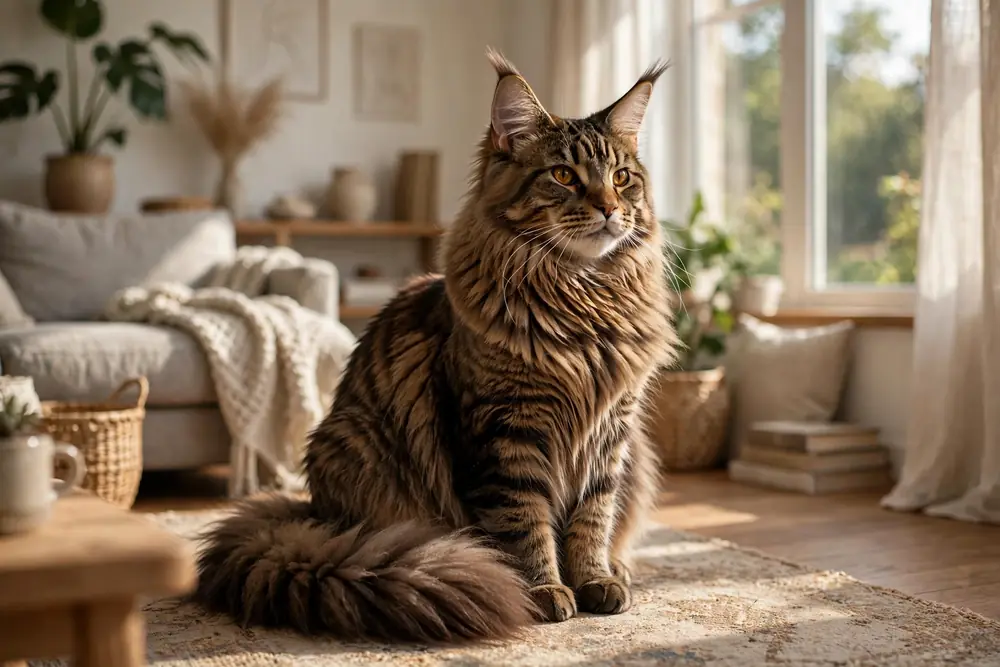
The Maine Coon is one of the most beloved cat breeds in the world — a big, shaggy, dog-like cat famous for chirping, following owners room to room, and growing to truly impressive sizes. The short answer for potential owners: Maine Coons are affectionate, playful, and great with families, but they need regular grooming, plenty of space, and an owner ready for a 15+ year commitment to a very large cat. This complete guide covers temperament, size, care, health, and how to decide if a Maine Coon is right for you.
Often called "gentle giants," Maine Coons combine wild looks with a sweet, social personality. They're among the largest domestic cat breeds — and among the most popular for good reason. But big cat means big responsibility, so let's get into the details.
Maine Coon at a Glance
- Size: large — males typically 13–18 lbs, females 8–12 lbs, and they keep growing until age 3–5.
- Coat: long, shaggy, water-resistant; heavy seasonal shedding.
- Lifespan: commonly 12–15+ years with good care.
- Personality: social, playful, dog-like, vocal (chirps and trills).
- Good with: children, other cats, and cat-friendly dogs — one of the best family breeds.
Personality: The Dog of the Cat World
Maine Coons are famous for acting more like dogs than cats:
- Social shadows. They follow their people from room to room — not clingy, just companionable. They want to be near the action.
- Playful well into adulthood. Many cats mellow with age; Maine Coons stay kittenish for years, loving fetch, puzzle toys, and interactive play.
- Chatty in a charming way. Instead of demanding meows, Maine Coons chirp, trill, and make soft chattering sounds — a whole vocabulary owners adore.
- Gentle with kids. Their patience and sturdy size make them exceptionally good with respectful children.
- Not typical lap cats — many prefer sitting beside you rather than on you. They show affection on their own dignified terms.
If you want an independent, aloof cat, look elsewhere. If you want a companion who participates in family life, this is your breed.
Grooming: The Real Commitment
That gorgeous coat doesn't maintain itself:
- Brush 2–3 times per week (daily during spring/fall shedding seasons) with a steel comb to prevent mats, especially under the arms, belly, and behind the ears.
- Watch for mats. Once mats form, they're painful and often need professional removal — prevention beats cure.
- Nail trims every 2–3 weeks and regular ear checks, like any cat.
- Dental care matters — introduce tooth brushing or dental treats early.
Many Maine Coons oddly enjoy water, which can make the occasional bath easier — but most never need bathing unless they get into something.
Health and Lifespan
Maine Coons are generally hardy, but the breed has some known predispositions to be aware of:
- Hypertrophic cardiomyopathy (HCM) — a heart condition; reputable breeders screen breeding cats with echocardiograms. Ask for proof.
- Hip dysplasia — unusual in cats but seen in this large breed; keep weight lean to protect joints.
- Spinal muscular atrophy (SMA) — breeders can DNA-test for this; responsible breeders do.
- Polycystic kidney disease — less common than in Persians but worth screening awareness.
Choose a breeder who health-tests and offers a written health guarantee — or better yet, check breed-specific rescues, where wonderful Maine Coons and mixes wait for homes. With good care, 12–15+ years together is normal.
Is a Maine Coon Right for You?
You'll love a Maine Coon if: you want a social, playful, family-friendly cat; you don't mind regular brushing; you have space for a large cat (big litter box, sturdy cat tree); and you're home enough to enjoy a companion cat.
Think twice if: you want a low-maintenance cat (the coat needs work); you have severe allergies (no cat is truly hypoallergenic, and there's a lot of fur here); you're away constantly (they're social and get lonely); or your space can't fit an 18-pound cat's essentials.
Costs to expect: beyond the purchase/adoption fee, budget for a jumbo litter box, an extra-sturdy scratching post and cat tree (cheap ones won't survive), quality food in larger quantities, and grooming tools. Big cat, slightly bigger budget.
Exercise and Enrichment for Maine Coons
A bored Maine Coon is a destructive Maine Coon — and at 15+ pounds, "destructive" scales up. Plan for their energy:
- Daily interactive play — 15–20 minutes, twice a day. Wand toys, feather teasers, and anything that triggers the chase sequence. A tired Maine Coon is a well-behaved Maine Coon.
- Go big on furniture. Standard cat trees are built for 10-pound cats. Maine Coons need extra-sturdy, wide-perch trees rated for large breeds — wobbly furniture gets ignored (or snapped).
- Puzzle feeders. They're famously smart and food-motivated — puzzle feeders engage the brain and slow down eating, which helps with weight.
- Consider harness training. Many Maine Coons take to leash walks beautifully. Start young, go slow, and you'll have a cat that hikes the garden with you.
- Water play. The breed's odd fascination with water means a dripping faucet or a shallow water toy can be enrichment gold.
Without outlets, that big brain invents its own games — opening cabinets, stealing food, "redecorating" shelves. Enrichment isn't optional with this breed; it's how you protect your belongings.
Maine Coon Myths, Debunked
- "They're part raccoon." The most persistent myth — biologically impossible. The name comes from the state of Maine and the raccoon-like bushy tail, nothing more.
- "They need to live on farms." Maine Coons are adaptable house cats. They love space but thrive in apartments with good enrichment.
- "Males are always friendlier." Personality varies by individual more than by sex — meet the kitten, don't shop by gender.
- "They don't meow." They meow less than some breeds, but they chirp and trill constantly — they're just as talkative, in their own dialect.
Frequently Asked Questions
How big do Maine Coons actually get?
Males typically reach 13–18 pounds and females 8–12 pounds, with exceptional individuals larger. They also grow slowly — many don't reach full size until 3 to 5 years old, so that lanky teenager phase lasts a while.
Are Maine Coons good apartment cats?
They can be, if the apartment is reasonably spacious and enriched — they need a large litter box, a sturdy tall scratcher, and daily interactive play. They're adaptable, but a tiny studio with no vertical space isn't ideal for a giant breed.
Do Maine Coons shed a lot?
Yes — moderately year-round and heavily in spring and fall. Regular brushing (2–3 times weekly, daily in shedding season) keeps it manageable and prevents mats. Their coat is somewhat water-resistant and less prone to matting than a Persian's, but it's not low-maintenance.
Are Maine Coons hypoallergenic?
No cat breed is truly hypoallergenic, and Maine Coons produce the usual allergens plus lots of fur. Allergy sufferers should spend time with the breed before committing.
Maine Coon vs. Norwegian Forest Cat — what's the difference?
They look similar (both big, shaggy, tufted), but Maine Coons tend to be more dog-like and social, while Norwegian Forest Cats are a bit more independent and athletic. Both are wonderful; personality fit matters more than the look.