Peterbald: Complete Breed Guide
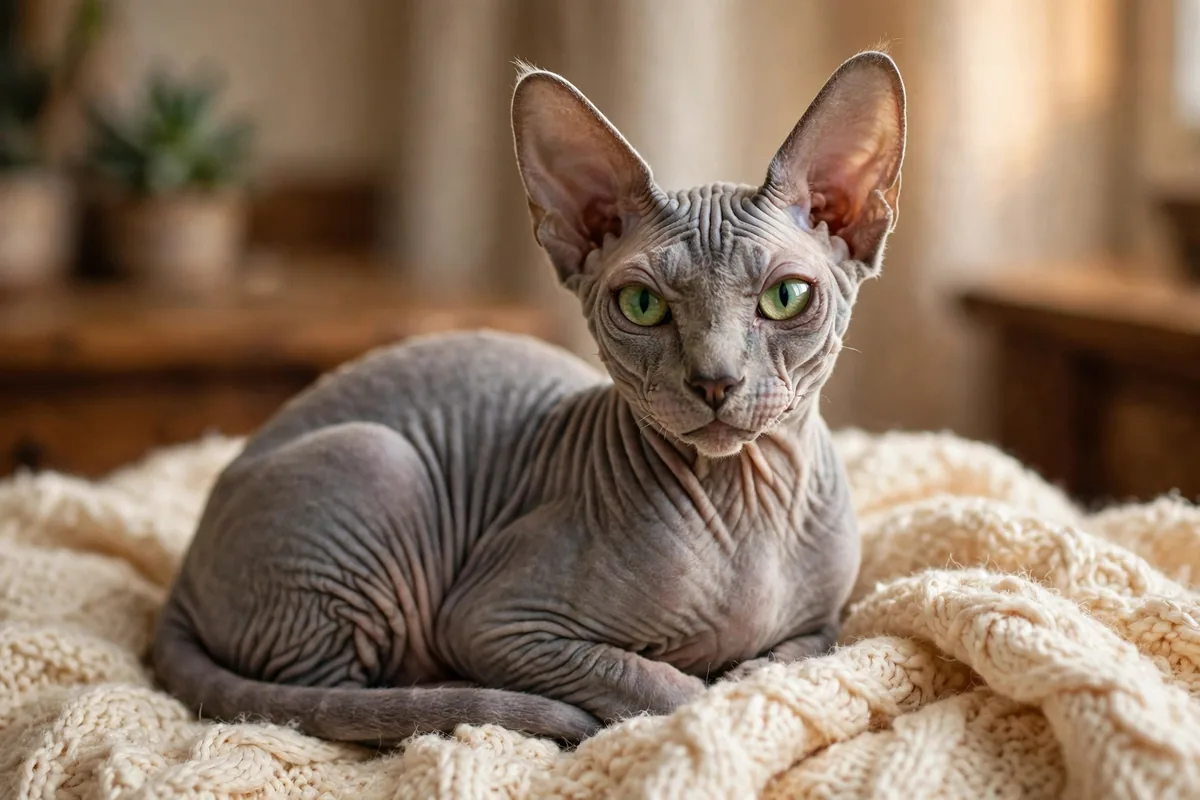
The Peterbald is one of the most unusual cats you will ever meet: a slender, elegant Russian breed that can be completely hairless, covered in a soft velvety fuzz, or coated in a fine brush-like layer, sometimes all within the same litter. With huge ears, long legs, and a whippy tail, it looks like a creature from a fantasy film, but its personality is warmly down to earth. Peterbalds are famously dog-like, following their owners from room to room and demanding to be part of everything.
The breed was developed in St. Petersburg in the 1990s, and it is still rare outside Russia and Europe. If you want a striking, affectionate, low-shedding cat and you are ready for the skin care and warmth that a hairless cat needs, the Peterbald is worth knowing. This guide covers its origins, coat types, temperament, care, and health.
Peterbald at a Glance
The Peterbald is a medium-sized cat, usually weighing between 3 and 5 kilograms, with a long, slender body, a narrow wedge-shaped head, large upright ears, and a long tapering tail. The skin feels warm and soft, and the coat, when present, ranges from completely bald to a fine velvet, a short brush coat, or a straight or wavy coat, depending on the individual cat.
Peterbalds are extremely people-oriented and active. They are intelligent, curious, and vocal, and they bond so strongly to their owners that many follow them around the house like a shadow. They typically live 12 to 15 years and stay playful and affectionate throughout their lives.
Origin and History: A 1990s Russian Creation
The Peterbald was created in St. Petersburg, Russia, in 1994, when breeder Olga Mironova crossed a Don Sphynx, a Russian hairless breed, with an Oriental Shorthair. The goal was to combine the Don Sphynx's hairless gene with the Oriental's elegant build, and the result was a new breed that inherited the Oriental body type and the hairless trait.
The breed was recognized by Russian cat associations in the late 1990s and later gained recognition internationally. Because the hair-loss gene is dominant, Peterbald kittens can be born with a range of coat types, and breeders still work with a small gene pool, which is one reason the breed remains rare and expensive.
Appearance: From Bald to Velvet
The Peterbald's most fascinating feature is its coat, or lack of one. Kittens are born in five coat types: bald, flock (a barely-there velvet fuzz), velour (a short, soft coat that may thin with age), brush (a wiry, wiry-feeling coat that can partly shed), and straight (a normal short coat). The same litter can contain several types, and some kittens lose their coat as they grow.
Whatever the coat, the body is the same: long and slender, with a narrow head, almond-shaped eyes that are usually green, and ears that are very large and set wide apart. The skin often shows wrinkles on the forehead, and bald Peterbalds have warm, soft skin that feels like suede.
Personality and Temperament: A Dog in a Cat's Body
Peterbalds are often described as dog-like, and the label fits. They greet you at the door, follow you to the kitchen, supervise your work, and curl up on your lap the moment you sit down. They are intelligent and curious, quick to learn tricks, and fond of interactive play. Many owners say their Peterbald is more like a small, affectionate dog than a typical cat.
They are also quite vocal, with a soft, chatty voice, and they do not like being left alone for long. A Peterbald left alone all day can become anxious or bored, so they suit homes where someone is around most of the time, or where a second cat provides company. They are gentle with children and usually get along well with other pets.
Grooming and Skin Care: Warmth Matters
A hairless or nearly hairless Peterbald needs more care than a coated cat. Without fur to absorb skin oils, the skin can become greasy, so a weekly wipe-down with a warm, damp cloth or a gentle bath keeps it clean. Their large ears also need regular checking and gentle cleaning, as wax builds up faster than in coated breeds.
Warmth is the other big need. Peterbalds feel the cold, so they need warm sleeping spots, blankets, and, in winter, a heated bed or a warm sweater. They can also sunburn, so keep them out of strong direct sun and never leave them in a sunny window for hours. A Peterbald that shivers or seeks out warm laps is telling you it is cold.
Peterbald Health and Lifespan
Peterbalds typically live 12 to 15 years. The breed is generally healthy, but it shares some risks with its Oriental ancestors, including dental disease and a tendency toward sensitive skin. Hairless cats are also more prone to skin irritation, sunburn, and minor cuts, so a safe indoor environment matters.
Some lines carry a risk of feline skin conditions linked to the hairless gene, and responsible breeders screen their cats and avoid breeding two hairless cats together in ways that increase health risks. Choose a breeder who health-tests, keep up with vaccinations and annual vet visits, and watch for skin changes, and your Peterbald has a good chance of a long, healthy life.
Is the Peterbald Right for You?
The Peterbald is right for you if you want a striking, affectionate, highly interactive cat and you are happy to provide the extra care a hairless breed needs. You will get a loyal shadow that follows you everywhere, plays fetch, chats with you, and curls up under your blanket at night. They suit people who work from home, families with gentle children, and anyone who wants a cat with a real personality.
It is not right for you if you want a low-maintenance cat, or if you are away all day. The skin care, the warmth needs, and the sheer neediness of the breed are real commitments. But if you can meet them, few breeds are as rewarding or as unforgettable as the Peterbald.
Frequently Asked Questions
Are Peterbalds hypoallergenic?
No cat is truly hypoallergenic, but Peterbalds are often easier for allergy sufferers because they shed very little and have minimal fur to carry allergens around the house. They still produce the Fel d 1 protein, so people with cat allergies should spend time with the breed before committing.
Do Peterbalds need baths?
Most Peterbalds benefit from a gentle bath or wipe-down about once a week, because without fur their skin oils build up and can feel greasy. Use a mild, cat-safe shampoo and warm water, and dry them well afterwards, as hairless cats chill quickly when wet.
Can Peterbalds live outdoors?
No, Peterbalds should be indoor-only cats. Without a protective coat they are vulnerable to cold, sunburn, and skin injuries, and their trusting, people-focused nature makes them easy targets outdoors. An indoor home with warm spots and window perches suits them perfectly.
How much does a Peterbald kitten cost?
Peterbalds are rare, so kittens from a reputable breeder usually cost between $1,500 and $3,000, depending on coat type, pedigree, and location. Bald and velour kittens are often the most sought after. Always check health screening before price.
Do Peterbalds get along with other cats?
Yes, Peterbalds are very social and usually enjoy feline company, especially another Oriental-type cat. They also tend to get along well with cat-friendly dogs and gentle children. Slow, supervised introductions work best, as with any new pet.