RFID Microchip Cat Feeders: Are They Worth It?
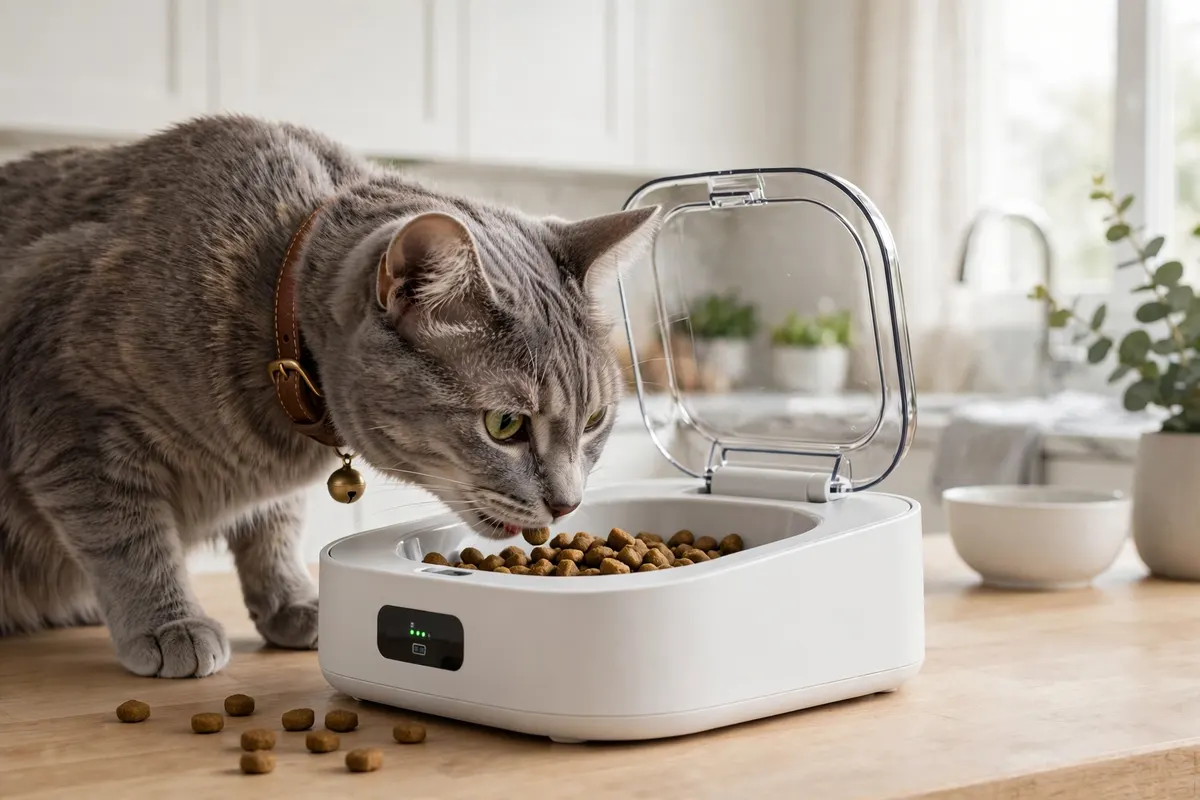
If you share your home with more than one cat, you know the dinner-time drama: one cat bullies the other away from their bowl, the cat on the special diet sneaks the "good stuff," and the chunky one treats every bowl as a personal buffet. RFID microchip cat feeders were built to end exactly that chaos — so yes, for multi-cat households, cats on prescription diets, or anyone trying to control portions, they are genuinely worth it.
They cost far more than ordinary bowls, some cats need a week or two of training, and they can't fix every feeding problem. This guide covers how they work, their pros and cons, and how to choose and introduce one.
How Does an RFID Microchip Cat Feeder Work?
The idea is simple, and it borrows the same RFID technology veterinarians already use for identification microchips. A small scanner sits near the bowl; you press a button (or use an app) to register your cat's chip by letting them eat from it once.
From then on, the scanner checks every approaching cat. If it recognizes a registered cat, a small motor opens the sealed lid; when the cat walks away, the lid closes again. An unregistered cat — or your dog — gets nothing. Because the lid stays sealed between meals, wet food stays fresher longer, with less odor, fewer flies, and less dried-out crust. Most feeders run on batteries, so there are no cords to chew. They typically hold one to two cups of dry food or a can's worth of wet food — smart bowls, not week-long dispensers. For timed meal dispensing, see our automatic cat feeder buying guide.
6 Real Benefits of Microchip-Activated Feeders
- They stop food stealing in multi-cat homes. This is the number one reason people buy them, and it genuinely works. The greedy cat learns fast that hovering doesn't pay — the lid never opens for them. No more standing guard at mealtimes or feeding cats behind closed doors.
- They protect prescription and special diets. An RFID feeder is one of the most reliable ways to make sure the right cat eats the right food — and that the other cat doesn't graze on expensive prescription kibble all day.
- They help with portion control. A sealed bowl limits grazing on other cats' leftovers, a hidden source of extra calories in multi-cat homes. Combined with measured meals, weight management gets noticeably easier. Read our cat portion guide to work out how much each of your cats should actually eat.
- They keep wet food fresh. The sealed lid slows drying and bacterial growth, so food served at 8 a.m. is still appetizing at 3 p.m. — with less odor and fewer flies.
- They cut down on early-morning wake-up calls. When the bowl opens only for one cat and holds a set amount, the theatrical 5 a.m. "I'm starving" routine loses its payoff.
- Some models track who ate what. App-connected feeders log feeding visits — genuinely useful, because a sudden drop in visits is one of the earliest signs a cat may be getting sick.
The Drawbacks Nobody Tells You About
Go in with honest expectations:
- The price. Expect to pay many times the cost of a regular bowl — and in a two-cat home with two restricted diets, you're buying two feeders.
- The training period. Some cats eat on day one. Others eye the moving lid like a trap and need one to three weeks of gradual introduction. Nervous or elderly cats may take longest.
- Power dependence. Batteries die at the worst moment, and most feeders fail closed — no cat eats until you swap them — so keep spares in the drawer.
- One feeder per restricted diet. Two cats on two different foods means two feeders. There's no way around the math.
- The motor sound. The lid makes a soft mechanical whirr. Most cats ignore it within days, but a very timid cat can be startled — the gradual training below usually solves this.
- They don't replace vet care. A smart bowl won't fix obesity, food allergies, or the underlying reason one cat bullies another at mealtimes. Think of it as a management tool, not a cure.
Who Should Buy One — and Who Shouldn't
Strong candidates: multi-cat households with food stealing, any cat on a prescription diet sharing a home with other pets, and owners who serve wet food and leave it out for hours.
You can probably skip it: single-cat households with no dietary restrictions, kittens too small to trigger the sensor, and homes where the cats already eat peacefully side by side. Also skip it if your cat is deeply noise-phobic and you can't commit to a slow training period.
How to Choose the Right RFID Cat Feeder
Here's what actually matters when comparing models:
- Microchip compatibility. Most feeders read the standard 15-digit (FDX-B) chips used worldwide today, but some older 9- or 10-digit chips won't register. Ask your vet to scan your cat and confirm the chip type before you buy — a quick call saves an expensive mistake.
- Sealed lid quality. Look for a lid that closes flush, with no gaps a persistent paw can pry open, and a fit tight enough to actually slow food drying.
- Power source and battery life. Check whether it uses standard AA/C batteries or a proprietary pack, how long a set lasts (several months is typical), and whether there's a clear low-battery warning.
- Bowl design. The inner bowl should be removable and dishwasher-safe, and shallow and wide enough to suit your cat's whiskers. If you feed wet food, make sure the model is designed for it rather than dry-kibble-only.
- Noise level. Reviews from real owners are your best guide here; a quiet motor makes training dramatically easier.
- Returns and warranty. Because some cats simply refuse to use them, buy from a retailer with a fair return window, and check the warranty length.
We don't endorse specific brands — the right choice depends on your cats, your chip type, and your budget. Compare a few current models against the checklist above and you'll land on a good one.
How to Train Your Cat to Use a Microchip Feeder
Rushing this step is the number one reason feeders end up unused in a closet. Plan on one to three weeks:
- Start with the lid off or propped open. Most feeders have a training mode that keeps the lid open. Let your cat eat from it like a normal bowl for several days until the new object becomes boring and safe.
- Make it rewarding. Serve favorite foods or top meals with a beloved treat in the feeder bowl — you want the strongest possible positive association.
- Let the lid start moving. Once the cat eats confidently, allow normal operation. Stay nearby the first few times and speak calmly if the motor sound startles them.
- Train one cat at a time. Let the registered cat learn first while the others eat elsewhere, then introduce the second feeder for the second cat.
- Never force it. Don't push your cat's head toward the opening. If a cat freezes, go back a step for a few days — patience now pays off for years.
Most cats figure it out within two weeks. If yours still won't approach after three patient weeks, the feeder may simply not suit their temperament — return it within the window and try a different strategy from our cat food guides.
Frequently Asked Questions
Does my cat need a microchip for an RFID feeder to work?
Not necessarily. Most feeders can learn an existing implanted microchip, and they also work with a lightweight RFID collar tag for cats that aren't chipped. Ask your vet to check your cat's chip type first, since older non-standard chips may not be compatible.
Can two cats share one RFID microchip feeder?
Yes — you can register multiple cats to a single feeder and it will open for any of them. But if your goal is to keep two cats on different foods, you need one feeder per cat, each registered to the other cat's exclusion.
What happens if the power or batteries run out?
Most feeders fail closed, so no cat can access the food until you replace the batteries. Choose a model with a low-battery indicator and keep spare batteries on hand.
Are microchip cat feeders loud?
The lid motor makes a soft mechanical whirr. Most cats get used to it within days, though very timid cats can be startled at first — which is why gradual training matters.
Can kittens use RFID microchip feeders?
Usually not right away — young kittens may be too small to trigger the sensor reliably. Most owners introduce the feeder once the kitten is big enough to eat from it comfortably, often around 4–6 months of age.