Toyger Cat: Complete Breed Guide
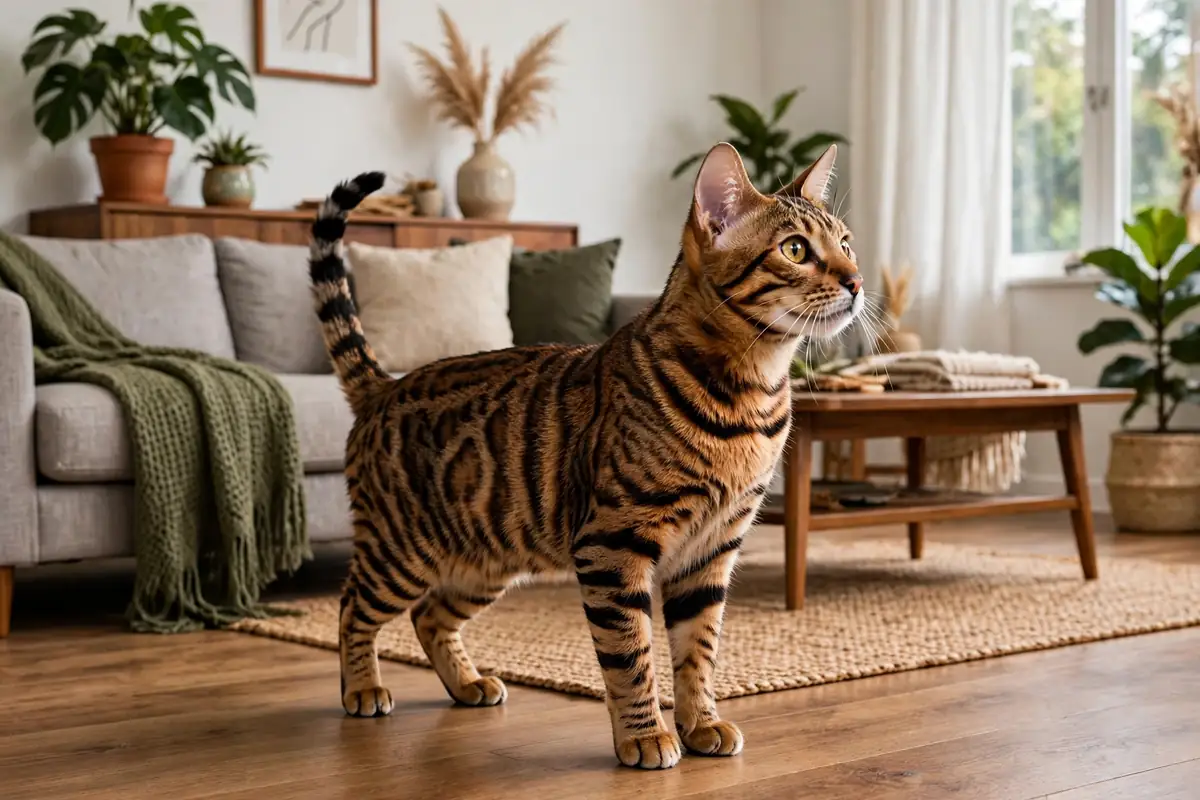
The Toyger looks like a tiger that shrank in the wash — bold orange and black stripes, a powerful muscular build, and a confident, almost wild expression, all in a fully domestic cat who wants to sleep on your sofa. Developed in the United States in the 1980s and 1990s, the Toyger was deliberately bred to resemble a miniature tiger, not by using wild cats, but by carefully selecting domestic cats with the right striping, body shape, and temperament over many generations.
The result is a striking, intelligent, and affectionate breed that turns heads wherever it goes, and one that is still rare enough that most people have never met one. This guide covers the Toyger's origins, personality, care for that spectacular coat, health, and the honest question every prospective owner should ask: is a tiger-lookalike the right cat for your home?
History: Bred to Look Like a Tiger
The Toyger was created by Judy Sugden, a breeder who noticed that one of her Bengal cats had stripes on the head that resembled the circular markings of a wild tiger. Her goal was not to create a wild animal, but a domestic cat whose appearance would inspire people to care about tiger conservation — a living reminder, in miniature, of the wild cats facing habitat loss. She crossed Bengals with a domestic shorthair tabby found in Kashmir with particularly bold striping, and then selected offspring generation after generation for vertical stripes, a long muscular body, and a broad, rounded head.
The breed name is simply a blend of toy and tiger, and the Toyger gained championship recognition from major cat associations in the 2000s. Crucially, no wild cat species is used in the modern Toyger breeding programme — the tiger look comes entirely from domestic cat genetics, which is why Toygers have the temperament of a domestic cat rather than the unpredictability of a wild hybrid. That distinction matters, both for owners and for the breed's conservation message.
Temperament: Confident, Social, and Smart
Toygers are confident, outgoing, and highly social cats. They tend to greet visitors at the door, follow their people around the house, and enjoy being part of family life rather than watching from a distance. They are intelligent and trainable — many learn to walk on a harness, play fetch, and respond to their names — and they thrive on interaction, puzzle toys, and climbing opportunities. A bored Toyger will invent his own entertainment, which may involve opening cupboards or rearranging your belongings.
They generally get along well with children and other pets when introduced properly, and their confidence means they are less likely than shy breeds to hide from household activity. That same confidence can make them demanding: a Toyger who wants play or attention will ask for it clearly and persistently. They suit active homes where someone enjoys playing with a cat daily and can provide the mental stimulation this bright breed needs.
The Striped Coat and Grooming
The Toyger's coat is its masterpiece: a short, dense, plush coat with bold, vertical, branching stripes on a rich orange background, a lighter belly, and distinctive facial markings including the circular head stripes that inspired the breed. The ideal pattern is random and broken rather than the neat mackerel stripes of an ordinary tabby, with dark markings that stand out sharply against the ground colour. Breeders also select for glitter — a shimmering quality in the coat that catches the light.
Grooming is refreshingly simple for such a showy cat. A weekly brushing with a soft brush or grooming mitt removes loose hair and keeps the coat gleaming, and Toygers rarely need baths unless they get into something messy. They shed moderately, so regular brushing also keeps household hair under control. Because the coat is short, matting is not a concern, which makes the Toyger a lower-maintenance choice than its dramatic appearance might suggest.
Toyger kittens are born with softer, less defined markings that sharpen and darken as they mature, so a kitten's adult pattern is only partly visible in the first months. Breeders assess pattern development over time, and the boldest stripes often emerge after the first year. Sunlight can also warm the orange ground colour, giving outdoor-enriched Toygers a particularly vivid coat.
Health and Lifespan
Toygers are generally healthy cats with a lifespan of around 10 to 15 years. As a relatively new and carefully bred breed, they do not carry a long list of breed-specific diseases, but responsible breeders still screen for heart conditions, including hypertrophic cardiomyopathy, and monitor for the general health issues that affect all cats. Their Bengal ancestry means some lines may share a tendency towards sensitive digestion, so a high-quality, easily digestible diet and a gradual approach to food changes suit most Toygers.
Weight and activity deserve attention: Toygers are muscular and athletic, and they stay healthiest with daily play, climbing trees or shelves, and measured meals rather than free feeding. Annual vet check-ups, dental care, and parasite prevention round out a straightforward health routine. Because the breed is rare, finding a vet experienced with Toygers is less important than finding a breeder who health-tests and is transparent about their lines.
Is a Toyger Right for Your Home?
A Toyger is a wonderful match for an active, cat-savvy home that wants a striking, social, intelligent companion and can provide daily play, vertical space, and attention. They adapt well to apartments if their enrichment needs are met, and they are a good choice for families who want a cat who participates in household life rather than observing it from a perch. They are less suited to very quiet homes where a cat is expected to be decorative, or to owners who are away for long hours without another pet for company.
Expect to search and possibly wait for a Toyger kitten, and expect a premium price — rarity, careful selective breeding, and health testing all contribute to cost. Choose a breeder who raises kittens in the home, socialises them well, provides health records, and can explain the breed's temperament honestly. If you fall for the tiger look but want the domestic heart underneath it, the Toyger delivers exactly that: a tiny tiger who would much rather be on your lap than in the jungle.
Frequently Asked Questions
Is a Toyger a wild cat hybrid?
No. Modern Toygers are bred entirely from domestic cats — Bengals and domestic shorthairs selected for tiger-like striping. No wild cat species is used in the breeding programme.
Are Toyger cats good with children?
Yes, Toygers are generally confident and social and do well with respectful children, though their energy means they appreciate supervised play rather than rough handling.
Do Toygers need a lot of grooming?
No. Their short, dense coat needs only a weekly brush to remove loose hair and keep it gleaming. Matting is not a concern.
How much does a Toyger kitten cost?
Toygers are rare and usually command a premium price from reputable breeders, reflecting health testing and selective breeding. Prices vary by region and breeder, so ask breeders directly for current figures.
Are Toygers active cats?
Yes. Toygers are athletic, intelligent, and playful, and they need daily interactive play, climbing opportunities, and puzzle toys to stay happy and out of mischief.