Bengal Cat: Breed Guide for Active Owners
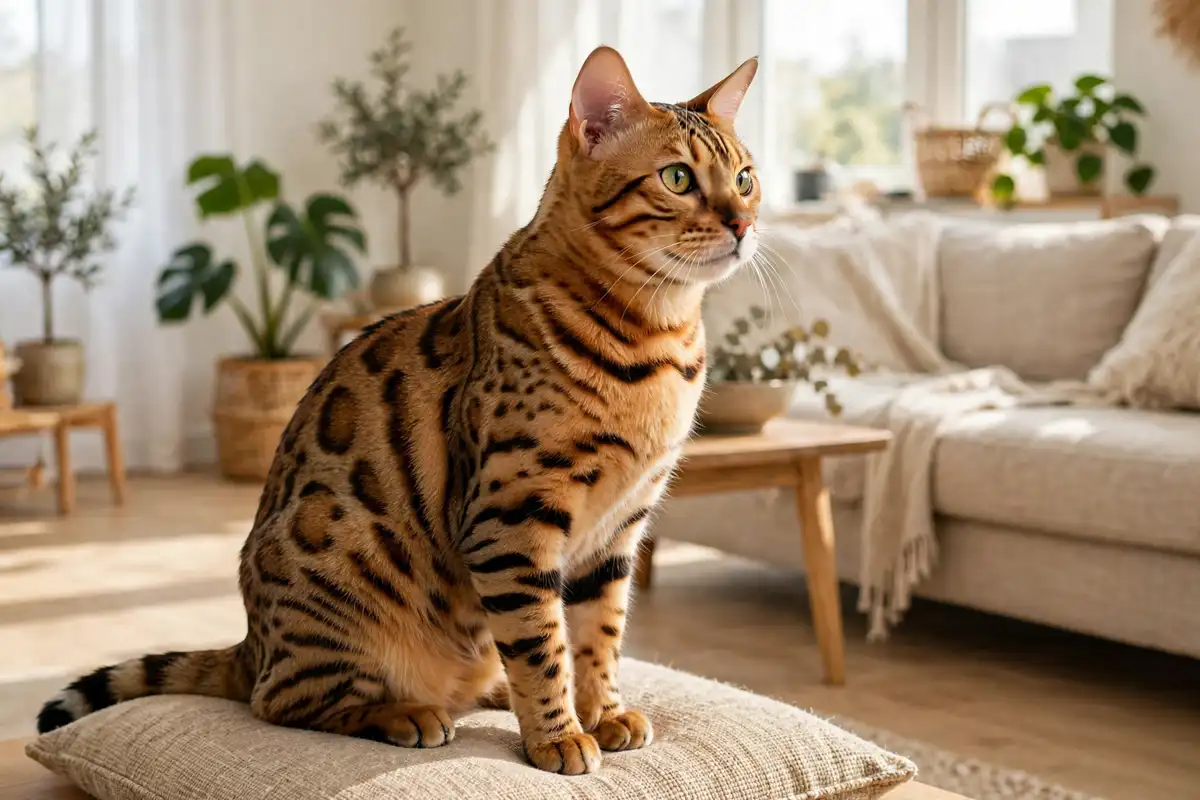
Should you get a Bengal cat? Only if you are ready for a cat with the energy of a border collie in a leopard-print coat. Bengals are stunning, athletic, and fiercely intelligent — but they are not sleepy lap cats for a quiet household. This breed thrives with owners who can give it daily interactive play, climbing space, and constant mental stimulation. If your idea of cat ownership is a couch companion that naps for sixteen hours, a Bengal will exhaust you. But if you want a playful, dog-like partner that joins in your daily life, a Bengal may be one of the most rewarding cats you will ever own.
In this guide, you will learn what makes the Bengal look the way it does, how its famous personality really behaves at home, exactly how much exercise and enrichment it needs, how to groom and care for it, which health topics to discuss with a breeder and your vet, and an honest checklist to decide whether this breed fits your lifestyle.
Bengal Cat Appearance: A Wild, Leopard-Like Look
The Bengal was developed by crossing domestic cats with the Asian leopard cat, and the result looks unmistakably wild. The hallmark is the coat: dense, short, and silky, patterned with bold rosettes — dark-edged spots with lighter centers — or dramatic horizontal striping. A rarer "marbled" pattern swirls the markings into flowing ribbons of color. Most Bengals wear warm golden-brown tones, with silver and snow variations also recognized.
Many Bengals have what breeders call a "glittered" coat — individual hairs with translucent tips that catch the light, giving the fur a shimmering glow you notice instantly in person.
Under the spots is a pure athlete: long, muscular, and heavier than it looks, with large rounded paws, a thick tail carried low, and a broad head with small rounded ears. Males run noticeably bigger and more powerfully built than females. Nothing about a Bengal looks delicate — this is a cat built to run, leap, and climb.
Bengal Cat Personality: Bold, Chatty, and Always in Motion
If you have only owned mellow cats, a Bengal's personality may surprise you — in the best possible way. Bengals are curious about everything: they supervise your cooking, inspect your shopping bags, and quickly learn to open doors, drawers, and faucets. Their intelligence defines the breed. Puzzle toys that bore other cats can hold a Bengal's attention, and many Bengals learn tricks like fetch and high-five remarkably fast.
Bengals are famously vocal, with a distinctive raspy, almost wild-sounding voice they use freely — especially around mealtimes. And many are fascinated by water, splashing in bowls or batting at running taps. It is charming, but supervise water play as you would with any cat.
What Bengals are not is aloof. They bond deeply, often choosing a favorite human to shadow from room to room. That devotion is wonderful — but it is also why the breed does poorly with owners who are gone all day with no enrichment arranged.
Exercise and Mental Stimulation: The Non-Negotiable Part
This is the section that decides whether a Bengal fits you, so read it twice. A Bengal needs serious daily exercise — not a five-minute feather-wand wave. Plan at least two dedicated interactive play sessions every day, with wand toys and chase games that let the cat sprint, pounce, and "catch" its prey, ending with a small meal so the hunt feels complete.
Set up the house like a gymnasium: tall, sturdy cat trees, wall-mounted shelves, and window perches for the vertical territory Bengals crave. Many owners swear by cat exercise wheels — Bengals take to them more readily than most breeds. Rotating puzzle feeders and clicker training keep the mind busy, and some Bengals learn to walk on a harness for safe outdoor adventures. If this energy level already sounds like a lot, our Cat Breeds section profiles calmer alternatives worth a look.
Skip the enrichment and a Bengal will invent its own: opening cabinets, climbing the curtains, or redecorating your shelves at 2 a.m. Destructive behavior in this breed is almost always a boredom problem, not a temperament problem.
Grooming and Everyday Bengal Cat Care
Here is the good news: that spectacular coat is low-maintenance. Weekly brushing with a soft brush or grooming mitt removes loose hair and keeps the glittered shine. Shedding is moderate — noticeable during seasonal changes, but far less than any long-haired breed. An occasional wipe with a damp cloth adds extra polish.
Cover the routine basics: trim nails every couple of weeks (active Bengals can be hard on furniture), clean ears gently when you notice buildup, and keep up with dental care through vet-recommended products, since dental disease affects cats of every breed. Feed for an athlete — high-quality, protein-rich food with wet food at the core — and follow your vet's portion guidance rather than free-feeding large amounts of dry food.
Provide a large, sturdy litter box and scoop it daily. Bengals are fastidious cats, and a dirty box may be protested in creative ways. For more everyday care routines, the Purrfect Paws homepage links out to our litter training, feeding, and vet-visit guides.
Bengal Cat Health: What Responsible Buyers Should Know
No breed is guaranteed a problem-free life, and Bengals are no exception — but knowing what to ask about puts you far ahead. Reputable breeders screen their breeding cats for known inheritable conditions. In Bengals, topics worth discussing include hypertrophic cardiomyopathy (HCM, a heart condition seen across many breeds), progressive retinal atrophy (PRA-b, an eye condition with an available DNA test), and pyruvate kinase deficiency (PK deficiency, a red blood cell disorder that is also testable). A responsible breeder discusses results openly and will take a cat back at any age if you cannot keep it — those are green flags worth more than any pedigree paper.
Day to day, keep your Bengal lean and muscular with proper food and play, stay current on vaccinations and parasite prevention, and book annual vet checkups — twice yearly for seniors. Indoor living, or supervised harness outings, protects this confident explorer from traffic, fights, and infectious disease.
Is a Bengal Cat Right for You? An Honest Checklist
A Bengal will likely thrive with you if:
- You are home often and genuinely enjoy interactive play — this breed wants a teammate, not a spectator.
- You can provide vertical space: tall cat trees, shelves, and room to sprint.
- You find a chatty, mischievous, water-splashing personality charming rather than annoying.
- Your budget covers a well-bred kitten, quality food, and an enriched home.
- Other pets in the home are confident and playful — Bengals often adore a feline or canine playmate.
Think twice if:
- You want a calm lap cat that naps most of the day.
- You are away from home for very long hours with no enrichment plan.
- You live somewhere a 2 a.m. furniture sprint would be a problem.
- You have not honestly researched the breed's energy level before committing.
Bengals are not difficult cats — they are demanding cats, and there is a difference. Meet the demand and you get a dazzling, loyal, endlessly entertaining companion. If this checklist gave you pause, our Cat Breeds guides include gentler options — and there is no shame in choosing the right cat over the flashiest one.
Frequently Asked Questions
Are Bengal cats good for first-time cat owners?
They can be, if you are an active first-timer who researches the breed honestly and sets up proper enrichment. But Bengals generally suit experienced or highly committed owners better, simply because their energy and intelligence demand so much daily engagement.
Do Bengal cats like water?
Many do — splashing in bowls, pawing at running taps, even lingering near the shower. It is a famous breed quirk, but not universal, so never force water play on a cat that is not interested.
How much exercise does a Bengal cat need?
Plan on at least two dedicated interactive play sessions every day, plus climbing structures, puzzle feeders, and ideally a cat exercise wheel. A bored Bengal will create its own entertainment, usually at your furniture’s expense.
Do Bengal cats shed a lot?
No — their short, dense coat sheds moderately, with heavier shedding during seasonal changes. A weekly brushing is enough to keep loose hair under control.
Are Bengal cats hypoallergenic?
No cat is truly hypoallergenic. Some allergy sufferers report milder reactions to Bengals, but if you have allergies, spend time with the breed before committing — and talk to your doctor first.