Siamese Cat: Complete Breed Guide
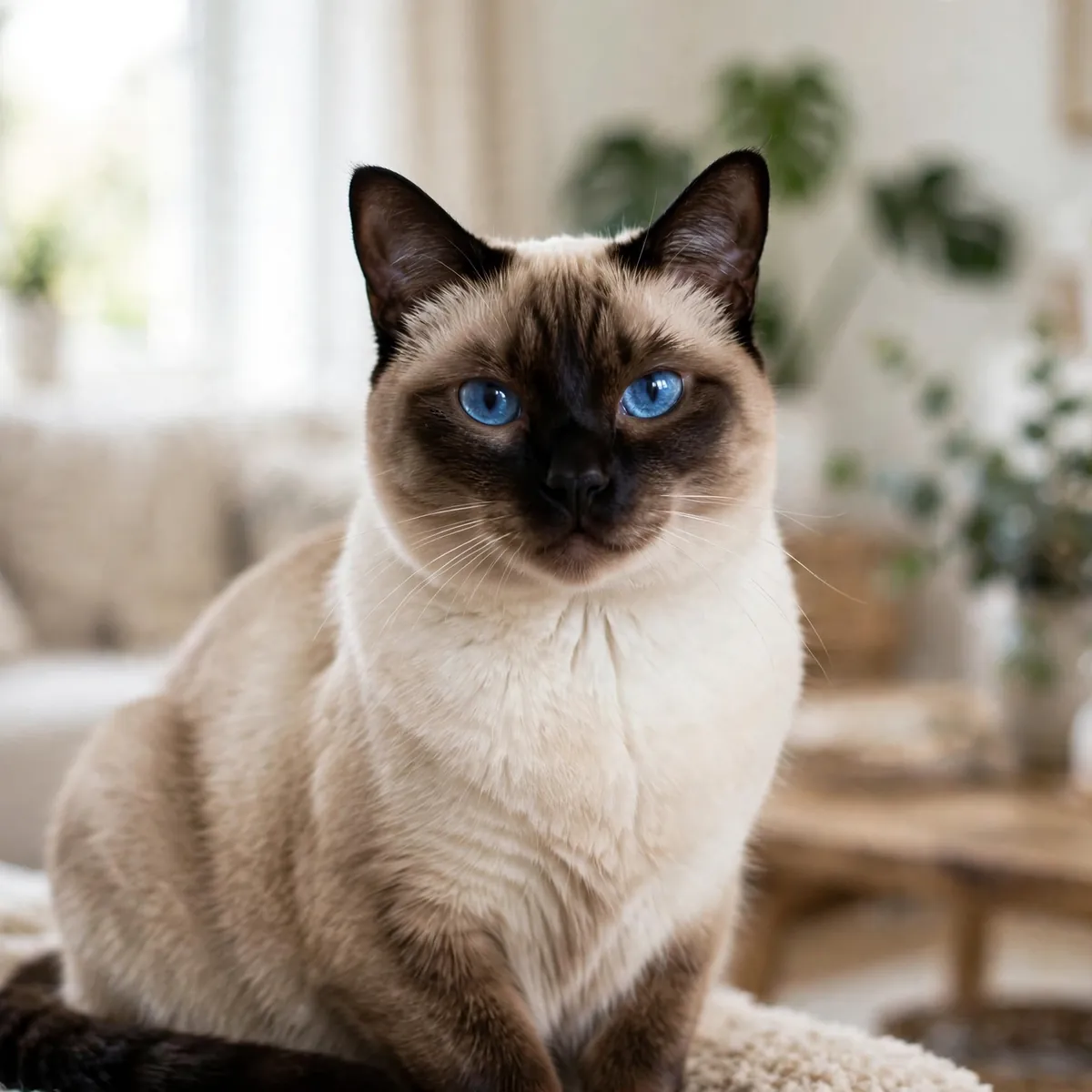
If you're wondering what it's really like to live with a Siamese cat, the short answer is this: you will never be lonely again. Siamese cats are among the most social, vocal, and people-oriented of all cat breeds — sleek, athletic cats with cream-colored coats, dark "points" on the ears, face, paws, and tail, and unforgettable sapphire-blue eyes. They bond intensely with their humans, follow you from room to room, and hold long "conversations" in a famously loud, distinctive voice. This complete breed guide covers the Siamese personality, appearance, care needs, grooming, health, and how to decide whether this chatty breed fits your home.
One of the oldest and most recognizable cat breeds in the world, the Siamese traces its roots to Thailand — once known as Siam — where these striking cats were treasured centuries ago. They arrived in the West in the late 1800s and have been stealing hearts ever since. Below, you'll find everything a prospective owner needs: what makes the Siamese tick, what they look like, how to keep them happy and healthy, and the honest pros and cons of sharing your life with one.
Siamese Cat Personality: The Chatty, People-Obsessed Companion
Forget the aloof-cat stereotype — the Siamese didn't get the memo. These cats are famously dog-like in their devotion: they greet you at the door, supervise your cooking, "help" with your laptop, and claim the warmest spot on (or under) the covers at night. Many Siamese pick a favorite person and shadow them relentlessly, though they'll happily spread affection across the whole household.
The trait Siamese are most famous for is their voice. This is a genuinely talkative breed with a loud, low-pitched, almost baby-like cry — owners affectionately call them "meezers." Your Siamese will comment on your comings and goings, demand dinner with running commentary, and answer you back when you talk to them. It's endearing if you love interaction; it's a lot if you prize silence, work night shifts and sleep days, or share thin apartment walls with light sleepers.
They're also strikingly intelligent and curious. A bored Siamese is a mischievous Siamese — opening cupboards, learning to turn on faucets, or inventing games you didn't agree to. That clever brain needs a job, which is why the care section below matters so much for this breed.
Siamese Cat Appearance: Color Points and Sapphire-Blue Eyes
The Siamese look is unmistakable: a pale, cream or fawn body set off by darker "points" — the ears, face mask, paws, and tail. Classic point colors include seal (dark brown), chocolate, blue (a cool grey), and lilac (a pale pinkish grey), and breeders have developed additional shades like red, cream, and tortie points.
Here's a fun detail: Siamese kittens are born almost entirely white. The points develop over the first weeks and months because the coloration is temperature-sensitive — cooler areas of the body grow darker fur. That's why the extremities darken first, and why a Siamese living in a cold climate may develop a darker overall coat.
Under the coat, the modern Siamese is sleek and athletic: a long, tubular body, fine boning, a wedge-shaped head, and strikingly large ears. The almond-shaped eyes are always a vivid blue — a breed hallmark. The coat itself is short, fine, and glossy, lying close to the body with minimal undercoat, which is why grooming this breed is refreshingly simple.
Siamese Cat Care: Companionship, Play, and Mental Stimulation
The single most important thing to know about Siamese care is this: they need company. This is not a breed that thrives alone for 10–12 hours a day. A lonely Siamese may become excessively vocal, destructive, or develop stress behaviors like over-grooming. If everyone in your household works long hours away from home, either plan on two cats — another Siamese or a similarly social breed is often ideal — or reconsider.
When you are home, make it count. Siamese cats adore interactive play: wand toys, feather teasers, and crinkle balls are hits, and many Siamese genuinely play fetch, trotting back with a toy for another round. Puzzle feeders turn mealtimes into brain games. Their intelligence also makes them unusually trainable — many learn to sit, come when called, and walk on a harness, opening up safe outdoor adventures together.
Set up the home for an athlete: a tall, sturdy scratching post, a window perch for bird-watching, and safe vertical spaces to climb. Keep a consistent feeding routine, and if you're comparing temperaments, browse our full cat breed guides to see how the Siamese stacks up against calmer or more independent breeds.
Grooming a Siamese Cat: Low Maintenance, Big Payoff
Here's the good news after all that talk of high social needs: grooming a Siamese is easy. Their short, fine coat barely sheds and rarely mats. A weekly once-over with a soft bristle brush or rubber grooming mitt removes loose hair, distributes skin oils, and doubles as bonding time — most Siamese love the attention.
Don't neglect the small stuff, though. Trim nails every two to three weeks, check ears for wax buildup, and pay special attention to teeth: dental disease is relatively common in the breed, so get your cat used to tooth-brushing with a cat-safe toothpaste early, and ask your vet about dental checkups. Siamese almost never need baths unless they get into something messy.
Siamese Cat Health Issues to Discuss With Your Vet or Breeder
Siamese cats are generally hardy and famously long-lived, often reaching well into their teens with good care. Still, every breed has predispositions worth discussing:
- Dental disease. Crowded teeth and gum issues show up more often in Siamese than in many breeds. Regular dental exams and home tooth-brushing go a long way.
- Respiratory sensitivity. Some Siamese are prone to asthma-like symptoms — coughing or wheezing. Dust-free litter and a smoke-free home help; persistent coughing deserves a vet visit.
- Progressive retinal atrophy (PRA). An inherited eye condition found in some Siamese lines that can lead to vision loss. Reputable breeders screen their breeding cats — ask for proof.
- Amyloidosis. A liver condition historically reported in some Siamese family lines. It's another reason to choose a breeder who health-tests and knows their lines' history.
Whether you adopt or buy, schedule a vet checkup in the first week home, keep vaccinations and parasite prevention current, and discuss spaying or neutering at the right age. If you're buying from a breeder, insist on meeting the mother, seeing clean home-raised conditions, and receiving written health records — a reputable breeder welcomes these questions.
Is a Siamese Cat Right for You?
A Siamese could be your perfect match if you:
- Work from home, are retired, or have family members around most of the day
- Want an interactive, dog-like companion rather than an independent cat
- Enjoy "talking" with your pet and find a chatty cat charming, not annoying
- Can commit to daily play sessions — or to adopting a feline friend so they have company
- Have children or a cat-friendly dog — well-socialized Siamese usually integrate beautifully with respectful kids and other pets
Think twice if you're away from home all day, treasure total quiet, or want a low-interaction pet. And before you shop, check shelters and rescues: Siamese and Siamese mixes are among the most common pedigree-type cats in rescue, and breed-specific Siamese rescues exist in many regions. Adopting an adult means you already know their personality — and you'll find plenty more everyday cat-care help on the Purrfect Paws homepage.
Frequently Asked Questions
Are Siamese cats really that vocal?
Yes — it's their signature trait. Siamese are among the most talkative of all breeds, with a loud, distinctive voice they'll use to greet you, demand meals, and narrate their day. If you want a quiet cat, calmer breeds like the British Shorthair or Persian are a better fit.
Do Siamese cats get along with other pets?
Usually very well, given proper introductions. They're social enough to enjoy feline companionship — many Siamese are happiest in pairs — and often do fine with cat-friendly dogs. Introduce newcomers gradually over a week or two for the smoothest transition.
Can I leave my Siamese cat alone while I work?
Not for very long stretches. Siamese left alone 10–12 hours daily often develop behavior problems from loneliness and boredom. If your schedule keeps you out all day, consider two cats, a pet sitter, or a breed with more independent tendencies.
Do Siamese cats shed a lot?
No — one of the perks of the breed. Their short, fine coat sheds minimally. A quick weekly brushing keeps loose hair under control and your furniture largely fur-free.
Should I adopt a Siamese or buy from a breeder?
Check shelters and Siamese-specific rescues first — Siamese mixes are common in rescue and make wonderful pets. If you buy, choose a breeder who raises kittens in the home, health-screens breeding cats, lets you meet the mother, and provides written health records. Avoid sellers who dodge questions or won't show you where kittens are raised.