Ocicat Cat: Complete Breed Guide
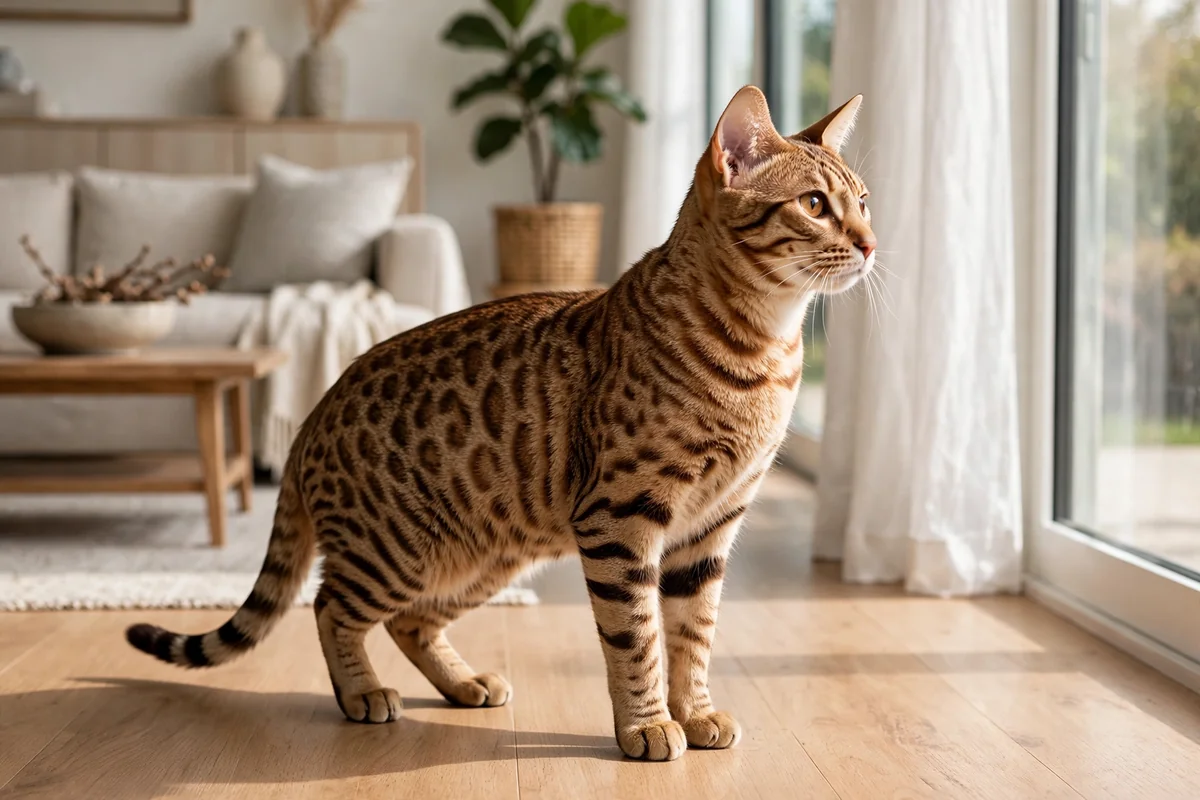
The Ocicat looks like it just stepped out of the jungle, with a wild spotted coat that resembles a miniature ocelot. But do not be fooled by the exotic appearance: the Ocicat is a fully domestic cat with no wild ancestry at all. It is, in fact, one of the friendliest, most people-oriented breeds you can bring home. This guide covers the Ocicat's appearance, temperament, care needs, health, and whether this athletic spotted companion is right for your household.
The Ocicat's story began by accident in the 1960s, when American breeder Virginia Daly crossed a Siamese with an Abyssinian while trying to develop a new color pattern. One kitten in the litter had an unexpected spotted coat, and Daly recognized something special. Later crosses with the American Shorthair refined the breed's sturdy body and bold markings. The result is a cat that looks wild, acts like a loyal dog, and fits happily into family life — a combination that has made the Ocicat a favorite among breed enthusiasts ever since.
Ocicat Appearance: A Wild Look, All Domestic
The Ocicat's defining feature is its coat: short, smooth, and covered in distinct thumbprint-shaped spots arranged in rows along the body, with a characteristic "M" marking on the forehead and dark lines running from the eyes. Spots come in twelve recognized colors, including tawny, chocolate, cinnamon, blue, lavender, and silver variations, always set against a lighter background. The overall effect is strikingly similar to a wild ocelot, which is exactly where the breed gets its name.
Underneath the spots, the Ocicat is a medium to large cat with a muscular, athletic build. Adults typically weigh between 9 and 15 pounds, with males larger than females. They have a long, solid body, strong legs, almond-shaped eyes that are usually gold, copper, or green, and large, alert ears that are sometimes tipped with small tufts. Their coat is short and satiny, lying close to the body with a glossy sheen that shows off the spotting beautifully.
One thing new owners notice quickly is how the Ocicat moves. This is an agile, powerful cat that runs, leaps, and climbs with confidence. They are known for opening doors and drawers with their paws, so childproof latches on cupboards are a wise investment. Their athleticism is part of their charm — but it also means your home needs to be Ocicat-proofed before they arrive.
Ocicat Temperament: Social, Smart, and Dog-Like
If you want a cat that acts like part of the family rather than a distant roommate, the Ocicat is a strong contender. These cats are famously outgoing and confident. They greet visitors at the door, follow their people around the house, and often ride on shoulders or settle in laps for a cuddle. Many Ocicats learn to fetch, walk on a leash, and respond to their names, and they generally enjoy learning tricks — especially when treats are involved.
Ocicats are also highly intelligent, which is both a blessing and a challenge. They figure out puzzle toys quickly, learn routines fast, and can get bored if their environment stays the same day after day. Rotate toys regularly, introduce new puzzle feeders, and spend time playing with them every day. A mentally stimulated Ocicat is a joyful, well-behaved companion; a bored one may redecorate your shelves or stage a dramatic protest by knocking things over.
Unlike some breeds that bond to a single person, Ocicats tend to love the whole household. They usually get along well with children, other cats, and cat-friendly dogs, making them one of the more social breeds available. They do, however, dislike being left alone for long stretches. An Ocicat left by itself all day may become lonely or anxious, so this breed suits households where someone is home much of the time, or where a second pet provides company.
Ocicat Care Needs: Grooming, Feeding, and Exercise
Grooming an Ocicat could hardly be easier. Their short coat needs only a weekly brushing with a soft brush or rubber grooming mitt to remove loose hair and keep the coat glossy. They shed moderately, with a bit more shedding in seasonal changes, but they rarely mat or tangle. Regular nail trims, ear checks, and dental care — as with any cat — complete the routine.
Feeding should match their active lifestyle. Ocicats are energetic cats with healthy appetites, and they can gain weight if meals are not measured, especially after neutering or as they age. Feed a balanced, high-quality cat food in measured portions, split into two meals a day, and keep treats to a small share of daily intake. Fresh water should always be available, and many Ocicats enjoy a running water fountain, which can encourage better hydration.
Exercise is where the Ocicat truly shines — and where owners need to commit. Plan for at least two interactive play sessions a day using wand toys, feather teasers, or laser pointers, plus free access to climbing structures. A tall cat tree, wall-mounted shelves, and a sturdy scratching post are essentials, not luxuries, for this breed. Puzzle feeders and treat-dispensing toys turn mealtimes into enrichment, and some Ocicats even enjoy supervised outdoor time in a secure catio or on a harness.
Ocicat Health: A Generally Hardy Breed
Ocicats are generally healthy cats with a lifespan of 12 to 15 years or more. Because the breed was developed from Siamese, Abyssinian, and American Shorthair lines, breeders and veterinarians watch for a few inherited conditions that appear in those foundation breeds. These can include a heart condition called hypertrophic cardiomyopathy and a liver enzyme condition known as pyruvate kinase deficiency. Reputable breeders screen their breeding cats for these conditions, so ask for health testing documentation before committing to a kitten.
Routine care matters just as much as genetics. Keep vaccinations and parasite prevention up to date, schedule annual veterinary checkups (twice yearly for seniors), and pay attention to dental health, since dental disease is common in all cats and easy to overlook. Because Ocicats are so active, also watch for the occasional sprain or bump from their acrobatics — most are minor, but limping or sudden reluctance to jump deserves a vet visit.
Weight management deserves special attention with this breed. An Ocicat's muscular build can hide extra weight under a sleek coat, so weigh your cat periodically and check their body condition with your vet. A healthy Ocicat should have a visible waist when viewed from above and ribs that are easy to feel under a thin layer of fat. Keeping them lean protects their joints and heart over a long life.
Are Ocicats Good for Families and Apartments?
Ocicats are excellent family cats. Their confidence, patience, and playfulness make them wonderful companions for children who treat them gently, and their social nature means they usually welcome visitors rather than hiding from them. Teach children to play with wand toys rather than hands, to let the cat leave when it wants to, and to respect its resting spots — rules that build a safe, happy relationship for everyone.
They also adapt well to apartment living, provided their energy and social needs are met. An Ocicat does not need a garden; it needs vertical space, playtime, and people. A well-set-up apartment with a tall cat tree, window perches, scratching posts, and daily interactive play will suit them far better than a large house where they are ignored. They are moderately vocal, with a soft, pleasant voice, and they will happily "talk" to you about their day — a trait owners either love or learn to love.
For first-time owners, the Ocicat is a rewarding but active choice. They are easy to groom, easy to train, and deeply affectionate, but they are not a low-maintenance, independent cat. If you want a companion who will be in the middle of everything you do — helping you work, watching you cook, and greeting you at the door — the Ocicat delivers that in spotted style. Just be ready to keep up. Browse more cat breed guides on Purrfect Paws to compare breeds side by side.
Frequently Asked Questions
Is the Ocicat a wild cat?
No. Despite its spotted, ocelot-like coat, the Ocicat is a fully domestic breed with no wild ancestry. It was developed in the 1960s by crossing Siamese, Abyssinian, and later American Shorthair cats.
Are Ocicats good with children and other pets?
Yes. Ocicats are famously social and usually do well with children, other cats, and cat-friendly dogs, especially when introduced gradually. They dislike being left alone for long periods.
Do Ocicats need a lot of exercise?
Yes, Ocicats are athletic and energetic. They need daily interactive play, climbing structures, and mental enrichment such as puzzle feeders to stay happy and out of mischief.
How much grooming does an Ocicat need?
Very little. The Ocicat's short, smooth coat needs only a weekly brushing to remove loose hair and keep its spotted pattern looking sleek and glossy.
Can Ocicats live in apartments?
Yes, Ocicats can thrive in apartments if they get enough play, vertical space, and companionship. They are active indoors but adapt well as long as their energy and social needs are met.