Why Do Cats Love Boxes So Much?
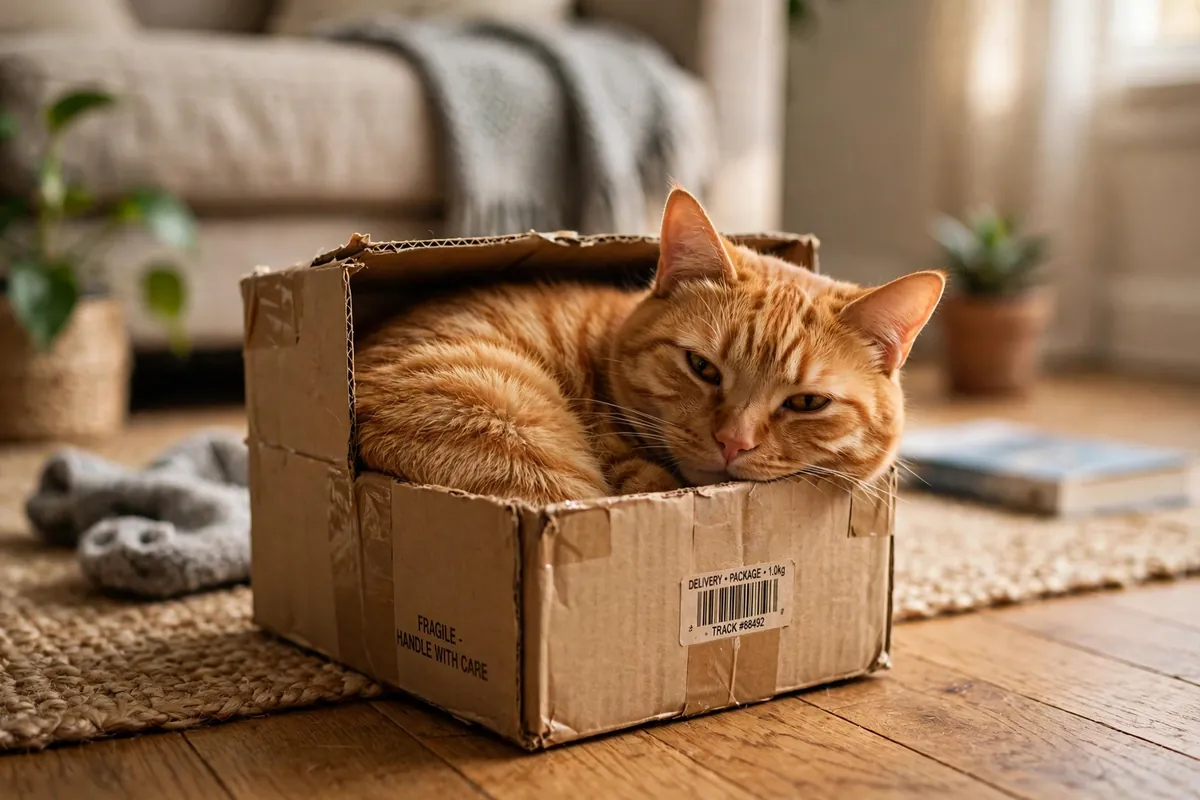
Cats love boxes because a box hits every instinct a cat has: hide, stay warm, watch the world unseen, and pounce from cover. To your cat, a cardboard box is a den, a fortress, and a hunting blind rolled into one — and the snugger the fit, the better. The short answer to "why do cats love boxes" is that boxes make cats feel safe in a way almost nothing else in your home does.
You have seen it a hundred times. You bring home a brand-new cat tree with three levels, a dangling mouse, and a plush cave — and your cat walks straight past it to sit in the shipping box it came in. It feels like a personal insult, but it is actually one of the most predictable behaviors in the entire cat kingdom. Scientists have studied it, behaviorists explain it the same way every time, and once you understand the "why," you can use boxes to genuinely improve your cat's life. Here at Purrfect Paws, we have rounded up the real reasons behind the obsession — and how to turn free cardboard into your cat's favorite enrichment.
The Den Instinct: Cats Are Built for Small, Hidden Spaces
Your cat's wild ancestors — small desert cats that hunted alone — survived by being both predator and prey. They stalked mice and birds from cover, but they also had to avoid becoming dinner for something bigger. A small, enclosed den with walls on every side solved both problems: nothing could sneak up behind them, and they could watch the world through a single opening.
That wiring never left. A box gives your house cat exactly what a burrow gave their ancestors — solid walls at their back and a clear view forward. It is not the cardboard they love so much as the containment: the gentle pressure of walls on all sides tells your cat's nervous system that they are safe.
Boxes Are Natural Stress Relievers
There is real science behind the calming power of a box. In one well-known study of shelter cats, researchers found that cats given a simple cardboard hiding box adapted to their new environment faster and showed fewer signs of stress than cats without one. Hiding is a cat's go-to coping strategy — when the world feels overwhelming, retreating to a small space is how they self-soothe.
This matters in your home more than you might think. Moving house, a new baby, houseguests, fireworks, a new pet, even rearranged furniture — all of these spike a cat's stress. A few boxes scattered around the house during chaotic times give your cat a portable safe room. Many behaviorists recommend setting out boxes before a stressful event (like a move) rather than after, so the safe spots are already claimed and scent-marked when the chaos begins.
Cats Are Heat Seekers — and Cardboard Is Warm
Here is a reason people rarely mention: your house is cold by cat standards. While we are happy around 70°F (21°C), cats prefer it closer to 85–95°F (30–35°C) — which is why your cat migrates to sunbeams, laptop keyboards, and your lap.
Cardboard is an excellent insulator. A box traps your cat's body heat and holds it close instead of letting it drift away into the room. Curl up in a snug box and the air pocket around your cat warms up fast. So when your cat chooses the box over the expensive open bed, part of what they are choosing is simply warmth. If you want to make a box irresistible, drop a folded fleece blanket inside — the combination of insulation and softness is close to a cat's idea of heaven.
The Perfect Ambush Spot
Watch a cat play around a box and you will see the hunter emerge. They crouch inside, eyes locked, tail tip twitching — then explode outward at a passing toy, sibling cat, or your unsuspecting ankle. A box is the ideal hunting blind: concealment on three sides, one clear line of attack.
In the wild, cats do most of their hunting from cover rather than open chase. Stalking from a box lets your cat practice the full sequence — watch, wait, wiggle, pounce — that their brain is hardwired to rehearse. This is why a box near a window becomes prime real estate: it is a bird-watching blind with a roof. If your cat seems bored or under-stimulated, try dragging a wand toy slowly past the box opening and watch their inner panther wake up.
The Texture Factor: Made for Scratching, Shredding, and Sniffing
Boxes also appeal to your cat's senses in ways a plastic toy never will. Corrugated cardboard has the perfect give for scratching — it shreds satisfyingly under claws, which is exactly what scratching is for: shedding old claw sheaths and marking territory. Many cats prefer a cardboard scratcher to a sisal post for this reason.
Then there is the chewing. Kittens especially gnaw on box corners for teething relief and curiosity, and shredding cardboard mimics the tearing motion cats use on prey. Your cat will also rub their cheeks on the edges to stamp the box with their own facial pheromones — literally claiming it as theirs.
How to Turn Any Box Into a Cat Paradise
Ready to upgrade from "random delivery box on the floor" to deliberate cat enrichment? These simple tweaks make boxes far more appealing:
- Cut two doorways. Cats love an escape route. A box with an entrance and an exit feels safe rather than trappy — cut a second hole on a different side and watch confidence soar.
- Stabilize the flaps. Tape the bottom flaps shut so the box does not collapse mid-pounce. A box that folds under them is a box they will not trust again.
- Line it with something soft. An old T-shirt or fleece blanket adds warmth and a familiar scent. Bonus points if it smells like you.
- Place boxes strategically. Near sunny windows, along walls (cats prefer edges to open floor), and in quiet corners — not in the middle of foot traffic.
- Build a box fort. Tape two or three boxes together with connecting holes for a tunnel system. It costs nothing and entertains cats for weeks.
- Rotate fresh boxes. Novelty matters. Swap in a new box every week or two and the excitement resets.
Safety first: remove all tape, staples, strings, and plastic handles before handing a box over. Stick to plain, unprinted cardboard when possible, and toss any box that gets soggy or heavily chewed.
When Box-Hiding Is a Warning Sign
Most box love is perfectly healthy — but the pattern matters. Happy box-sitting looks relaxed: slow blinks, kneading paws, purring, and popping out to play or eat. Concerning hiding looks tense: flattened ears, dilated pupils, a tucked-tight loaf that never unloafs, and — most importantly — a cat that stops coming out for food, water, or the litter box.
If your cat suddenly starts hiding far more than usual, especially paired with appetite loss, litter-box changes, vomiting, or lethargy, do not write it off as "just being a cat." A sudden behavior change is one of the earliest signs that something is medically wrong. Trust your gut: you know your cat's normal better than anyone, and a vet visit is always the right call when normal changes. For more on reading feline body language, browse our cat behavior guides.
Frequently Asked Questions
Why does my cat sit in a box that is way too small for them?
Tight spaces give cats comforting pressure on all sides, which helps them feel secure — the snugger the fit, the safer it feels. That is the whole idea behind the internet saying "if it fits, I sits."
Is cardboard safe for cats to chew and scratch?
Plain, unprinted cardboard is generally safe for cats. Remove tape, staples, strings, and plastic handles first. Occasional nibbling is normal, but if your cat eats large pieces, take the box away and watch for vomiting or appetite loss.
Why does my cat ignore their expensive bed for a free box?
Most cat beds are open and exposed, while a box has walls on every side. Try moving the bed into a quiet corner, or choose an enclosed cave-style bed that mimics what a box offers.
Should I leave cardboard boxes out for my cat all the time?
Yes — boxes are cheap, excellent enrichment. Rotate in a fresh box every week or two to keep the novelty alive, and replace any box that gets soggy, shredded, or soiled.
My cat suddenly hides in boxes all day and stopped eating. Should I worry?
Yes, take that seriously. Happy box-sitting comes with purring, kneading, and play. A sudden increase in hiding combined with appetite loss or litter-box changes can signal illness or serious stress — schedule a vet visit.