Why Does My Cat Sleep So Much? (16 Hours Explained)
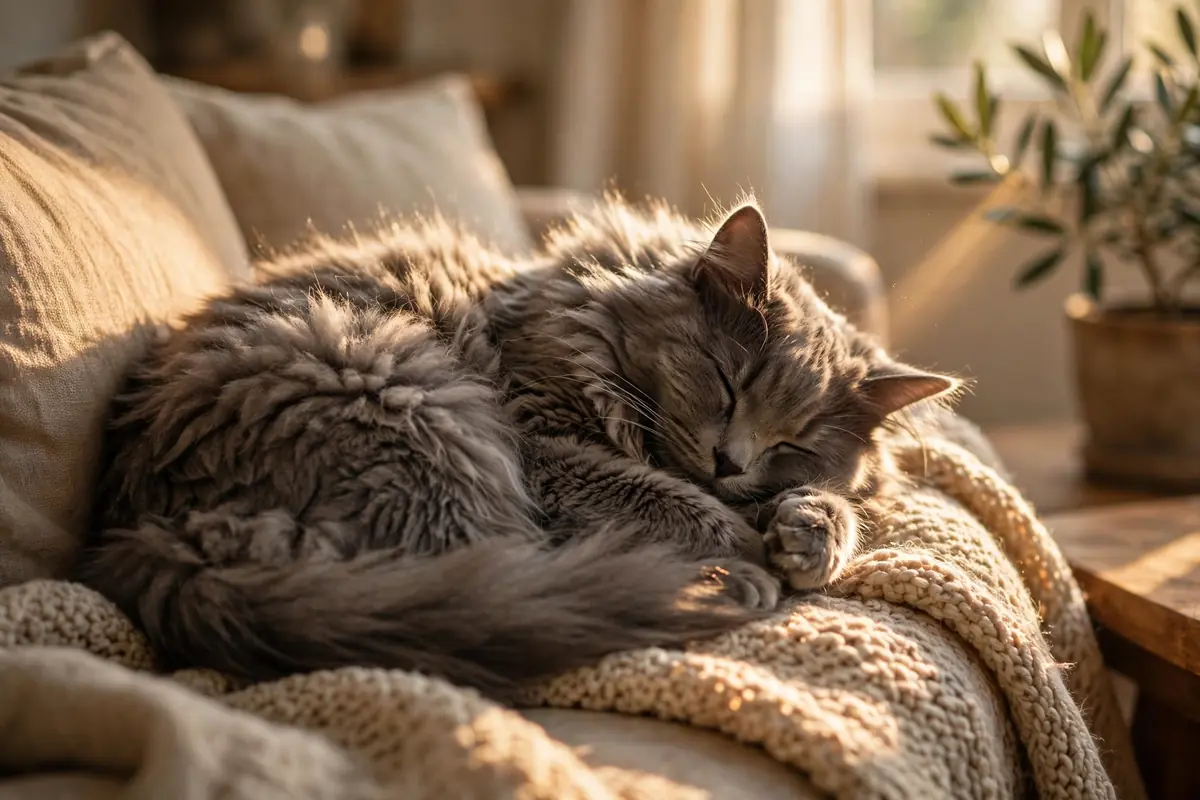
If you have ever looked at the clock at noon and found your cat in exactly the same sunny spot where you left them at eight in the morning, you are not imagining things. A healthy adult cat sleeps 12 to 16 hours a day — kittens and seniors can snooze up to 20. Your cat is not lazy or broken; they are running an ancient biological program written by thousands of years of evolution as a small, energy-efficient predator.
Still, "normal" has limits. This guide covers how much sleep is normal at each life stage, why cats are such champion nappers, what happens inside a sleeping cat's brain, everyday reasons totals creep up — and the warning signs worth a vet visit.
How Much Sleep Is Normal for Cats?
Sleep needs change across a cat's life:
- Kittens (under 6 months): up to 18–20 hours a day. Growth hormone releases mostly during sleep, so marathon naps are literally how kittens grow.
- Adult cats (1–10 years): 12–16 hours a day, broken into many short naps rather than one long stretch.
- Senior cats (11+ years): 16–20 hours. Slower metabolisms and achy joints make rest genuinely more comfortable than activity.
Personality matters too — some cats are simply champion loungers. The number that matters most is not the absolute total, but whether your cat's pattern has changed. A cat who has always slept 16 hours a day is fine; a 12-hour sleeper who suddenly needs 19 deserves a closer look.
The Evolutionary Reason: Your Cat Is a Nap Strategist
Cats are crepuscular hunters — wired to be most active at dawn and dusk, when their wild ancestors' prey was stirring. A hunting cat spends energy in explosive bursts: the stalk, the pounce, the chase. Between bursts, the smartest strategy is to do nothing and conserve every calorie.
Your indoor cat no longer needs to hunt, but the wiring never got the memo. Your cat sleeps through the middle of the day, wakes for the evening "hunt" (a.k.a. the infamous 3 a.m. zoomies), and treats your sofa like a sun-warmed savanna rock. Those marathon naps are not laziness — they are a finely tuned energy budget, perfected over millennia.
This is also why cats nap in short cycles: a predator that slept eight unbroken hours would miss opportunities — or become one. Your cat's twentieth nap of the day is, evolutionarily speaking, a security patrol with breaks.
Cat Naps vs. Deep Sleep: What Is Happening in There?
Not all cat sleep is equal. Roughly 70 percent is light dozing — the "one eye open" state where ears still swivel toward sounds. The remaining 30 percent is deep sleep, including REM sleep, the dreaming stage.
You can spot deep sleep easily: the body goes fully limp, breathing slows, and then the show starts — twitching paws, flicking whiskers, muffled chirps. Researchers believe cats replay the day's experiences during REM sleep, consolidating memories of hunting and exploring. Your sleeping cat may genuinely be chasing dream mice across a dream living room.
Cats in deep sleep can be surprisingly hard to wake and may startle dramatically when roused. Let sleeping cats lie — the deep-sleep phase is when the most important restoration happens.
Age Matters: Why Kittens and Seniors Sleep the Most
Kittens are sleep machines because they are growing. Deep sleep triggers the release of growth hormone that builds muscle, bone, and a developing nervous system. A kitten that plays hard for twenty minutes then collapses is following a perfect play-sleep-grow cycle — never wake a sleeping kitten for play.
Senior cats sleep more for the opposite reason: conservation. An aging body recovers slowly, joints may ache, and senses dull — making rest the path of least resistance. Seniors also seek warmer spots with new determination: sunbeams, heating vents, your lap. Soft, warm, easily reachable beds on the ground floor make their extra rest genuinely better — see our senior cat care guide.
Watch the speed of change: gradual increases over months are normal aging, but a sudden jump — say 13 to 19 hours within a week or two — is worth mentioning to your vet.
5 Everyday Reasons Your Cat Sleeps More Than Usual
Beyond age and evolution, ordinary factors can push the total up:
- Boredom. A cat with nothing to do sleeps. Indoor cats without regular play, window perches, or puzzle feeders log the highest nap totals — the fix is more interesting waking hours, not less sleep.
- Weather and seasons. Shorter winter days and cold weather slow many cats down. Less daylight shifts their crepuscular rhythm, and a warm blanket outcompetes a chilly windowsill. A seasonal bump of an hour or two is normal.
- The post-zoomie crash. After an intense play session, cats recharge with a long, deep nap. The crash after midnight zoomies is a feature, not a bug.
- A full belly. Digestion is drowsy work. Many cats follow the hunt-eat-groom-sleep sequence even when the "hunt" was walking to the food bowl. A long nap after breakfast is completely normal.
- Routine changes. A new schedule, houseguests, or a move can temporarily increase sleep while your cat adjusts. Most cats return to baseline within a week or two.
When Sleeping Too Much Is a Red Flag
Here is the key distinction: sleeping a lot is normal; being lethargic is not. A cat who wakes up bright, stretches, eats with enthusiasm, and plays when invited is fine — even at 17 hours a day. A lethargic cat is hard to rouse and uninterested in food or play during waking hours.
Call your veterinarian if extra sleep comes with any of these:
- A sudden increase in sleep over days rather than months
- Appetite loss or drinking much more or less water
- Hiding in unusual spots and resisting interaction
- Skipping the litter box or straining
- Rapid, labored, or open-mouth breathing
- Weight loss, vomiting, diarrhea, or an unkempt coat from skipped grooming
Trust your gut — you know your cat's baseline better than anyone. A checkup for a false alarm costs far less than waiting on a real problem.
How to Support Healthy Cat Sleep
You should not try to make your cat sleep less. Instead, make their sleep higher quality and their waking hours richer:
- Protect the nap spots. Cats choose sleeping places carefully: warm, elevated, enclosed. Let them keep their claimed spots undisturbed.
- Keep a routine. Feeding and playing at roughly the same times each day regulates their internal clock and leads to more settled rest.
- Play before bedtime. A 10–15 minute evening play session followed by a meal mimics the hunt-eat-groom-sleep cycle — and often buys you a quieter night.
- Enrich waking hours. Puzzle feeders, rotating toys, and bird-watching perches give your cat reasons to be awake — making the naps that follow restorative rather than boredom-driven.
- Keep up vet checkups. Annual exams (twice yearly for seniors) catch slow-developing conditions that first show up as "just sleeping more."
A cat asleep in a sunbeam is a cat whose world feels safe enough to switch off in — one of the nicest compliments your cat can pay you.
Frequently Asked Questions
Is it normal for my cat to sleep 18 hours a day?
Often, yes — kittens and seniors can sleep 18–20 hours a day, and some adults simply sleep more than the typical 12–16. What matters is consistency: a sudden jump from 12 to 18 hours means more than a lifetime of heavy sleeping.
Why does my cat sleep all day and stay awake all night?
Cats are crepuscular — naturally most active at dawn and dusk, when their wild ancestors hunted. Daytime sleeping plus 3 a.m. zoomies is that ancient schedule playing out in your living room. An evening play session can help shift their energy earlier.
Do cats dream when they sleep?
Almost certainly. During REM sleep you may see twitching paws, flicking whiskers, or quiet chirps. Researchers believe cats replay hunting and exploration in their dreams — your sleeping cat may be chasing dream mice.
Why does my cat sleep more in winter?
Shorter days and cold weather slow many cats down, shifting their crepuscular rhythm and making warm naps irresistible. A seasonal increase of an hour or two is normal — unless it comes with appetite loss or withdrawal, which warrant a vet visit.
My cat suddenly sleeps much more than usual — should I worry?
A sudden change deserves attention. Is your cat also eating less, hiding, skipping the litter box, or breathing differently? If extra sleep comes with any of those — or your cat seems hard to wake and uninterested in old favorites — call your veterinarian.