Why Does My Cat Chew My Hair? 5 Reasons
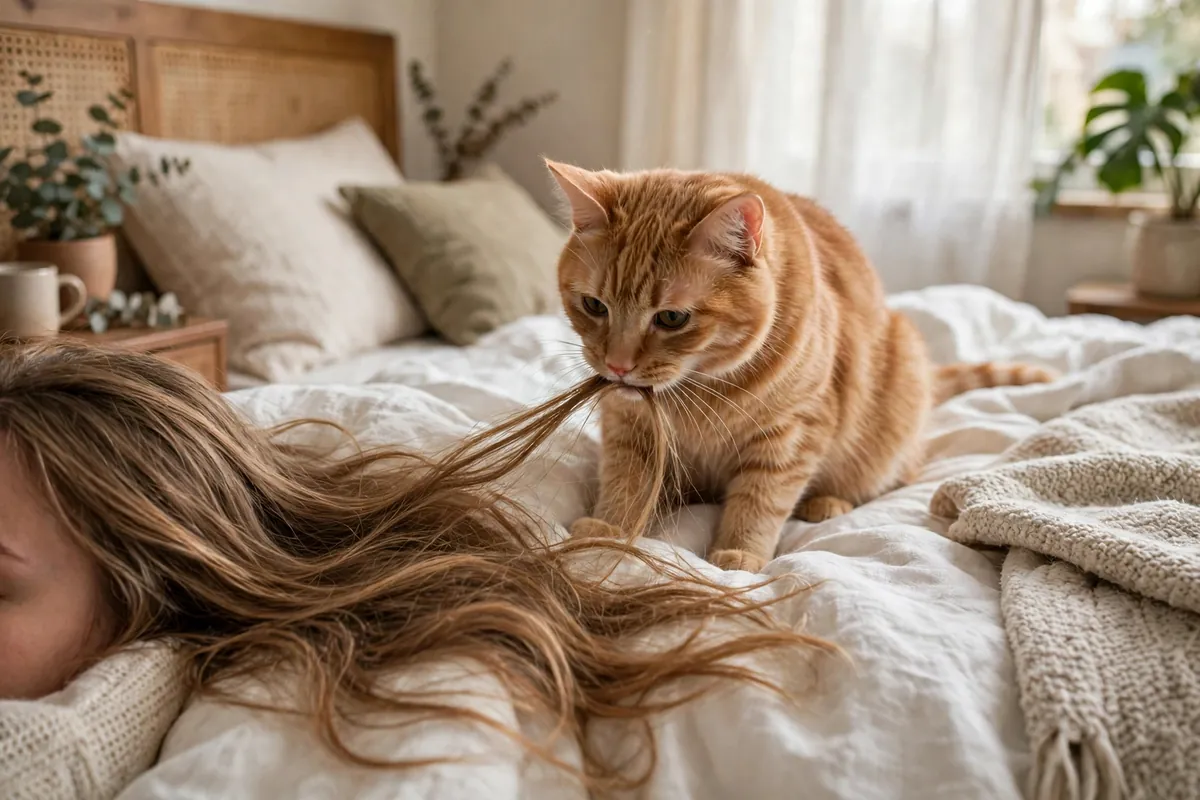
Why does your cat chew your hair? If you have woken up to a cat nibbling your hair at 3 a.m., you are far from alone — hair chewing is a common, usually affectionate cat behaviour, but it can also be a sign of stress, boredom, or a medical issue. Most of the time, your cat is treating you the way cats treat each other: grooming a beloved companion. Sometimes, though, the habit points to something that needs attention, especially if it is intense, compulsive, or paired with eating non-food items.
Understanding which reason applies to your cat is the key to responding well. A gentle nibble during a cuddle session calls for a very different response from frantic hair chewing in a stressed or under-stimulated cat. This guide covers the five most common reasons cats chew hair, how to tell them apart, and practical, kind ways to redirect the behaviour without damaging the bond behind it.
1. Grooming You Like Family
The most common reason cats chew hair is social grooming, known as allogrooming. Cats groom the cats they trust, licking and gently nibbling fur around the head and ears as a bonding ritual. When your cat chews your hair, he is very likely including you in his social group — you are family, and family gets groomed. This is the same instinct behind headbutting, slow blinks, and kneading, and it is generally a compliment.
Grooming-style hair chewing is usually gentle, rhythmic, and paired with purring, kneading, or a relaxed body. It often happens during calm moments: on the sofa, in bed, or while you are reading. Your cat may lick first, then nibble, then lick again, exactly as he would groom another cat. If this describes your cat, the behaviour is normal and healthy, and the goal is management — redirecting it to a more convenient time or place — rather than elimination.
2. Comfort, Nursing Memories, and Stress Relief
Some cats chew hair as a self-soothing behaviour, similar to sucking on a blanket. Kittens separated from their mothers early, or cats who find comfort in oral behaviours, may chew hair, fabric, or their own fur when they are sleepy, anxious, or settling down for the night. The rhythmic motion is calming, much like a child with a comfort blanket, and it often appears at bedtime or during thunderstorms, fireworks, or household changes.
Stress-related hair chewing tends to increase when life changes: a house move, a new pet or baby, a change in routine, or the loss of a companion. If your cat's hair chewing started suddenly alongside hiding, appetite changes, overgrooming, or litter box avoidance, stress is a likely contributor. In these cases, the chewing is a symptom, not the problem — reducing stress with predictable routines, hiding spots, play, and, if needed, a vet-recommended calming product will do more than scolding ever will.
3. Play, Hunting Instinct, and Boredom
Hair moves, dangles, and smells interesting — to a cat, that makes it a toy. Long hair swaying as you move can trigger the same chase-and-grab instinct as a dangling string, especially in young, energetic cats. Play-driven hair chewing is usually bouncy and enthusiastic rather than gentle: your cat may pounce on a ponytail, bat at loose strands, or grab hair during a play session and then dash away.
Boredom amplifies this. A cat without enough play, climbing opportunities, or mental stimulation will invent his own entertainment, and your hair is conveniently attached to his favourite person. If hair chewing happens mostly when your cat is restless, or after long periods alone, increase daily interactive play — two or three short sessions with a wand toy, puzzle feeders, and a window perch or cat tree can transform a bored hair-chewer into a satisfied, sleepy cat.
4. Taste, Texture, and Hair Products
Sometimes the attraction is simply your hair itself. Cats are drawn to the texture of hair, and they may be attracted to the scent or taste of shampoo, conditioner, hair oil, or styling products. Some products contain ingredients cats find appealing, and others leave a residue that tastes interesting to a grooming cat. If your cat only chews freshly washed hair, or only chews one person's hair in a household, the product or the individual scent is probably the draw.
This reason is worth taking seriously for safety: some hair products contain ingredients that are not meant to be ingested, and cats who chew treated hair also ingest whatever is on it. Switching to unscented, simple hair products, rinsing thoroughly, and keeping hair tied up or covered at night can break the habit quickly. If your cat chews hair despite a product change, one of the other reasons is more likely at play.
5. Pica and Medical Causes — When to Worry
The reason that needs a vet is pica: the compulsive eating of non-food items. A cat with pica does not just nibble hair during cuddles — he actively seeks out and swallows hair, fabric, plastic, wool, or other materials, often in large amounts. Pica can be linked to nutritional deficiencies, anaemia, dental pain, gastrointestinal problems, anxiety disorders, or early weaning, and it carries a real risk of intestinal blockage from swallowed material.
Warning signs include swallowing hair rather than just nibbling, chewing many different non-food items, vomiting hairballs frequently, weight loss, lethargy, or changes in appetite or stool. If any of these apply, book a vet visit rather than trying to train the behaviour away. Your vet may check bloodwork, dental health, and diet, and discuss behaviour modification or medication if anxiety is driving the compulsion. Early intervention matters — a blockage is far harder to treat than the habit that caused it.
How to Redirect Hair Chewing Kindly
For normal, affectionate hair chewing, punishment backfires — your cat will not understand why a bonding behaviour suddenly earns a scolding, and it may damage his trust in you. Instead, redirect calmly: when chewing starts, gently move your hair away, offer a chin scratch or a favourite toy, and reward calm behaviour with attention. Keep hair tied up at night if bedtime chewing disturbs your sleep, and give your cat a soft blanket or a grooming brush session as an alternative oral outlet.
Consistency helps more than intensity. Everyone in the household should respond the same way, play sessions should happen daily, and stress triggers should be addressed at their source. Most cats reduce hair chewing significantly with these steps, even if they never stop entirely — and a cat who occasionally nibbles your hair while purring is, at heart, just telling you that you belong to him.
Frequently Asked Questions
Why does my cat chew my hair at night?
Night-time hair chewing is often comfort behaviour — cats settle, groom, and self-soothe before sleep, and your hair is nearby. Tying hair up and offering a soft blanket can help.
Is it safe for my cat to chew my hair?
Gentle nibbling is usually harmless, but swallowing large amounts of hair can contribute to hairballs or, rarely, blockages. Hair products can also be ingested, so unscented products and tied-up hair are safer.
Why does my cat only chew my hair and not others?
Individual scent, hair texture, length, and hair products all play a role. Cats also groom the people they are most bonded with, so a preference for one person is normal.
When is hair chewing a sign of pica?
Suspect pica if your cat actively swallows hair and other non-food items, chews many different materials compulsively, or shows vomiting, weight loss, or appetite changes. See a vet in that case.
How do I stop my cat chewing my hair?
Redirect calmly to a toy or chin scratch, keep hair tied up, increase daily play, and address stress triggers. Avoid punishment — it damages trust without teaching an alternative.