Why Does My Cat Suck on Blankets?
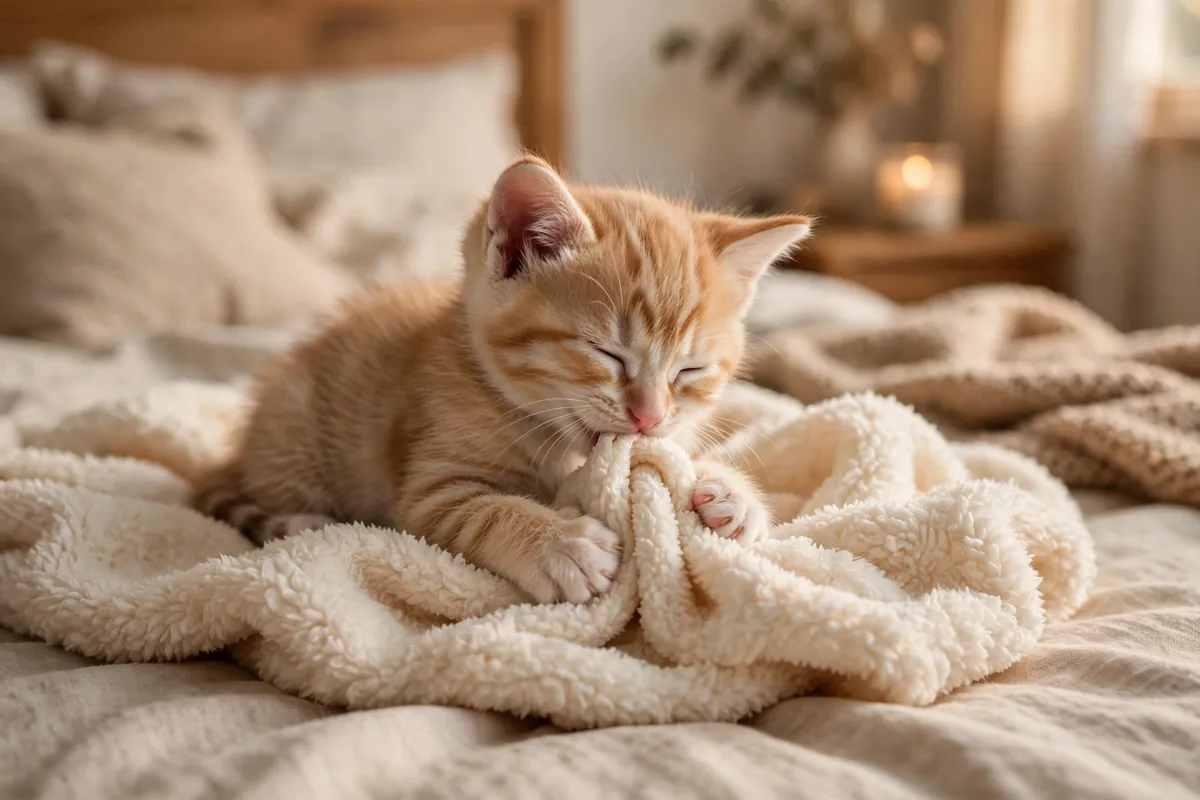
Yes — in most cases, a cat sucking on blankets is perfectly normal behavior. Known as wool-sucking or blanket nursing, it is your cat's way of self-soothing: the rhythmic kneading and gentle suckling mimics the comfort of nursing from their mother as a newborn kitten. Cats separated from their mother too early do it most often, but any cat can pick up the habit — and for the majority, it is simply a cozy ritual, like a favorite childhood security blanket.
If your cat drools contentedly while kneading a fleece throw and suckling one corner of it, you can usually relax — that is comfort behavior at its purest. It only becomes a problem when a cat starts chewing off and swallowing pieces of fabric, or when the suckling turns obsessive and replaces eating, playing, or grooming. In this guide, we cover the most common reasons cats suck on blankets, which breeds are famous for it, safe alternatives, and the red flags that mean it is time to call your veterinarian.
What Is Blanket-Sucking (Wool-Sucking) in Cats?
Blanket-sucking is exactly what it sounds like: your cat mouths, sucks, or chews rhythmically on soft fabric — blankets, sweaters, towels, socks, or stuffed animals — while often kneading and drooling a little. The older name, "wool-sucking," comes from early cases involving woolen clothing; today fleece throws, flannel shirts, or the corner of your duvet are just as popular.
The ritual has a distinctive look: half-closed eyes, a loose relaxed body, paws alternating in the slow kneading motion known as "making biscuits," and soft, repetitive sucking at the fabric. Many cats claim one particular blanket and return to it every night before sleep. It is, in essence, a kitten nursing routine that never fully switched off.
5 Reasons Cats Suck on Blankets
There is no single explanation for every cat, but behaviorists point to a handful of overlapping theories:
1. They were weaned too early
The comfort-nursing theory is the most popular explanation: kittens separated from their mother before about eight weeks never fully finished the nursing phase, so as adults they recreate it with blankets. The soft fabric stands in for their mother's fur, and the kneading mirrors the paw-pressing kittens use to stimulate milk flow. Not every early-weaned cat becomes a blanket-sucker, but veterinarians often ask about weaning age when the topic comes up.
2. It is pure self-soothing
Even for cats weaned right on schedule, suckling can become a comfort habit — feline stress relief. The repetitive motion calms them the way thumb-sucking calms a human child. Cats often do it at bedtime, after a stressful event like a vet visit, or while settling into a favorite nap spot. If your cat only suckles when winding down and otherwise lives a normal, playful life, think of it as their way of tucking themselves in.
3. Breed tendencies play a role
Anecdotally, some breeds are famous blanket-suckers — especially Siamese and Burmese, along with their Oriental relatives. Behaviorists note these breeds seem prone to oral fixations in general, from wool-sucking to enthusiastic over-grooming. Nobody knows exactly why; it may be genetic, or simply that these sensitive, people-oriented cats form stronger comfort rituals. If your Siamese mix nurses your sweaters, you are in very crowded company.
4. It relieves stress and anxiety
Cats under stress — a recent move, a schedule change, tension with another pet — sometimes escalate a casual habit into a full coping mechanism. The key clue is timing: if the suckling appeared suddenly or intensified after a household change, anxiety is a likely driver, and addressing the underlying stress matters far more than fighting the symptom.
5. They just like the texture
Sometimes there is no deep psychological story: certain fabrics simply feel good. Many cats prefer soft, slightly fuzzy materials like fleece, wool, or flannel — and some seem drawn to the faint taste of detergent or human skin on worn clothing. If your cat ignores every blanket but your favorite hoodie, texture (and your scent) is probably the whole explanation.
When Blanket-Sucking Is Completely Harmless
You probably do not need to change a thing if your cat suckles without swallowing fabric, sessions happen at relaxed times with a loose, content body, appetite, play, grooming, and litter box habits are normal, and your cat is easy to distract. Millions of cats suckle blankets their entire lives without a single problem — for them, the blanket is simply a security object. You will find it often paired with kneading, another comfort ritual we cover in our Cat Behavior guides.
5 Red Flags That Mean You Should Step In
It crosses the line from quirk to problem when you notice any of these signs:
- Your cat is chewing off and swallowing fabric. Ingested thread and fabric can cause linear foreign body obstructions in the intestines — a genuine surgical emergency in cats. Do not wait on this one.
- The suckling has become compulsive — hours a day, to the exclusion of eating, playing, or interacting with you.
- Your cat is suckling its own body, creating bald patches or sores.
- An adult cat suddenly starts out of nowhere, which can signal new stress, pain, or — in seniors — cognitive changes.
- Your cat cannot be redirected at all — calling their name, offering a toy, or gently moving them gets no response.
If fabric ingestion is happening, remove access to chewable fabrics right away and call your vet the same day.
How to Give Your Cat Safe Alternatives
Rather than punishing the behavior — which only adds stress — redirect it toward safer outlets:
- Designate a "snuggle blanket." Choose one machine-washable fleece blanket as the official one, and reward your cat for using it. Supervise at first to confirm they are suckling, not eating, the fabric.
- Offer safe chew toys. Rubber chew toys, silvervine sticks, and catnip kickers give orally fixated cats something safe to mouth. Rotate them so they stay interesting.
- Increase playtime. Two or three short wand-toy play sessions a day burn off the restless energy behind compulsive habits — a tired cat is a content cat.
- Build calming routines. Predictable feeding times, a quiet sleeping spot, and a vet-approved pheromone diffuser can lower the background anxiety that drives stress suckling.
- Protect the tempting stuff. Keep wool sweaters, socks, and throw pillows out of reach until the habit is redirected.
Our rule at Purrfect Paws: meet the need, don't fight the cat.
When to Talk to Your Vet or a Behaviorist
Book a vet visit if you notice fabric ingestion, compulsive intensity, self-directed suckling that damages skin or fur, or a sudden new onset in an adult or senior cat. Your veterinarian will first rule out medical contributors — dental pain, gastrointestinal upset, and skin conditions can all masquerade as behavioral problems, and cognitive decline can trigger new oral habits in seniors.
If the medical workup is clean and the behavior is truly compulsive, ask for a referral to a certified animal behaviorist. Compulsive disorders sometimes respond to environmental changes alone; in persistent cases, your vet may discuss anti-anxiety support as part of a broader plan. The sooner you intervene, the easier these patterns are to unwind — so don't hesitate to call about "just" blanket-sucking — vets hear it often.
Frequently Asked Questions
Is it normal for kittens to suck on blankets?
Very normal — especially in kittens separated from their mother early. Suckling is a leftover nursing instinct, and most kittens do it while kneading. Many outgrow the habit as they mature, while others keep it as a harmless adult comfort ritual.
Why does my cat drool while suckling a blanket?
Drooling while blanket-sucking mirrors the salivary response of nursing kittens — a sign of deep contentment, not illness. Drooling that starts suddenly, or comes with bad breath or appetite loss, deserves a vet check.
Will my cat grow out of blanket-sucking?
Some do, especially when the habit started in kittenhood — it often fades as they mature. Others suckle blankets their entire lives without any problem. The habit is harmless as long as no fabric is swallowed; a sudden increase in an adult cat is worth investigating.
How do I stop my cat from sucking on my clothes?
Do not punish the behavior — redirect it. Give your cat a designated fleece snuggle blanket, store the tempting clothes out of reach, and reward them for using the approved blanket. More play and a predictable routine also reduce the urge. Most cats switch within a couple of weeks.
Can blanket-sucking be dangerous?
Yes — but only when fabric is actually swallowed: ingested thread or cloth can cause a linear foreign body obstruction, a surgical emergency. Suckling without swallowing is harmless. Watch for chewed holes, missing fabric, vomiting, or appetite loss, and call your vet promptly.