Why Does My Cat Drool? 7 Reasons
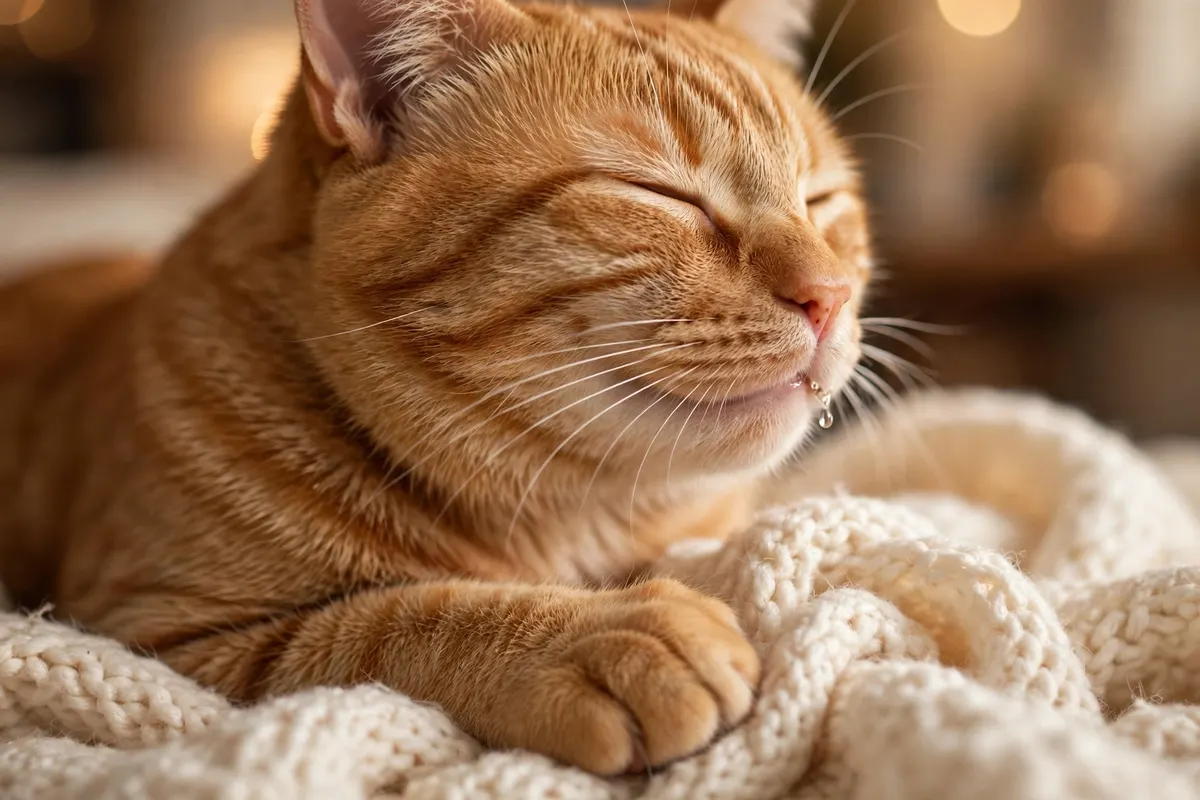
You are stroking your cat, they are purring like a tiny engine and kneading your lap — and then you feel it: a wet spot. So why does your cat drool? In most cases the answer is wonderfully simple — drooling is a sign of pure contentment, especially when paired with purring and kneading. But occasionally drool is a clue that something is wrong, from sore teeth to nausea to a swallowed foreign object. This guide covers the 7 most common reasons cats drool, how to tell happy drool from a health warning, and when to call your veterinarian.
Cats are not natural droolers the way some dog breeds are. A healthy cat's mouth is usually dry, so new or heavy drooling deserves a moment of your attention. The good news: the context almost always tells the story. A cat drooling on a favorite blanket during cuddle time is worlds apart from a cat drooling while pawing at their mouth and refusing dinner.
1. Contentment and Kneading Bliss
This is the number one cause of drooling in cats, and it is nothing to worry about. Many cats drool when they are extremely relaxed — typically while being petted, held in a favorite lap, or kneading a soft blanket. The purring, the slow blinks, the rhythmic paw presses, and the little string of drool often arrive together as one package of feline bliss.
The behavior traces back to kittenhood. Nursing kittens knead their mother's belly to encourage milk flow, and the whole experience is associated with comfort and safety. Some cats carry that association into adulthood, and drooling is simply the salivary glands joining in. (Curious about that kneading-purring-drooling combo? Read our explainer on cat smurgle.)
2. Dental Disease and Sore Teeth
By middle age, a large share of cats show some form of dental trouble — inflamed gums, tartar buildup, or tooth resorption (a painful condition where the tooth structure itself breaks down). A cat with a sore mouth often drools because swallowing hurts or because inflamed gums produce extra saliva. This is one of the most common medical causes of drooling in cats.
Watch for supporting clues: bad breath, red gums, eating on one side of the mouth, or a cat who approaches the food bowl eagerly and then walks away. Dental disease does not improve on its own — it needs a professional cleaning and sometimes tooth extraction under anesthesia. If your cat is drooling and avoiding food, see our guide on why a cat stops eating and book a dental checkup.
3. Mouth Ulcers and Oral Sores
Painful sores inside the mouth — from feline stomatitis, an infected tooth root, a bite wound, or a mild viral flare-up — make saliva flow freely. Cats with mouth ulcers drool almost constantly, and the saliva may look thicker than usual or be tinged with blood. These cats often shake their heads, paw at their faces, or make smacking sounds while trying to eat.
Stomatitis, a severe immune-driven inflammation of the mouth lining, is particularly notorious: affected cats can drool heavily while refusing food entirely. Ulcers and sores need veterinary diagnosis to identify the cause.
4. Nausea and Upset Stomach
Just like people, cats salivate more when they feel nauseous. If your cat is drooling shortly before or after vomiting, while retching, or after gobbling food too fast, nausea is the likely story. A bout of stomach upset from eating something odd or a sudden food change can trigger the drool-and-retch sequence.
Short-lived nausea that resolves within a few hours, with the cat returning to normal eating and play, is usually not alarming. But repeated vomiting, drooling that goes on for hours, or drooling combined with lethargy points to something deeper — track the episodes, since that timeline helps your vet enormously.
5. Stress and Fear
Some cats drool when they are frightened or anxious. The classic trigger is the car ride to the vet: the cat is panting, wide-eyed, maybe vocalizing, and drooling at the same time. New environments, loud noise, unfamiliar guests, or a new pet in the house can produce the same stress response. The drooling is part of the body's fight-or-flight reaction and usually stops once the cat feels safe again.
The fix here is comfort, not medicine. Give the cat a quiet hiding place, keep routines predictable, and ask your vet about calming strategies for travel or big household changes.
6. Something Stuck in the Mouth or Throat
A piece of string, a grass blade, a bit of bone, or a tooth fragment lodged between teeth can make a cat drool heavily. These cats often paw frantically at their mouths, rub their faces on the floor, or gag. Linear objects like string or thread are especially dangerous because they can anchor under the tongue while the free end slides into the intestines.
Never pull on string or thread hanging from your cat's mouth — it may be wrapped around something internal, and pulling can cause serious damage. Sudden frantic drooling with pawing at the mouth is a same-day vet visit.
7. Heat, Excitement, and Overstimulation
Rarely, some cats drool when overheated or overstimulated. A cat who has been playing hard in a warm room, or one who gets very wound up during intense petting, may start drooling as the body works to cool down. A few cats also drool briefly after tasting something bitter, like a medication or a nibbled houseplant leaf.
This type of drooling is brief and stops once the cat rests or the unpleasant taste fades. The exception is the plant or chemical nibble: if your cat may have tasted something toxic, drooling is the warning flag to check what they got into and call your vet right away.
When Drooling Is a Red Flag
Happy-context drool needs no action. Medical drool does. Call your veterinarian promptly — or head to an emergency clinic — if you notice any of the following:
- Drooling that starts suddenly in a cat who has never drooled before.
- Thick, foul-smelling, or blood-tinged saliva.
- Drooling combined with refusing food or water, especially for more than 24 hours.
- Pawing at the mouth, head shaking, gagging, or repeated swallowing.
- Swelling of the face, lips, or under the jaw.
- Difficulty breathing, open-mouth panting at rest, or collapse.
- Known or suspected exposure to a toxin or poisonous plant.
Trust your instincts. You know your cat's normal better than anyone.
What to Do If Your Cat Is Drooling
Start with the context: what was happening when the drool started? Cuddle-time drool on a familiar blanket almost always means a content cat. Drool that appears out of nowhere, during eating, or alongside other symptoms means investigation. Offer water and a small amount of a favorite wet food — a cat who eats normally is reassuring, while a cat who wants food but cannot manage it points to mouth pain.
Wipe your cat's chin and chest gently with a soft damp cloth, since constant moisture can irritate the skin. Never treat drooling with home remedies meant for human mouth problems — many are unsafe for cats. If the cause is not obvious happiness, and especially if any red-flag sign above is present, call your vet.
Frequently Asked Questions
Is it normal for cats to drool?
Yes — many cats drool when extremely relaxed, especially while kneading or being petted. It is only a concern when it starts suddenly, looks excessive, or comes with symptoms like refusing food or lethargy.
Why does my cat drool when purring?
Drooling while purring and kneading is a sign of deep contentment. It traces back to kittenhood: nursing kittens knead their mother while feeding, and many adult cats replay that blissful state when they feel safe and happy.
Why is my cat drooling and not eating?
Drooling plus a sudden loss of appetite often points to mouth pain — such as dental disease, a sore tooth, or mouth ulcers. A cat that stops eating for more than 24 hours should see a veterinarian.
Can stress make a cat drool?
Yes. Fear and anxiety — car rides, vet visits, loud noises, or a new pet in the house — can make a cat drool as part of the stress response. It usually stops once the cat calms down somewhere safe.
When is cat drooling an emergency?
Seek urgent veterinary care if drooling is sudden and heavy, smells foul or contains blood, or comes with swelling, difficulty breathing, repeated vomiting, or known exposure to a toxin or poisonous plant.