Why Does My Cat Eat Grass and Then Vomit?
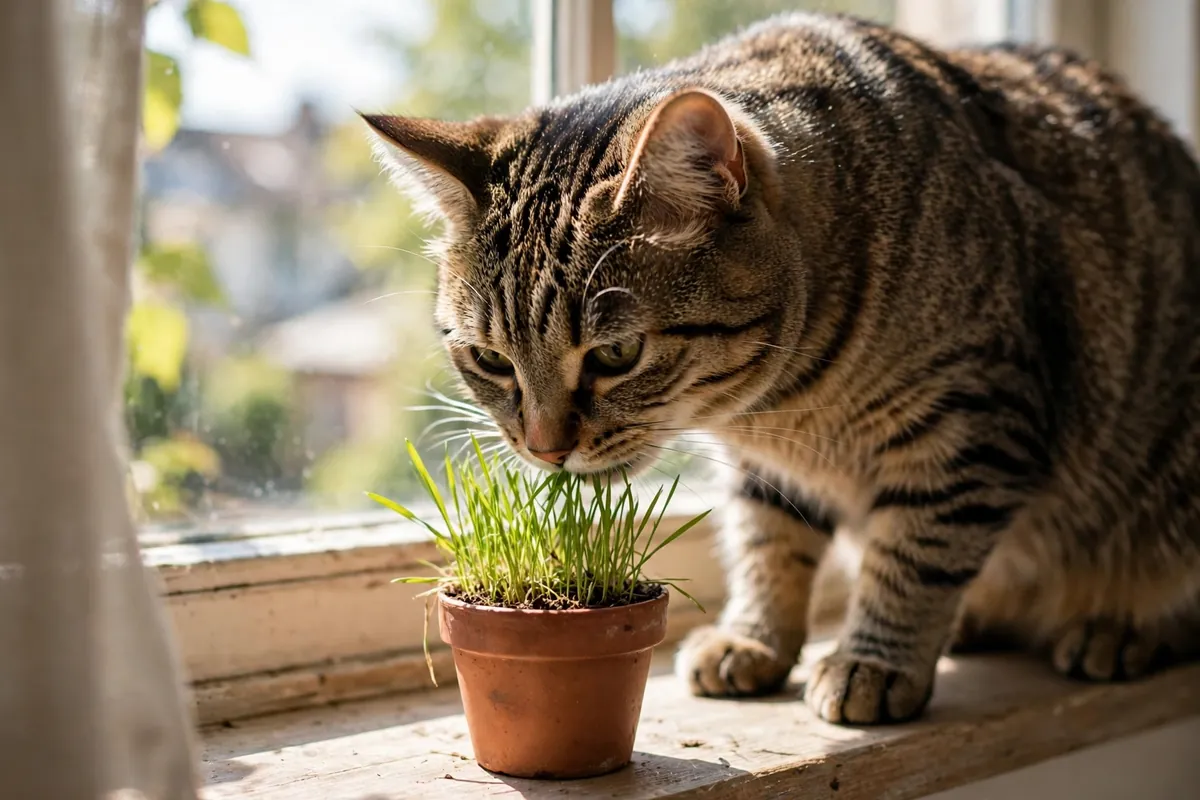
If you have ever watched your cat nibble grass in the garden and then vomit it back up, you have probably wondered whether something is wrong. It looks alarming, and it is natural to assume your cat felt sick first. In most cases, though, grass eating is completely normal cat behavior — and the vomiting that sometimes follows is usually harmless too. This guide explains what researchers actually think is going on, when grass eating is a warning sign, and how to grow safe cat grass at home.
The Old Myth: Cats Eat Grass Because They Feel Sick
For years, the popular explanation was simple: a cat with an upset stomach eats grass to make itself vomit and feel better. But modern research does not support it. In one well-known survey, researchers found that most cats who ate grass showed no signs of illness beforehand, and only a minority actually vomited afterwards. Grass eating usually happens in healthy cats, and vomiting is the exception rather than the rule.
That finding flips the old story on its head. Instead of a sick cat self-medicating, grass eating looks like an ordinary, instinctive behavior — something cats have done for thousands of years, and kittens often start nibbling grass without ever being taught. It appears to be hardwired, not a cry for help.
Why Do Cats Eat Grass? 4 Likely Reasons
Scientists have not settled on a single answer, but several explanations fit the evidence well:
- Fiber and digestion. Grass contains insoluble fiber, which may help food move through the digestive tract and support normal digestion.
- Hairball control. Cats swallow a lot of fur while grooming, and grass blades may help bind loose hair so it can be vomited up as a hairball or passed along, rather than building into a blockage.
- Instinct and enrichment. Chewing grass is a form of natural enrichment. Indoor cats with little stimulation may be especially drawn to plants for this reason.
- Taste and texture. Some cats simply seem to enjoy it — fresh grass blades may taste pleasant, and tearing them off is satisfying in itself.
None of these reasons means your cat is ill. A healthy cat that grazes occasionally and vomits rarely is almost certainly just being a cat.
Why Does Vomiting Happen After Eating Grass?
When vomiting does follow grass eating, the cause is usually mechanical rather than medical. Grass blades are not easily digested and can irritate the stomach lining, so the stomach expels them, sometimes with a hairball or a small amount of food. The cat usually bounces straight back to normal afterwards.
That quick recovery is reassuring: a cat that vomits grass and then carries on normally is very different from one that vomits repeatedly, hides, or refuses food.
When Grass Eating IS a Concern
Most grass eating is harmless, but a sudden change in the pattern deserves attention. Contact your veterinarian if you notice any of the following:
- Your cat suddenly starts eating grass obsessively or far more often than usual.
- Vomiting more than once or twice a week, or several times in one day.
- Vomit contains blood, or looks like coffee grounds.
- Your cat is losing weight, eating less, drinking much more, or has diarrhea.
- Lethargy, hiding, or stopped grooming.
- Suspected toxic plant or treated grass eaten.
A sudden appetite for grass combined with other symptoms can point to an underlying issue such as inflammatory bowel disease or intestinal parasites, which your vet can check with an examination and simple tests.
Toxic Plants to Keep Away From Your Cat
The real danger of outdoor grazing is not grass itself, but what grows next to it: many common garden plants are toxic to cats, and a nibbling cat may not know the difference. The most dangerous include lilies of all kinds — even a small nibble or licking pollen can cause kidney failure — plus daffodils, tulips, sago palm, and azaleas. Indoors, watch out for lilies in bouquets, pothos, and monstera.
Equally important is what has been sprayed on the grass: lawn grass treated with weed killers, pesticides, or fertilizers can be harmful even in small amounts. If you are unsure whether your lawn has been treated, offer indoor cat grass instead, and call your vet or a pet poison helpline right away if your cat eats an unknown plant.
How to Grow Safe Cat Grass at Home
Offering your own cat grass is the easiest way to let your cat enjoy this instinct safely. Wheatgrass and oat grass are the most popular choices, and both are simple to grow on a windowsill. Here is how:
- Pick your seeds. Buy untreated wheatgrass, oat grass, or barley grass seeds. Avoid seeds labeled as treated or coated.
- Choose a shallow pot. Use a pot with drainage holes, about 10 to 15 centimeters wide — heavy ceramic is best, since cats knock light pots over.
- Fill with soil. Use plain, organic potting soil with no added fertilizer. Moisten it lightly before planting.
- Sow and cover. Scatter seeds thickly over the surface, press them gently in, cover with a thin layer of soil, and mist with water.
- Keep it warm and bright. Place the pot in bright, indirect light and keep the soil damp but not soggy — sprouts should appear within a few days.
- Offer at about 10 centimeters tall. Once the blades reach roughly 10 centimeters, place the pot where your cat can reach it. Replace the pot every two to three weeks, or when the grass starts to yellow.
Most cats nibble a few blades and walk away. If yours demolishes the whole pot in one sitting, remove it and offer it again later.
What to Do After Your Cat Vomits
If your cat vomits grass, stay calm and follow these simple steps:
- Check the vomit for grass blades, hairballs, blood, or foreign objects — a pile of grass with a hairball is usually no cause for alarm.
- Watch your cat. If your cat is eating, drinking, and grooming normally within a few minutes, that is a good sign.
- Withhold food briefly. If your cat vomits more than once, skip the next meal, offer small amounts of water, and reintroduce a small, bland meal after a couple of hours if your cat seems settled.
- Do not give human medicines. Antacids, anti-nausea drugs, and painkillers meant for people can be toxic to cats.
- Call the vet if vomiting continues. Repeated vomiting, vomiting with other symptoms, or a cat that cannot keep water down needs same-day veterinary attention.
When to Call the Vet: Red-Flag Checklist
Call your veterinarian promptly if your cat shows any of these red flags:
- 🚩 Vomiting more than twice in 24 hours, or returning over several days.
- 🚩 Blood in the vomit, or dark, grainy vomit like coffee grounds.
- 🚩 Your cat cannot keep water down, or has not drunk anything for 12 hours.
- 🚩 Lethargy, hiding, weakness, or a refusal to eat for more than 24 hours.
- 🚩 Diarrhea alongside vomiting, especially with blood.
- 🚩 Signs of pain: crying, hunching, a tense belly, or reluctance to move.
- 🚩 You know or suspect your cat ate a toxic plant or treated grass.
When in doubt, call your vet — vets would much rather reassure you about a grass-related vomit than treat a crisis that waited too long.
Frequently Asked Questions
Is it normal for cats to eat grass and vomit?
Yes, usually. Many healthy cats eat grass occasionally and sometimes vomit it back up, often with a hairball. It becomes a concern only when vomiting is frequent or comes with other signs of illness.
Do cats eat grass because they feel sick?
Not usually. Research suggests most cats are not sick before eating grass — it appears to be normal, instinctive behavior, possibly linked to fiber, hairball control, or taste and texture.
What kind of grass is safe for cats?
Wheatgrass, oat grass, and barley grass are commonly grown as cat grass and are safe for cats. Avoid lawn grass treated with pesticides, herbicides, or fertilizers, and keep toxic plants like lilies far away from cats.
How often is too often for a cat to vomit after eating grass?
Occasional vomiting after grass is usually fine, but vomiting more than once or twice a week, or vomit containing blood or bile, should be checked by a veterinarian.
Can I stop my cat from eating grass?
You do not usually need to. Offering safe indoor cat grass gives your cat a controlled option and reduces the chance they will chew unknown plants outside. If grass eating suddenly increases a lot, ask your vet about it.