Cat Dandruff: Causes and 5 Fixes
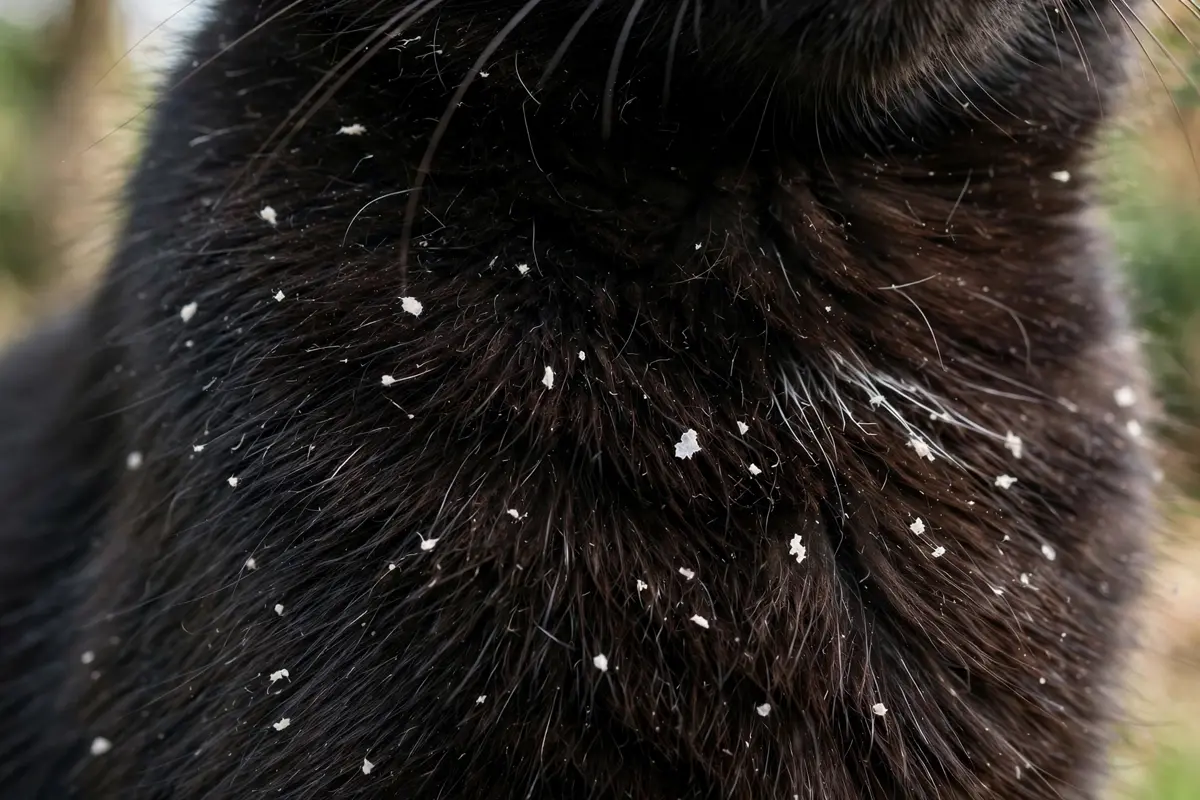
You are stroking your cat, enjoying that soft fur — and then you notice it: tiny white flakes scattered across a dark coat, like snow that should not be there. Cat dandruff is almost never an emergency, but it is always a message. Your cat's skin is telling you something is slightly off, whether that is dry winter air, a diet missing key fats, or simply that she can no longer groom one hard-to-reach spot.
The good news is that most dandruff clears up with a few simple changes at home. In this guide we will look at what those white flakes actually are, the 7 most common causes, 5 fixes that genuinely work, and the warning signs that mean the flakes deserve a vet's attention rather than a brush.
What Is Cat Dandruff, Really?
Dandruff is simply dead skin cells shedding faster than usual. A small amount of shedding is completely normal — skin renews itself constantly — but when the flakes become visible, numerous, or accompanied by itching and redness, the skin's balance is off. On dark-coated cats it shows up as obvious white specks; on light cats you may feel a gritty texture before you see anything.
One special case to know about: "walking dandruff" (cheyletiellosis) is not dandruff at all but a contagious skin mite whose movement makes the flakes appear to crawl. If the flakes seem to shift on their own, or several pets in the house are flaky and itchy at once, skip the home fixes and see your vet — mites need proper treatment.
7 Common Causes of Dandruff in Cats
- Dry indoor air. The number-one cause, especially in winter or in air-conditioned homes. Low humidity dries the skin exactly the way it chaps human hands, and the flakes follow.
- Dehydration. Cats are famously reluctant drinkers, and a cat that does not drink enough often shows it in the skin first. Dry food-only diets without adequate water intake are a common setup for flaky skin.
- Diet low in fatty acids. Skin health depends heavily on omega-3 and omega-6 fatty acids. A low-quality diet, or a diet that has gone stale (fats oxidize once a bag sits open for months), can leave the coat dull and flaky within weeks.
- Obesity and poor grooming reach. Overweight cats physically cannot twist around to groom their lower back and the base of the tail. Dead skin and loose fur accumulate exactly where the tongue cannot reach — which is why dandruff so often appears along the spine of chubby cats.
- Allergies. Food sensitivities or environmental allergies (dust mites, pollen) can inflame the skin and speed up cell turnover. Allergic dandruff usually comes with itching, over-grooming, or red patches.
- Parasites. Fleas, mites, and even ringworm (a fungus, despite the name) can all cause flaking. If dandruff appears alongside scratching, scabs, or patchy hair loss, parasites move to the top of the suspect list.
- Underlying illness. In senior cats especially, persistent dandruff can be an early outward sign of conditions like diabetes, hyperthyroidism, or kidney disease, which all affect skin and coat quality. New, stubborn dandruff in an older cat is worth mentioning at the next checkup.
5 Proven Fixes for Cat Dandruff
- Brush regularly — the right way. Gentle brushing 2–3 times a week lifts dead skin and loose fur, spreads the skin's natural oils along the hair shaft, and stimulates blood flow to the skin. For short-haired cats a soft rubber brush works beautifully; long-haired cats need a wide-tooth comb to reach the undercoat. Always brush in the direction of hair growth, and go easy over bony areas.
- Add moisture to the air. If your home's air is dry, a small humidifier in the room where your cat sleeps can transform flaky skin within a week or two. Aim for indoor humidity around 40–50%. It is one of the simplest fixes there is, and your own skin will thank you too.
- Upgrade hydration. Encourage drinking with fresh water changed daily, a bowl placed away from the food dish (cats prefer separation), and wet food added to the diet. A cat water fountain works wonders for reluctant drinkers — many cats drink far more from moving water. Better hydration shows in the skin surprisingly fast.
- Feed the skin from the inside. Make sure your cat eats a complete, high-quality diet with named animal protein and adequate fat. For extra support, ask your vet about an omega-3 supplement (fish oil formulated for cats). Give any dietary change 4–6 weeks — skin and coat turn over slowly, so patience is part of the treatment.
- Bathe only when needed — and gently. Most cats never need baths, and over-bathing strips natural oils and makes dandruff worse. But a cat with heavy flaking can benefit from an occasional bath with a cat-specific, soap-free or oatmeal-based shampoo — never human shampoo or anti-dandruff products, which are too harsh and often contain ingredients toxic to cats. Lukewarm water, a calm approach, and a thorough rinse matter more than scrubbing.
When Dandruff Means a Vet Visit
Home fixes handle the majority of cases, but book a vet appointment if you notice any of the following:
- Dandruff with intense scratching, scabs, redness, or open sores.
- Patchy hair loss or a foul/yeasty smell from the skin.
- Flakes that seem to move on their own (possible mites) or dandruff spreading to other pets.
- Sudden dandruff in a senior cat, especially with increased thirst, weight loss, or appetite changes.
- No improvement after 4–6 weeks of consistent home care.
Your vet may do a skin scraping, check for parasites or fungus, or run bloodwork if an internal cause is suspected. Most diagnoses are quick and most treatments straightforward. For more skin and coat guidance, explore our Cat Health section, or return to the Purrfect Paws homepage for the full library.
Frequently Asked Questions
Is cat dandruff contagious to humans or other pets?
Ordinary dandruff is not contagious at all — it is just dry skin. The exception is “walking dandruff,” a mite infestation that spreads between pets (and occasionally causes a temporary itchy rash in people). If flakes appear to move, see your vet.
Can I use human anti-dandruff shampoo on my cat?
No. Human shampoos — including anti-dandruff formulas — have the wrong pH for cat skin and often contain zinc pyrithione, coal tar, or fragrances that are irritating or toxic to cats. Use only shampoos made specifically for cats.
Does my cat’s diet really affect dandruff?
Very much so. The skin is one of the first places a poor diet shows. Adequate quality protein and omega fatty acids keep skin supple; deficiencies show up as dull, flaky coats. Diet changes take 4–6 weeks to show in the coat, so be patient.
How long does it take for cat dandruff to clear up?
With the right fix — humidity, brushing, hydration, diet — most mild dandruff visibly improves within 2–4 weeks and resolves in about 6 weeks. If nothing changes after 6 weeks of consistent care, have your vet take a look.
My overweight cat has dandruff along her lower back — why there?
That pattern is classic. Overweight cats cannot reach their lower back and tail base to groom, so dead skin cells and loose fur pile up exactly there. Gentle brushing of that area plus a vet-guided weight plan usually clears it up.