How to Tell If Your Cat Has Fleas
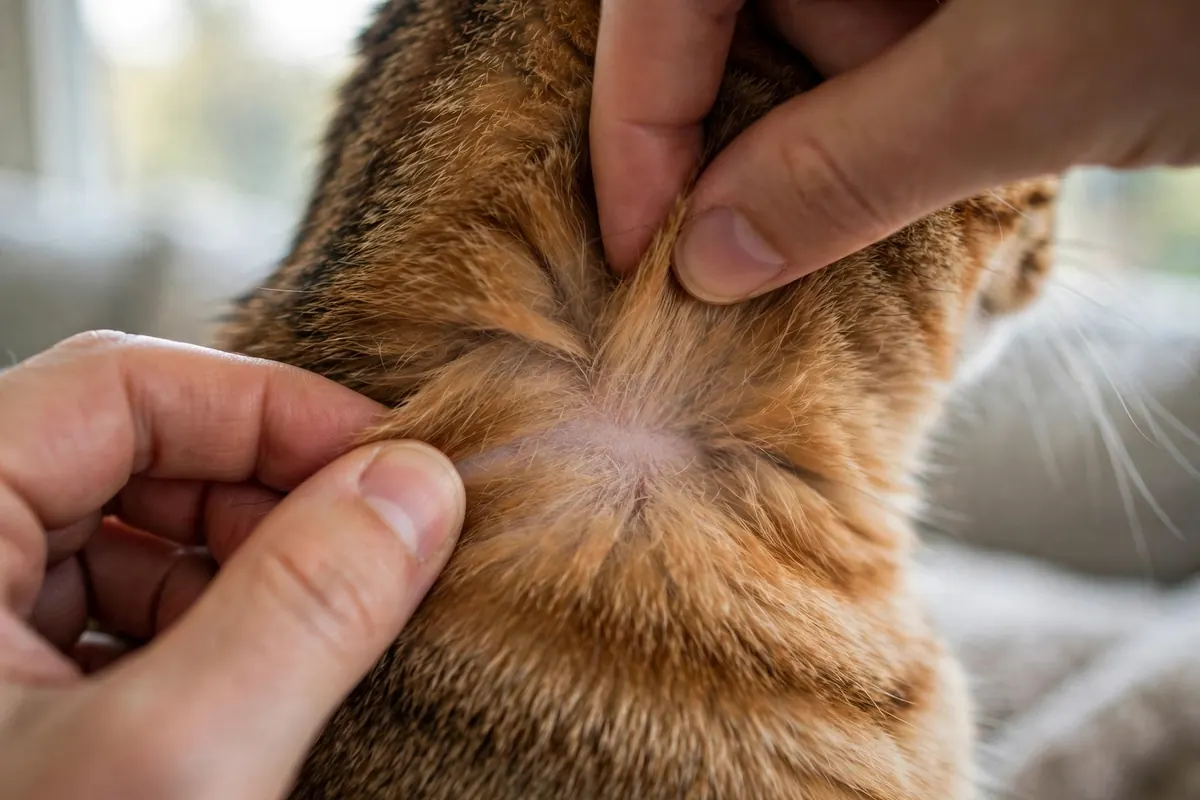
If your cat is scratching more than usual, chewing at the base of their tail, or losing small patches of fur, fleas are the most likely culprit. Fleas are the number one external parasite in domestic cats — indoor and outdoor alike. The fastest way to confirm your suspicion is the flea dirt test: part the fur near the base of the tail, collect any tiny black specks onto a damp white paper towel, and watch — if they smear reddish-brown, that is flea dirt (flea droppings made of digested blood), and your cat has fleas.
The tricky part is that many cats with fleas barely scratch at first, and the fleas themselves are tiny, fast, and easy to miss against dark fur. This guide covers the clearest signs of fleas in cats, where to look on your cat's body, how to run the flea dirt test at home, and the vet-approved steps for getting rid of fleas — including why treatment takes several weeks even when the product works perfectly.
What Fleas Actually Look Like on a Cat
An adult flea is only 1 to 3 millimeters long — roughly the size of a sesame seed — flat, reddish-brown, and wingless, moving with quick sideways hops that make them hard to catch in the act. On a white or cream cat you might spot them scurrying near the skin; on dark fur, you may never see one.
That is why vets and groomers hunt for the evidence rather than the fleas themselves: flea dirt, irritation, and the pattern of where your cat is scratching. If you can find flea dirt, you have found fleas — it is the most reliable at-home proof there is.
The Flea Dirt Test: A 2-Minute Check You Can Do at Home
Flea dirt is flea feces — mostly digested blood from your cat. It looks like tiny black pepper-like specks on the skin or in the fur. Here is how:
- Settle your cat on your lap and gently part the fur, especially at the base of the tail.
- Run a fine-toothed flea comb (or your fingertips) through the fur and collect any black specks onto damp white paper towel.
- Press and smear the specks against the wet paper.
- If the specks dissolve into reddish-brown streaks, that is flea dirt — confirmation of fleas. Ordinary dirt or dandruff will not turn red.
No flea dirt on the first pass does not mean no fleas — light infestations leave very little behind. Try the back of the neck and behind the ears, or repeat the test the next day, and combine it with the behavioral signs below.
7 Tell-Tale Signs Your Cat Has Fleas
- Sudden, intense scratching. Every cat scratches, but flea-driven scratching is frantic, repetitive, and focused on the head, neck, and base of the tail. If your cat has suddenly become a full-time scratcher, fleas are the prime suspect.
- Chewing or biting at the skin. Cats with fleas often nibble or yank at their fur, especially along the back and around the tail.
- Hair loss and thinning patches. Flea-driven over-grooming leaves patchy, thinned-out areas, most often on the hind legs, lower back, and belly. Some cats develop flea allergy dermatitis — an allergic reaction to flea saliva that can cause dramatic bald patches and scabs from just a few bites.
- Scabs and red, irritated skin. Look for tiny crusty bumps (miliary dermatitis) along the neck, back, and rump — a classic fingerprint of a flea problem.
- Pale gums or unusual tiredness. In heavy infestations — especially in kittens — fleas drink enough blood to cause anemia. Pale gums, lethargy, and weakness in a small kitten are urgent signs.
- Tiny black specks on bedding. Check where your cat sleeps: flea dirt and pale flea eggs often shake out of the coat onto beds and blankets. Dark specks on a white cat bed are a common first discovery.
- Restlessness and over-grooming. A cat that cannot settle or grooms obsessively for hours may be dealing with flea irritation. Over-grooming can be mistaken for stress or boredom, so rule fleas out first.
The Best Places to Check for Fleas on Your Cat
Fleas cluster where skin is warm and fur is dense. Focus on these hot spots in order:
- The base of the tail and rump. The single most productive place to look — part the fur right where the tail meets the body and check the skin.
- The back of the neck and behind the ears. Cats cannot groom these areas easily, so fleas congregate there.
- The belly and inner thighs. Fur is thinner here, making fleas and flea dirt easier to spot.
- The armpits and groin. Warm, protected spots fleas love.
A flea comb helps: its closely spaced teeth trap adult fleas and flea dirt, and a dip in warm soapy water after each stroke drowns what you catch.
Can Indoor Cats Get Fleas?
Absolutely — this misconception catches the most owners off guard. Fleas and flea eggs hitch rides into the home on shoes, clothing, other pets (including visiting dogs), secondhand furniture, and even guests' bags. Flea pupae can lie dormant in carpets for months, so moving into a new apartment can activate an infestation left by a previous pet.
The bottom line: indoor-only cats still need flea prevention — unseen flea stages can hide in any home, and prevention is far easier than treating a full infestation. For more on keeping indoor cats healthy, browse our Cat Health guides.
Why Flea Treatment Takes Weeks: Understanding the Life Cycle
The adult fleas biting your cat today are only about 5% of the problem. The other 95% — eggs, larvae, and pupae — hide in your home: in carpet fibers, between couch cushions, and in bedding. Here is why that matters:
- Eggs hatch in a few days to two weeks.
- Larvae feed on flea dirt in the environment, then spin pupae.
- Pupae are nearly indestructible — resistant to most insecticides and cold — and can wait months for the vibration of a passing pet before hatching.
Modern flea products kill the adults on your cat, but pupae in the carpet keep hatching. That is why veterinarians recommend treating for at least three consecutive months: you are outlasting the pupal wave. Seeing a few fleas after starting treatment usually means a new wave hatched and will die when it bites the treated cat — not that the product failed.
Vet-Approved Ways to Treat Fleas on Cats
Start with your veterinarian — especially for kittens, seniors, or medicated cats. The main vet-recommended options are:
- Topical spot-on treatments — liquid applied to the skin at the back of the neck, usually monthly; prescription options tend to be most reliable.
- Oral flea preventives — chewable or pill forms that kill fleas quickly after a blood meal, on a monthly schedule.
- Prescription flea collars — slow-release collars that protect for months; avoid cheap supermarket collars, often ineffective and sometimes unsafe.
- Flea combing — a good supplement and monitoring tool, but not a treatment by itself.
Critical safety warning: never use flea products labeled for dogs on a cat — dog spot-ons containing permethrin are highly toxic to cats and can be fatal, one of the most common accidental poisonings vets see. Also avoid flea shampoos, powders, and sprays marketed for "all pets" unless your vet recommends them.
How to Treat Your Home for Fleas
Treating only the cat while ignoring the house is the classic reason infestations drag on. An effective home plan:
- Wash all bedding weekly — cat beds, blankets, and cushion covers — in hot water and dry on high heat.
- Vacuum thoroughly and often, especially along baseboards, under furniture, and under couch cushions. Vacuuming removes eggs and larvae and stimulates pupae to hatch. Empty or seal the vacuum contents outside immediately.
- Treat all pets in the household on the same schedule — an untreated dog is a flea reservoir.
- Ask your vet about environmental products (insect growth regulators) for heavy infestations.
- For severe cases, a professional pest-control visit may be the fastest fix.
Consistency is everything: one thorough weekend of cleaning plus three months of monthly prevention beats what any single application could.
When to See the Vet About Fleas
Book a veterinary visit if you notice:
- Pale gums, weakness, or lethargy — possible flea-bite anemia, especially urgent in kittens.
- Large bald patches, raw skin, or widespread scabs.
- Signs of tapeworms (small rice-like segments near the tail or in stool) — fleas carry tapeworm larvae, so the two often arrive together.
- Your cat is under 8 weeks old, pregnant, elderly, or on other medication.
- The infestation persists after two months of consistent vet-recommended treatment.
Your vet can confirm the diagnosis, choose the safest product for your cat's situation, and treat any secondary skin infections.
Frequently Asked Questions
Can I actually see fleas on my cat with the naked eye?
Sometimes. Adult fleas are about 1–3 millimeters long, reddish-brown, and move fast through the fur — easier to spot on light-colored cats. Most owners spot the evidence first: flea dirt (tiny black specks) rather than the fleas themselves.
What are the tiny black specks in my cat's fur?
Those are almost certainly flea dirt — flea droppings made of digested blood. Confirm with the wet paper towel test: flea dirt placed on damp white paper smears reddish-brown, while ordinary dirt or dandruff does not.
Can humans get fleas from their cats?
Cat fleas prefer cats but will bite people, especially around the ankles, when infestations are heavy. Humans are not a preferred host, so they do not live on you — but they will hitch a ride on clothes and spread to other pets.
How do indoor-only cats get fleas?
Fleas and flea eggs hitch rides on shoes, clothing, other pets, secondhand furniture, or guests' bags. Flea pupae can also lie dormant in a home or apartment for months before hatching, so a new move can activate an old infestation.
How long does it take to get rid of fleas on a cat?
Most owners need 8–12 weeks of consistent treatment. Modern products kill adult fleas on the cat quickly, but eggs and pupae already in the home keep hatching in waves — which is why monthly prevention must continue for at least three months.