Why Does My Cat Lick My Face? 6 Reasons
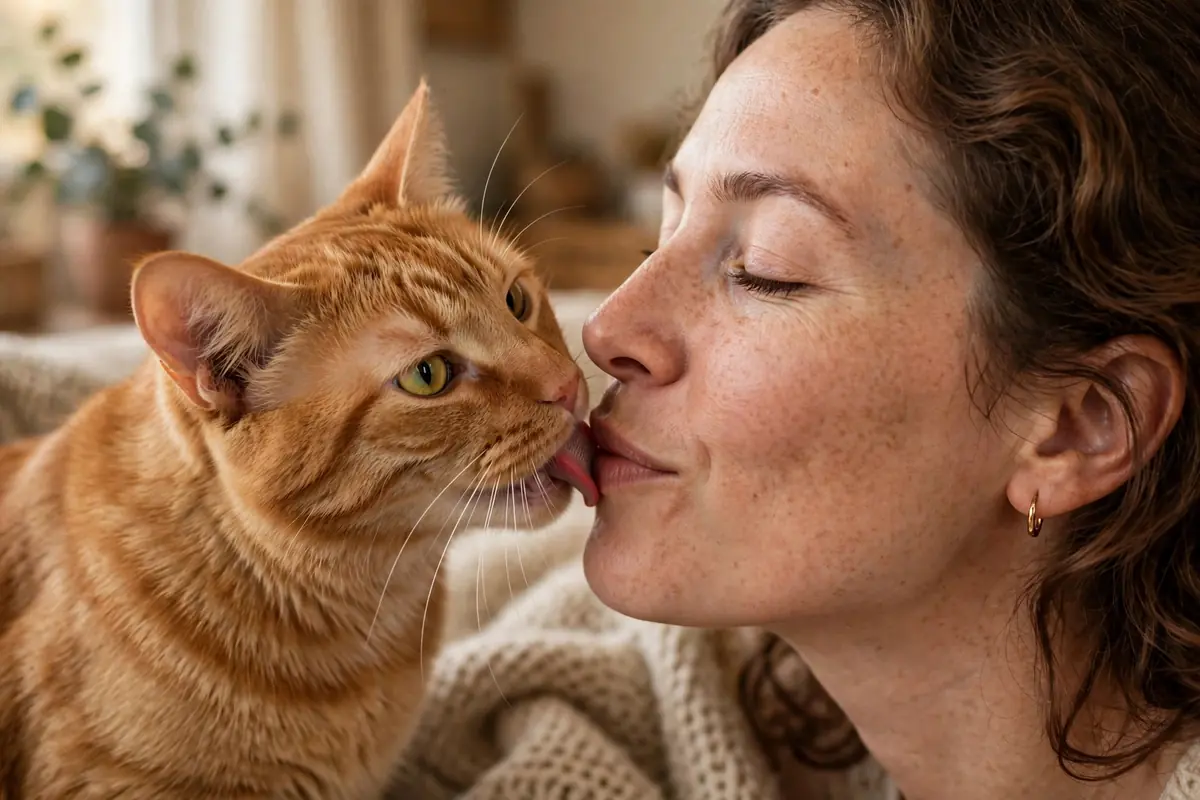
You are relaxing on the couch when a rough little tongue starts sandpapering your cheek. If your cat licks your face, the short answer is that it is almost always a compliment. Face-licking grows out of feline social grooming — cats groom the cats they trust, and they have simply extended that behavior to the humans in their inner circle. Your salty skin, your familiar scent, and plain habit all play a part.
Most face-licking is harmless affection, and many owners find it endearing. But the behavior can also have less cozy roots: anxiety, attention-seeking, or — in rare cases — nausea or mouth pain that drives a cat to lick compulsively. Here are the 6 most common reasons cats lick faces, when to simply enjoy it, and when the licking is telling you something worth a vet visit.
6 Reasons Your Cat Licks Your Face
- It is affection, pure and simple. In cat colonies, mutual grooming — allogrooming — is how bonded cats say "you are family." Kittens are groomed by their mothers from birth, and adult cats reserve grooming for the individuals they trust most. When your cat licks your face, you are being treated like a fellow colony member. It sits in the same family of affection behaviors as kneading — a leftover comfort ritual from kittenhood, now aimed at you.
- You taste interesting. Human skin carries a light film of salt from sweat, and cats find that taste appealing. Morning face-licks are especially common because overnight perspiration leaves your skin at its saltiest. Lotions, sunscreen, and even the residue of last night's dinner can also make your face worth investigating — which is why some cats develop strong opinions about particular moisturizers.
- They are marking you as theirs. Grooming is not just cleaning; it is also scent exchange. Cats have scent glands around their mouths and cheeks, and licking deposits their scent on you while picking up yours. A face-licking session blends your smells together, which in cat logic means you belong to the same group. Consider it a furry stamp of ownership.
- It is a soothing habit. The rhythmic motion of licking releases calming endorphins for cats, much like thumb-sucking comforts a child. Cats who were weaned early or who find grooming deeply relaxing may lick their people the way they would knead a soft blanket. If your cat licks your face while purring with half-closed eyes, you are likely watching a self-soothing ritual as much as an affectionate one.
- They are anxious or stressed. Licking can be a displacement behavior — something a cat does to cope when it feels uneasy. A cat rattled by a move, a new pet, loud construction, or a change in routine may lick its owner more than usual, seeking the comfort of a trusted scent. If face-licking has ramped up alongside hiding, appetite changes, or over-grooming of their own fur, stress is a reasonable suspect and the underlying trigger deserves attention.
- It works — you respond. Cats are sharp observers of cause and effect. If licking your face reliably earns pets, sweet talk, or breakfast served early, your cat has learned a very effective alarm clock. This is not manipulation in the human sense; it is simply smart animal learning. The more entertaining your reaction, the more motivated the licker.
When Face-Licking Signals a Health Problem
Affectionate licking is usually relaxed and occasional. Licking that is sudden, frantic, or constant deserves a closer look. Excessive licking of faces — or of the air, floors, and their own lips — is a recognized sign of nausea in cats. Similarly, cats with dental pain, mouth sores, or a bad tooth may lick and drool more as they try to soothe the discomfort.
Watch for the company the licking keeps: drooling, bad breath, pawing at the mouth, dropping food, eating on one side, vomiting, or a sudden loss of interest in meals. Any of those alongside a surge in licking means the behavior may be a symptom rather than a love language — and a veterinary checkup is the right call. Cats hide oral pain remarkably well, so new licking habits are one of the few early clues owners get.
Should You Let Your Cat Lick Your Face?
For most healthy adults, an occasional cheek lick is low risk — but a cat's mouth is not clean in any medical sense. It carries bacteria that do not belong near your eyes, nose, or mouth, or on broken skin. Enjoy the forehead and cheek affection, then wash the area afterward. If anyone in the household is immunocompromised, pregnant, very young, or has an open wound, kitty kisses should stay off faces entirely.
If you would rather redirect the habit, do it gently — never punish a cat for affection, or you risk damaging the trust behind it. When the tongue comes out, calmly offer an alternative: a chin scratch, a quick play session, or a lick mat smeared with a little wet food. Stay boring and consistent — no dramatic reactions — and most cats transfer the habit within a couple of weeks. You will find more decoding of quirky habits in our Cat Behavior guides, and the Purrfect Paws home page has the full article library.
Frequently Asked Questions
Is it safe to let my cat lick my face?
For most healthy adults the risk is low, but a cat's mouth carries bacteria you do not want near your eyes, nose, or mouth — or on broken skin. Enjoy the affection on your forehead or cheek, then wash the area. If you are immunocompromised, pregnant, or have an open wound, keep kitty kisses away from your face.
Why does my cat lick my face and then bite me?
That lick-then-nip pattern is common and usually means overstimulation: the grooming felt good until it suddenly felt like too much. It is rarely aggression. When you feel the mood shift — tail twitching, skin rippling — calmly end the interaction before the teeth come out.
How do I get my cat to stop licking my face?
Redirect rather than punish. When the tongue comes out, offer a chin scratch, a favorite toy, or a lick mat with a little wet food instead. Stay consistent and boring about it — no big reactions — and most cats shift the habit within a couple of weeks.
Why does my cat only lick my face at night in bed?
Bedtime is peak bonding time: you are warm, still, and relaxed, and your scent is strongest after a full day. Many cats treat the pre-sleep cuddle as their daily grooming session with their favorite colony member — you.
My cat suddenly started licking everything — should I worry?
A sudden surge in licking — faces, floors, the air, or their own lips — can be a sign of nausea or mouth pain rather than affection. If the behavior is new, intense, or comes with drooling, appetite changes, or bad breath, book a veterinary checkup.