Why Does My Cat Lick Plastic Bags? 6 Reasons
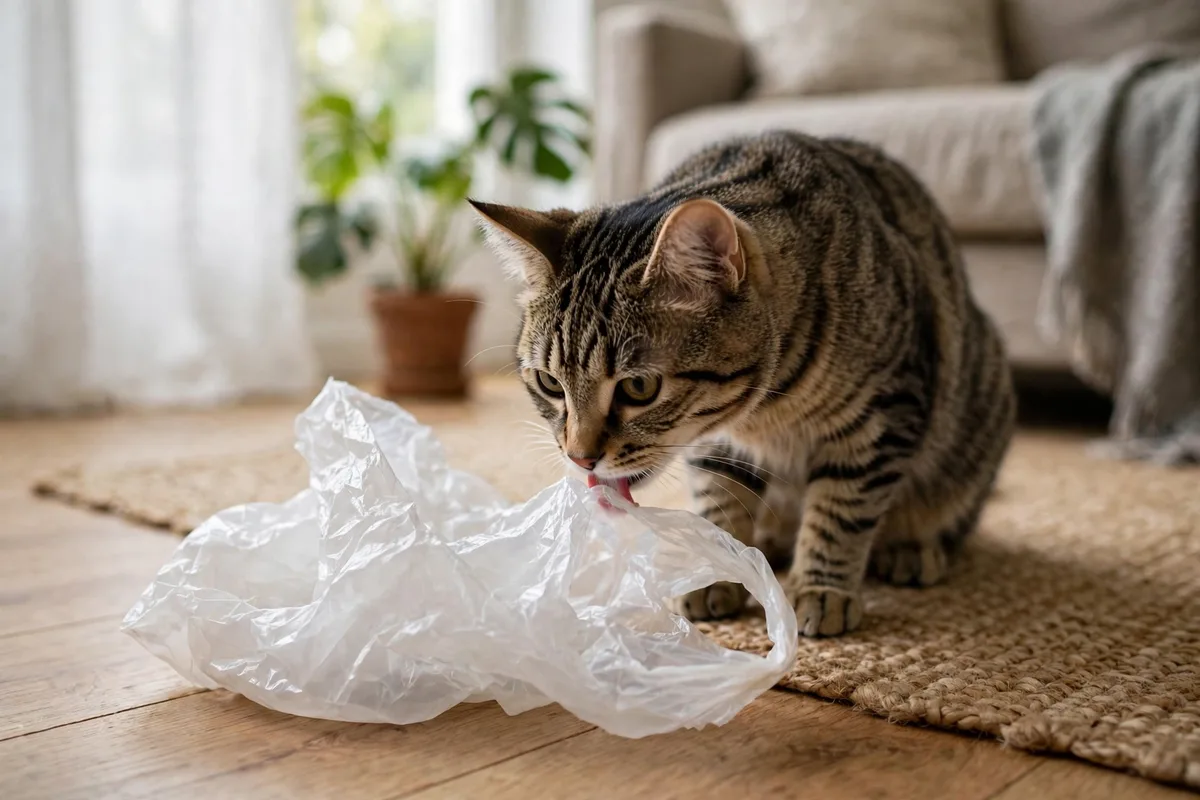
You bring the groceries in, set a bag on the counter for two seconds, and there your cat is — nose buried in the plastic, tongue working away like it is the most delicious thing in the house. It looks bizarre, but licking plastic bags is one of the most common odd habits cats have. The good news is that most of the time it is harmless curiosity, not a crisis. The short answer is that plastic bags appeal to cats on several levels at once: they smell faintly of food and animal-based manufacturing ingredients, they feel interesting against a cat's rough tongue, and they crinkle in a way that wakes up a cat's hunting instincts. Understanding which reason fits your cat matters, because the fix for a bored cat is different from the fix for a cat with a compulsive habit — and in a few cases, the habit is worth a vet visit.
1. The Bag Actually Tastes Like Something to Your Cat
This is the reason most cat owners never guess. Many plastic bags are manufactured with corn starch, and some are coated with substances derived from animal fats, such as lanolin or gelatin, to keep the plastic from sticking together. Humans cannot smell or taste these residues, but cats have a sense of smell roughly fourteen times stronger than ours, plus a special scent organ on the roof of the mouth called the vomeronasal organ. To your cat, that grocery bag may carry a faint whiff of something edible. This also explains why cats often prefer grocery bags and packaging from food stores over plain plastic, and why the same cat may ignore a brand-new bag but obsess over one that carried meat, cheese, or fish. If your cat only licks bags that have held food, taste and smell are almost certainly the draw.
2. The Texture Feels Good on Their Tongue
A cat's tongue is covered in tiny backward-facing barbs called papillae, which is why it feels like sandpaper when your cat licks your hand. Smooth, cool plastic offers a completely different sensation from fur, food, or fabric, and some cats simply enjoy it. This is similar to why some cats lick windows, tile floors, or metal taps. The sensation itself is rewarding, especially for cats that are sensory-seeking by nature. You will often notice these cats lick slowly and calmly, with half-closed eyes, the way another cat might knead a blanket. It is a self-soothing behavior as much as a taste thing, and it tends to come and go rather than turning into a frantic obsession.
3. The Crinkle Triggers Their Hunting Instinct
Plastic bags make noise. To a cat, that high-pitched crinkle sounds a lot like rustling leaves or small prey moving in the grass, and it grabs their attention instantly. Many cats start by batting or pouncing on a bag, then graduate to licking and chewing it as part of the "hunt." Indoor cats, who do not get to chase real prey, are especially drawn to this kind of stimulation. If your cat's plastic habit always starts with an excited pounce and wide pupils, you are probably looking at play behavior that has simply gone a step too far. Offering crinkle balls, rustling tunnel toys, or a cardboard box stuffed with paper gives them the same satisfying sound without the risk of swallowing plastic.
4. Boredom or Stress Is Driving the Habit
Cats that spend long hours alone, or that live in homes with little to play with, invent their own entertainment — and a plastic bag is conveniently right there. Repetitive licking can also be a coping mechanism for stress, much like a person biting their nails. Moves, new pets, a change in routine, or even a rearranged living room can push an anxious cat toward compulsive licking. Watch for the pattern: if the habit started after a household change, or happens mostly when you are out, stress or boredom is a likely culprit. The fix is not punishment but enrichment — daily interactive play, puzzle feeders, a window perch for bird-watching, and a predictable routine all help an under-stimulated cat feel settled again.
5. Kittens and Young Cats Are Exploring the World by Mouth
Like toddlers, kittens learn about their surroundings by putting things in their mouths. A kitten licking a plastic bag is often just investigating, and many outgrow it as they mature. Teething can add to the urge: kittens between about three and six months old are losing baby teeth and growing adult ones, and chewing or licking unusual textures can soothe sore gums. If your kitten is the culprit, keep bags out of reach for now and offer safe teething alternatives such as rubber chew toys made for kittens or a chilled (not frozen) washcloth to gnaw on. Most kittens leave the plastic phase behind on their own within a few months.
6. Pica: When Licking Turns Into Eating Non-Food Items
Pica is the medical term for persistently eating things that are not food — plastic, wool, cardboard, fabric, or rubber bands. Some breeds, notably Siamese and other Oriental breeds, are more prone to it, and it can be linked to nutritional deficiencies, digestive problems, anxiety, or early weaning. The line between a quirk and pica is what your cat actually does: licking a bag now and then is usually fine, but deliberately chewing off pieces and swallowing them is not. Swallowed plastic can cause choking or a dangerous intestinal blockage, which may show up as vomiting, loss of appetite, lethargy, or straining in the litter box. If your cat regularly eats plastic, or the habit appeared suddenly alongside other behavior changes, book a vet visit to rule out a medical cause before assuming it is just a funny habit.
When Should You Worry About Plastic Licking?
Most plastic licking is harmless, but call your veterinarian promptly if you notice any of these warning signs:
- Your cat is actually swallowing pieces of plastic, not just licking the surface.
- Vomiting, gagging, drooling, or pawing at the mouth after chewing plastic.
- Loss of appetite, lethargy, or changes in litter box habits.
- The habit started suddenly in an adult cat, or has become constant and frantic.
- Your cat also chews and eats other non-food items like fabric, cardboard, or elastic bands.
When in doubt, a quick call to your vet is always worth it — an intestinal blockage is a genuine emergency, and early treatment makes all the difference.
How to Stop Your Cat Licking Plastic Bags Safely
The simplest solution is also the most effective: remove the temptation. Store grocery bags in a closed drawer, cabinet, or bag holder, and never leave packaging lying around. Then give your cat something better to do with that energy. A crinkle ball or a crackly tunnel satisfies the sound-loving hunter, a puzzle feeder engages a bored brain, and a daily play session with a wand toy burns off the restless energy that feeds compulsive habits. If stress is part of the picture, keep feeding times and playtimes consistent and make sure your cat has a quiet retreat spot of their own. Whatever you do, do not scold or spray your cat — punishment only adds stress and usually drives the habit underground, where you cannot supervise it. Calmly take the bag away, offer a toy instead, and praise the switch.
Plastic licking looks strange, but for most cats it is just a mix of smell, texture, curiosity, and play. Once you know which reason fits your cat, the habit is easy to manage — and your grocery bags can finally have a quiet life.
Frequently Asked Questions
Is it dangerous for my cat to lick plastic bags?
Occasional licking is usually harmless, but it becomes risky if your cat chews off and swallows pieces of plastic, which can cause choking or an intestinal blockage. Keep bags out of reach and redirect your cat to a safe toy.
Why do cats like the taste of plastic?
Some plastic bags are made with corn starch or coated with animal-based substances such as lanolin or gelatin during manufacturing. Cats, with their far sharper sense of smell and taste, can detect these residues even when we cannot.
Can licking plastic be a sign of pica in cats?
Yes, it can be. Pica is the habit of eating non-food items, and it is linked to boredom, stress, nutritional gaps, or certain medical conditions. If your cat eats plastic regularly, or also chews fabric, cardboard, or wool, talk to your veterinarian.
How do I stop my cat from licking plastic bags?
Store bags in closed cabinets or drawers, offer textured toys or crinkle balls as a substitute, and increase daily play sessions. Do not scold your cat — calmly remove the bag and redirect their attention instead.
Should I take my cat to the vet for licking plastic?
See your vet if your cat swallows plastic, vomits, stops eating, or becomes lethargic, or if the licking is sudden, constant, or paired with other behavior changes. These can signal a medical problem that needs checking.