Why Does My Cat Run Away From Me? 6 Reasons
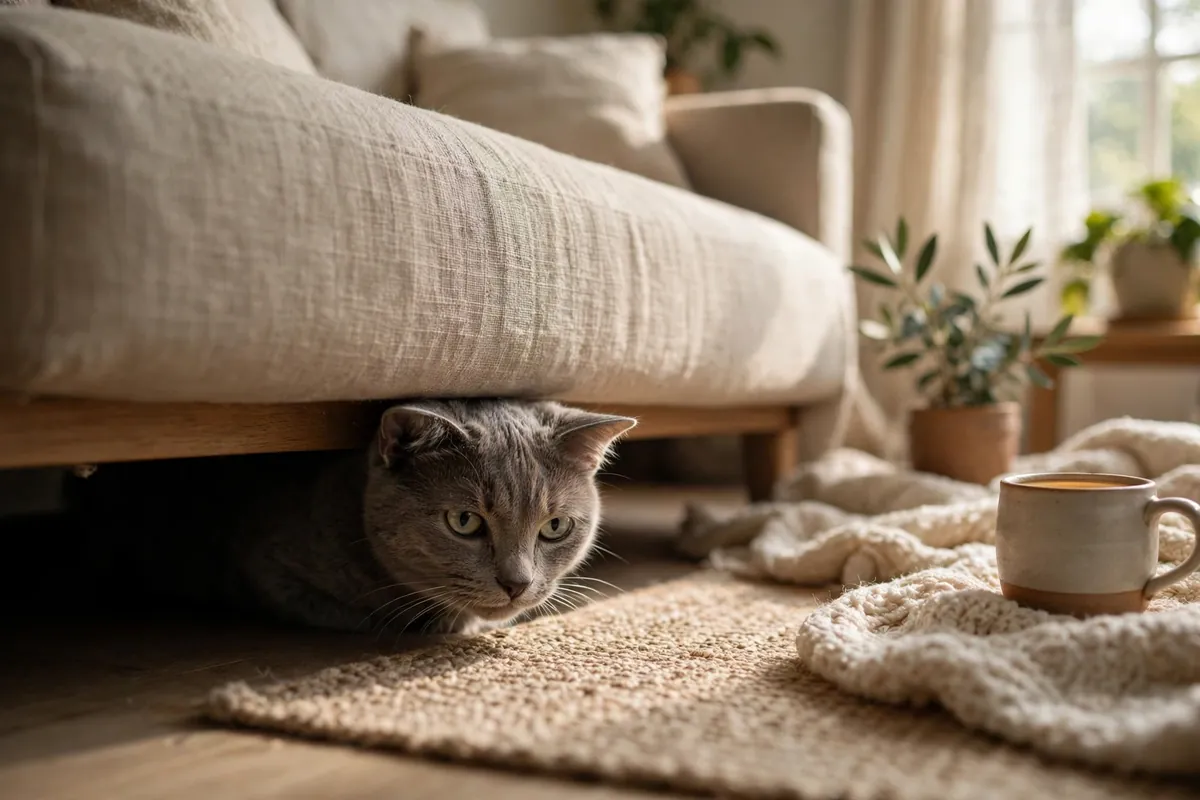
It can sting a little when the creature you feed, house, and adore sprints off the moment you walk toward it. But a cat running away from you is almost never personal — and it is rarely a sign that your cat dislikes you. Cats are both predators and prey animals, and their first instinct when something large moves toward them quickly is to create distance and reassess from safety. Running is a survival behavior, not a verdict on your relationship.
Understanding why your cat bolts is the first step to changing it. Here are the six most common reasons cats run away from their owners, and practical, patient ways to earn their trust — plus the warning signs that mean a vet visit is in order.
First, Read the Whole Picture
Before jumping to conclusions, notice the context. Does your cat run from everyone, or just from you? Does it happen all the time, or only in certain situations — when you stand up suddenly, when guests visit, or when you reach for them? Does your cat return later on its own terms, or does it stay hidden for hours? The answers narrow down the cause quickly. A cat that happily sleeps on your lap in the evening but darts away when you approach in the hallway is reacting to the approach, not to you as a person.
1. You Are Approaching Too Fast or From Above
To a cat, a human walking straight at them, leaning over them, and reaching down is an intimidating silhouette — big, fast, and looming. Cats feel safest when they can see what is coming and when they have an escape route. Walking directly toward a cat, especially in a narrow hallway or corner, can feel like being cornered even when you mean nothing but affection. The fix is simple and surprisingly effective: slow down, approach from the side rather than head-on, crouch to make yourself smaller, and avert your gaze slightly. Let the cat close the last bit of distance itself. Many owners find that simply sitting on the floor and ignoring the cat works better than any amount of coaxing.
2. Your Cat Is Naturally Shy or Under-Socialized
Some cats are simply wired to be cautious. Kittens that had little gentle handling during their early weeks, former strays, and naturally timid breeds and individuals tend to startle easily and keep a buffer zone around themselves. This is temperament, not rejection — shy cats often show affection in quieter ways, like sleeping nearby, slow-blinking at you, or following you from a distance. With shy cats, progress is measured in small wins: eating while you are in the room, staying put when you move slowly, and eventually choosing to sit near you. Forcing contact sets this progress back, sometimes by weeks.
3. Something in the Environment Is Scary
Sometimes your cat is not running from you at all — it is running from something near you. A vacuum cleaner, a loud television, a barking dog, a new scent on your clothes, or even a plastic bag can be the real trigger, and you just happen to be standing next to it. Cats also react strongly to changes: new furniture, a visitor's perfume, or the smell of another animal on your shoes. If the bolting is situational, remove or reduce the trigger and give your cat a safe retreat — a covered bed, a high perch, or a quiet room — where it can decompress.
4. Your Cat Associates You With Something Unpleasant
Cats have excellent memories for cause and effect. If you are usually the person who gives baths, administers medicine, trims nails, or carries them to the vet, your cat may have learned to associate your approach with those experiences — especially if the experiences involved being grabbed or held against their will. This does not mean your cat hates you; it means it has learned a pattern. You can rewrite that pattern by pairing your presence with good things: offer treats when you approach, keep handling sessions short and gentle, and end them before your cat gets upset. Over time, the association shifts from "this person means trouble" to "this person means treats."
5. Your Cat Is Overstimulated or Simply Not in the Mood
Cats have firm opinions about when they want interaction and when they do not, and they are not shy about enforcing those boundaries. A cat that was happily being petted a minute ago may suddenly dart away because it has had enough — this is overstimulation, and it is normal. Warning signs include a twitching tail, flattened ears, dilated pupils, or skin rippling along the back. Likewise, a cat that is sleeping, grooming, or focused on a window may run simply because it was startled out of its own world.
6. Your Cat May Be in Pain
A cat that used to enjoy being picked up or petted but now runs, flinches, or cries out when touched may be hurting. Arthritis in older cats, dental pain, an injured paw, a sore belly, or an abscess can all make handling uncomfortable, and running is the cat's way of avoiding that discomfort. This is the reason that deserves the most attention: if the change in behavior is sudden, or if it comes with hiding, reduced appetite, limping, or a change in grooming or litter box habits, book a veterinary appointment. Pain is also why you should never punish a cat for running — you may be punishing it for protecting an injury.
How to Build Trust With a Cat That Runs
Trust-building with cats is slow, quiet work — but it works. Start by making yourself predictable: move slowly, speak softly, and keep a consistent routine. Sit near your cat without reaching for it, and let it investigate you. Offer high-value treats — small pieces of cooked chicken or commercial cat treats — by placing them near you and gradually closer over days. Play is another powerful bridge: a wand toy lets your cat interact with you from a comfortable distance, and shared play builds positive associations without any handling at all. The slow blink is a useful tool too: when your cat looks at you, slowly close and open your eyes, which cats read as a friendly, non-threatening signal.
Above all, respect the exit. Every time your cat chooses to stay, it is because staying felt safe. If you chase, grab, or corner a cat that is trying to leave, you teach it that leaving earlier and faster is the only safe option. Patience is not just kind here — it is the fastest route to a cat that walks toward you instead of away.
When to See the Vet
Most running-away behavior is behavioral and improves with patience, but see a vet if the change is sudden, if your cat also hides for long periods, stops eating, limps, cries when touched, or shows any change in litter box habits. A vet can check for pain, vision or hearing changes in senior cats, and other medical causes. Once health is ruled out, you can work on behavior with confidence.
Frequently Asked Questions
Is it normal for a new cat to run away from me?
Yes, completely normal. A new home is full of unfamiliar smells, sounds, and people. Most cats need days to weeks to settle in, and shy cats may need a couple of months. Give them a quiet room of their own and let them explore at their own pace.
Should I chase my cat when it runs away?
No. Chasing confirms to your cat that you are something to flee from and damages trust. Instead, stop, crouch down, look away slightly, and let the cat decide to come closer — or simply walk away and try again later.
Why does my cat run from me but not from other people?
Cats form different relationships with different people, and they may associate one person with something stressful — baths, vet trips, medication, or loud behavior. They may also simply prefer a calmer approach from someone else. Changing how you approach often changes the response.
How long does it take for a shy cat to trust you?
It varies widely. Some cats warm up in a few days, while very shy or previously stray cats can take several weeks or even months. Progress is usually gradual: first eating near you, then staying in the same room, then approaching, then accepting touch.
Could pain be making my cat run away?
Yes. A cat that used to enjoy being handled but now runs or flinches may be in pain from arthritis, dental problems, an injury, or a sore spot. If the change is sudden, or your cat also hides, eats less, or moves differently, see a vet.