Why Is My Cat Drinking So Much Water? 7 Causes
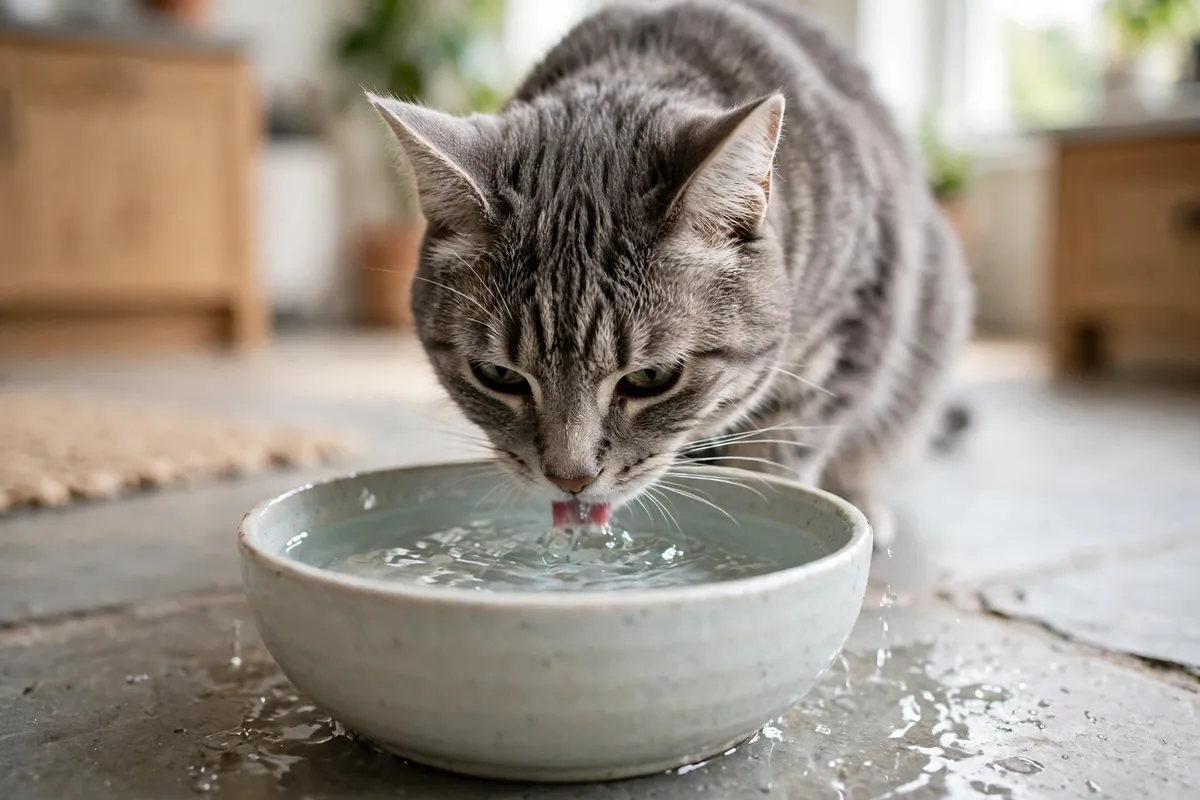
If you have noticed your cat's water bowl emptying faster than usual — or your cat suddenly lingering at the tap, the shower, or any puddle it can find — you are right to pay attention. Cats are famously low-volume drinkers, so a clear, sustained increase in thirst is one of the earliest clues that something has changed, whether it is as simple as a new diet or as serious as kidney disease. The important thing is not to panic, but not to ignore it either.
In this guide, you will learn what counts as excessive thirst in cats, the 7 most common causes behind it, how to tell a harmless change from a medical warning sign, and when to book a vet visit.
How Much Water Should a Cat Drink?
Cats evolved as desert animals, so they naturally drink less than dogs and get much of their water from food. As a rough guide, a cat needs about 60 ml of water per kilogram of body weight per day — including the water in their food. A 4 kg cat therefore needs roughly 240 ml a day in total. A cat eating mostly wet food (which is around 70–80% water) may drink very little from the bowl, while a cat on dry food will drink noticeably more. That is why the best measure is not the absolute amount, but the change: a cat that has always drunk a little and suddenly starts drinking a lot is the pattern that matters.
Vets use the term polydipsia for excessive thirst, and it almost always goes together with polyuria — urinating more, or producing larger volumes of urine. If you are refilling the bowl more often and scooping a wetter litter box, the two signs together are worth investigating.
7 Causes of Increased Thirst in Cats
- A switch to dry food. This is the most common harmless cause. Dry kibble contains only about 10% moisture, compared with 70–80% in wet food, so a cat moved from wet to dry food will naturally drink much more to make up the difference. If the change in drinking started right after a food change, this is the most likely explanation — though mixing in some wet food is usually better for hydration anyway.
- Hot weather and extra activity. Like us, cats drink more when it is warm or after an energetic play session. A temporary increase on hot days, or after your cat has been racing around the house, is normal. What is not normal is heavy drinking that continues once the weather cools or the cat is resting.
- Salty food or treats. Treats, table scraps, and some lower-quality foods can be high in salt, which drives thirst. If your cat has recently discovered a new favorite treat or has been getting more human food than usual, check the salt content and cut back — and keep table scraps off the menu.
- Kidney disease. This is the most common medical cause, especially in senior cats. Healthy kidneys concentrate urine and conserve water; as kidney function declines, the cat loses more water in urine and drinks more to compensate. Early kidney disease often shows up as increased thirst and urination long before other symptoms appear, which is exactly why a change in drinking habits is worth acting on early.
- Diabetes. In diabetic cats, high blood sugar spills into the urine, dragging water with it. The cat then drinks more to replace the lost fluid. Warning signs that point toward diabetes include increased thirst together with increased urination, weight loss despite a good appetite, and lethargy. Diabetes in cats is manageable with veterinary treatment, and some cats even go into remission, but it needs diagnosis first.
- Hyperthyroidism. An overactive thyroid gland — common in cats over 8 years old — speeds up metabolism and often increases both thirst and appetite. A hyperthyroid cat may drink more, eat more, lose weight, and seem restless or hyperactive. It is diagnosed with a simple blood test and is very treatable.
- Medications, urinary infections, and other conditions. Some medications, including certain steroids, increase thirst as a side effect. Urinary tract infections can make a cat visit the litter box more often and drink more, often with straining or small, frequent urinations. Less commonly, liver disease and some hormonal conditions can also drive thirst. If your cat recently started a new medication, mention the timing to your vet.
Harmless Change or Warning Sign? How to Tell
Ask yourself three questions. First, did something change? A new food, new treats, a heatwave, or a new medication explains a lot. Second, is it sustained? A day of extra drinking after a hot afternoon is different from a week of steadily increasing intake. Third, are there other symptoms? Weight loss, bigger or more frequent urinations, vomiting, lethargy, changes in appetite, or a dull coat alongside the thirst all push the balance toward "see the vet soon." When in doubt, measure: note roughly how much water you put down each day for a couple of days, and bring that estimate to your appointment. It is genuinely useful information for your vet.
What NOT to Do
- Never restrict your cat's water. Excessive drinking is a symptom, not the problem, and withholding water can cause dehydration and make an underlying condition worse. Always keep fresh water available.
- Do not change diets abruptly in an attempt to fix the thirst — a sudden food switch can cause stomach upset and muddy the picture for your vet.
- Do not give human supplements or "kidney remedies" you found online. Some are useless, and a few are harmful to cats. Diagnosis comes first; treatment follows from it.
What the Vet Will Do
Your vet will usually start with a physical exam and a blood test, which can reveal kidney values, blood sugar, and thyroid levels — the three most common culprits — in a single panel. A urine sample helps confirm how well the kidneys are concentrating urine. Depending on the results, treatment may be as simple as a diet change, or may involve medication for diabetes or hyperthyroidism, or a long-term kidney care plan with diet and hydration support. The earlier these conditions are caught, the more options there are and the better the outlook, which is why acting on a change in thirst is one of the most useful things a cat owner can do.
Keeping Your Cat Well Hydrated
Regardless of the cause, good hydration habits help every cat. Offer fresh water daily in a clean bowl (many cats prefer ceramic or stainless steel over plastic), place water away from the food bowl, and consider a cat water fountain — the moving water encourages many cats to drink more. Adding some wet food to the diet is one of the simplest ways to raise a cat's overall water intake. In multi-cat homes, provide one water station per cat plus one extra, so a shy cat is never blocked from drinking by a bolder housemate. And keep an eye on the bowl: you are the only one who will notice when "normal" changes.
Frequently Asked Questions
How much water should a cat drink per day?
As a rough guide, a cat needs about 60 milliliters of water per kilogram of body weight per day, including water from food. A 4 kg cat therefore needs around 240 ml daily in total — less if they eat wet food, which is mostly water, and more if they eat only dry food.
My cat drinks a lot but also eats wet food — is that normal?
Wet-food cats usually drink less from the bowl, since their food provides much of their water. A wet-food cat that suddenly starts drinking heavily from the bowl is more unusual than a dry-food cat doing the same, and is worth mentioning to your vet.
Should I limit my cat's water if they drink too much?
No — never restrict water. Excessive drinking is a symptom, not the problem itself, and withholding water can cause dehydration and make an underlying condition worse. Let your cat drink freely and book a vet visit to find the cause.
Can a change in food make my cat drink more?
Yes. Switching from wet to dry food is one of the most common harmless causes: dry food contains far less moisture, so the cat compensates by drinking more. Salty treats and a new high-protein diet can also raise water intake temporarily.
When should I worry about my cat drinking too much water?
See your vet if the increase is sudden and sustained for more than a day or two, or if it comes with weight loss, larger or more frequent urination, vomiting, lethargy, or a change in appetite. These combinations can point to kidney disease, diabetes, or hyperthyroidism, all of which are much easier to manage when caught early.