Are Essential Oils Safe for Cats?
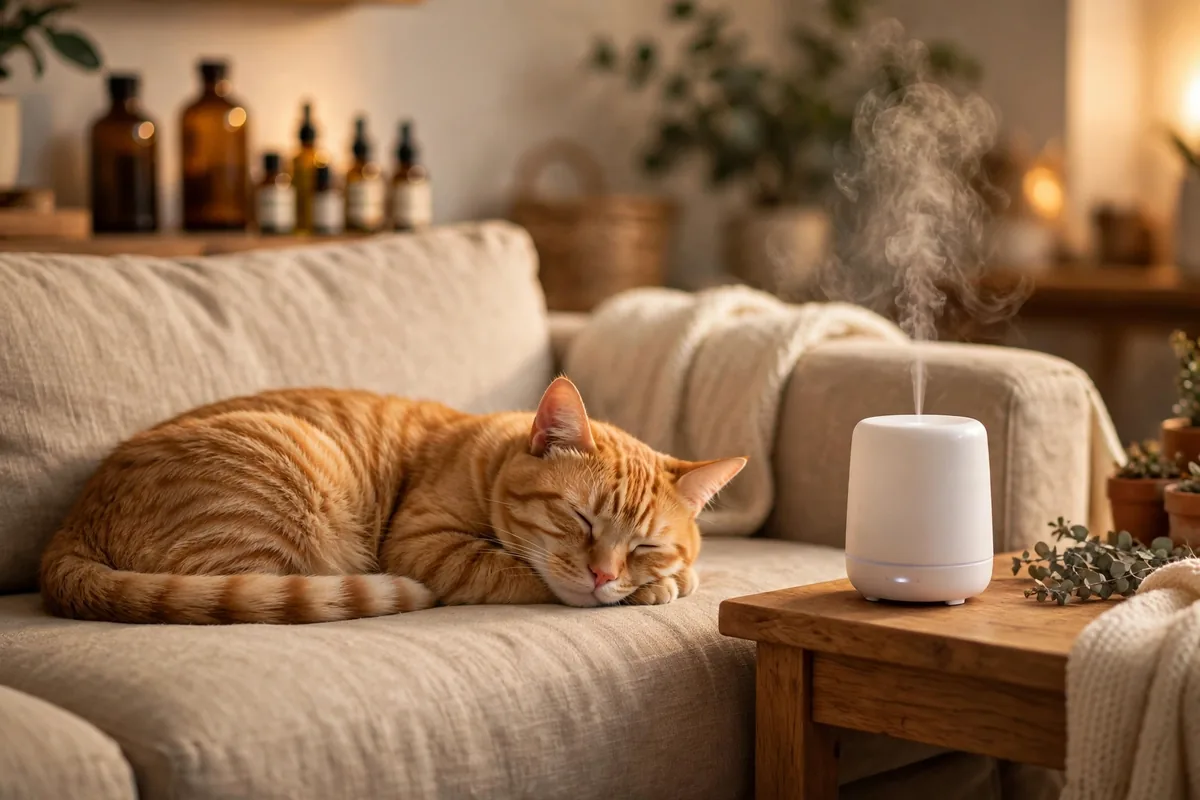
Short answer: no — most essential oils are not safe for cats. Cats lack a key liver enzyme needed to break down many of the natural compounds in essential oils, so oils that are harmless (or even helpful) for humans can make cats seriously ill. The worst offenders include tea tree, citrus, eucalyptus, peppermint, cinnamon, pine, and ylang ylang. And it's not just about applying oils directly — mist from an active diffuser can land on your cat's fur and be swallowed during grooming. If you love your diffuser, you don't necessarily have to throw it away: passive reed diffusers in well-ventilated rooms your cat can freely leave are lower risk. Read on for the full list of dangerous oils, diffuser safety rules, warning signs of poisoning, and genuinely cat-safe ways to keep your home smelling nice.
Essential oils are everywhere now — in diffusers, cleaning sprays, candles, and "natural" pet products. Marketing makes them sound pure and harmless, but "natural" is not the same as "safe for cats." This guide explains why cats are uniquely vulnerable, which specific oils to avoid, how to use a diffuser more safely if you insist on one, what poisoning looks like, and what to do if your cat is exposed.
Why Cats Are Uniquely Sensitive to Essential Oils
The problem is your cat's liver. Essential oils contain compounds called phenols and terpenes. Humans and dogs have a liver enzyme — glucuronyl transferase — that helps break these compounds down and flush them out. Cats are deficient in this enzyme, which means these substances accumulate in a cat's body instead of being cleared. Over time, or with a large single exposure, they can build up to toxic levels.
Cats are exposed in three ways, and all of them matter:
- Skin contact. Oils applied directly to fur or skin — or mist settling on the coat — are absorbed and then ingested when the cat grooms.
- Ingestion. Licking oil residue from paws, fur, or surfaces. Cats groom constantly, so anything on the coat ends up in the stomach.
- Inhalation. Breathing concentrated vapors, especially in small, closed rooms or from active diffusers that aerosolize oil into fine droplets.
This is also why some "natural flea treatments" and homemade remedies containing essential oils are dangerous for cats — what's sold as gentle and plant-based can be a concentrated dose of exactly the compounds a cat's liver can't handle.
The Most Dangerous Essential Oils for Cats
Not every oil is equally risky, but veterinarians and poison control centers consistently flag the following as dangerous for cats. Treat this as an avoid list:
- Tea tree (melaleuca). The single most notorious. Even diluted tea tree products applied to skin have caused severe reactions and deaths in cats. Never use it on or around your cat.
- Citrus oils (lemon, orange, grapefruit, lime, bergamot). Contain limonene and linalool, which cats can't process well. Many "natural" cleaners use these.
- Eucalyptus. Widely used for colds and in shower steamers — toxic to cats in concentrated form.
- Peppermint and wintergreen. Contain phenols; wintergreen also contains methyl salicylate, related to aspirin, which cats tolerate very poorly.
- Cinnamon, clove, and oregano. Potent phenol-rich oils; even small amounts can irritate and poison.
- Pine. Common in holiday scents and cleaners — problematic for cats.
- Ylang ylang and pennyroyal. Frequently cited on veterinary toxic lists. Pennyroyal in particular has a history of causing fatal poisoning in cats.
- Lavender oil. This one surprises people. Lavender shows up in "calming" pet products, but the concentrated essential oil — especially diffused actively — is a concern for cats. (See our dedicated guide: Is Lavender Toxic to Cats?)
A practical rule: if an oil smells strong to you, it's overwhelming to a cat. A cat's sense of smell is roughly fourteen times more sensitive than a human's, so concentrations that seem mild to us can be intense for them.
Are ANY Essential Oils Safe for Cats?
You'll find blog posts claiming certain oils are "cat-safe" — frankincense, chamomile, and cedarwood appear on such lists most often. Be skeptical. The evidence for safety is thin, products vary wildly in purity and concentration, and "safe" usually means "less acutely toxic in tiny amounts," not "proven harmless."
The honest position most veterinarians take: no essential oil is proven safe for cats, and the safest choice is to avoid them around your cat entirely. If you still want to use one, follow these non-negotiable rules:
- Never apply any essential oil directly to your cat's skin, fur, paws, or collar.
- Never let your cat ingest oils — keep bottles sealed and stored where cats can't knock them over.
- Use only 100% pure oils (no synthetic fragrance blends), in the smallest amount possible.
- Always give your cat a way out — never diffuse in a closed room, and never in the room where your cat sleeps.
- Watch for reactions every time, even with an oil you've used before.
Diffusers: Passive vs. Active (This Distinction Matters)
Not all diffusers expose your cat equally:
- Active diffusers (ultrasonic and nebulizing types) pump fine oil droplets into the air. These droplets settle on fur, furniture, and floors — and your cat grooms them off. This is the riskiest setup for a cat household.
- Passive diffusers (reed diffusers, ceramic stones, dried sachets) release scent slowly without aerosolizing oil. Lower risk, but not zero — the room still fills with vapors.
If you want to keep a diffuser with a cat in the house, these precautions meaningfully reduce risk: use it only in a large, well-ventilated room; run it for short periods (30–60 minutes), not all day; keep the door open so your cat can leave; place it high and far from where your cat eats, drinks, and sleeps; and never run it in a bedroom with the door closed while your cat is inside. If your cat starts sneezing, coughing, drooling, or acting odd, turn it off immediately and air the room out.
Signs of Essential Oil Poisoning in Cats
Symptoms can appear within minutes of heavy exposure or build up over days of low-level contact. Watch for:
- Drooling or pawing at the mouth. Often the first sign — the cat tastes something unpleasant or irritating. (Persistent drooling has many causes, covered in our guide on why cats drool.)
- Vomiting or loss of appetite.
- Wobbliness, tremors, or weakness — trouble walking straight or standing.
- Breathing problems: coughing, wheezing, rapid or labored breathing.
- Lethargy or hiding beyond the cat's normal behavior.
- Collapse or seizures in severe cases — this is an emergency.
What to Do If Your Cat Is Exposed
- Remove the source. Turn off the diffuser, take the cat out of the room, and open windows to ventilate.
- If oil is on the fur or skin, wash it off promptly with lukewarm water and a mild dish soap (used sparingly), then rinse thoroughly. This matters because the cat will otherwise ingest it while grooming.
- Do not induce vomiting unless a veterinarian specifically tells you to — vomiting can cause aspiration, especially with oils.
- Call your vet or a poison control hotline immediately. Bring the oil bottle or a photo of its label so they can see the exact ingredients and concentration. Time matters — don't "wait and see" with tremors, breathing trouble, or collapse.
Cat-Safe Ways to Keep Your Home Smelling Nice
You don't have to live in a scent-free house. These alternatives carry far less risk:
- Ventilation and cleaning. The biggest source of "cat smell" is the litter box — scoop daily, wash the box regularly, and ventilate. An enzymatic cleaner on accident spots does more than any fragrance.
- Simmer pots with kitchen ingredients (sliced citrus, herbs, vanilla) used briefly while you're home and the cat can leave the kitchen — though note even simmered citrus releases some compounds, so keep sessions short and airy.
- Baking. Few things beat the smell of fresh bread or cookies, and it's completely cat-safe.
- Feline pheromone diffusers (like Feliway-style products). These are specifically formulated for cats and mimic natural feline facial pheromones — they don't scent the room for humans, but they can genuinely calm a stressed cat.
- Fresh air. Open windows when weather allows. Simple, free, and zero risk.
One more household caution: many scented cleaning products and air fresheners contain the same problematic compounds as essential oils. If you're auditing scents for your cat, check cleaners and plug-in fresheners too — and see our guide on toxic houseplants like pothos for the other common household hazards cat owners overlook.
For more household-safety topics, explore our Cat Health section or return to the Purrfect Paws homepage.
Frequently Asked Questions
Are essential oils safe for cats?
Most are not. Cats lack a liver enzyme needed to break down many compounds in essential oils, so oils like tea tree, citrus, eucalyptus, peppermint, cinnamon, pine, and ylang ylang can poison cats through skin contact, ingestion, or even inhaled mist from active diffusers.
Which essential oil is most dangerous for cats?
Tea tree (melaleuca) oil is one of the most dangerous — even diluted products applied to skin have caused severe reactions and fatalities in cats. Citrus oils, eucalyptus, peppermint, and pine are also high-risk.
Can I use a diffuser if I have a cat?
Active (ultrasonic or nebulizing) diffusers that spray fine mist into the air are risky because droplets can land on your cat's fur and be ingested during grooming. Passive reed diffusers in a well-ventilated room your cat can leave are lower risk, but never use them in a closed room with your cat, and watch for any symptoms.
What are the signs of essential oil poisoning in cats?
Drooling, pawing at the mouth, vomiting, wobbliness or tremors, difficulty breathing, coughing, lethargy, and in severe cases collapse or seizures. If you see any of these after oil exposure, turn off the diffuser, ventilate the room, and call your vet or poison control immediately.
Is lavender oil safe for cats?
Lavender is frequently listed as a concern for cats, especially in concentrated or diffused form. While dried lavender in a sachet is generally low risk, lavender essential oil — particularly in active diffusers — should be avoided around cats. See our dedicated guide on whether lavender is toxic to cats for details.