Balinese: Complete Breed Guide
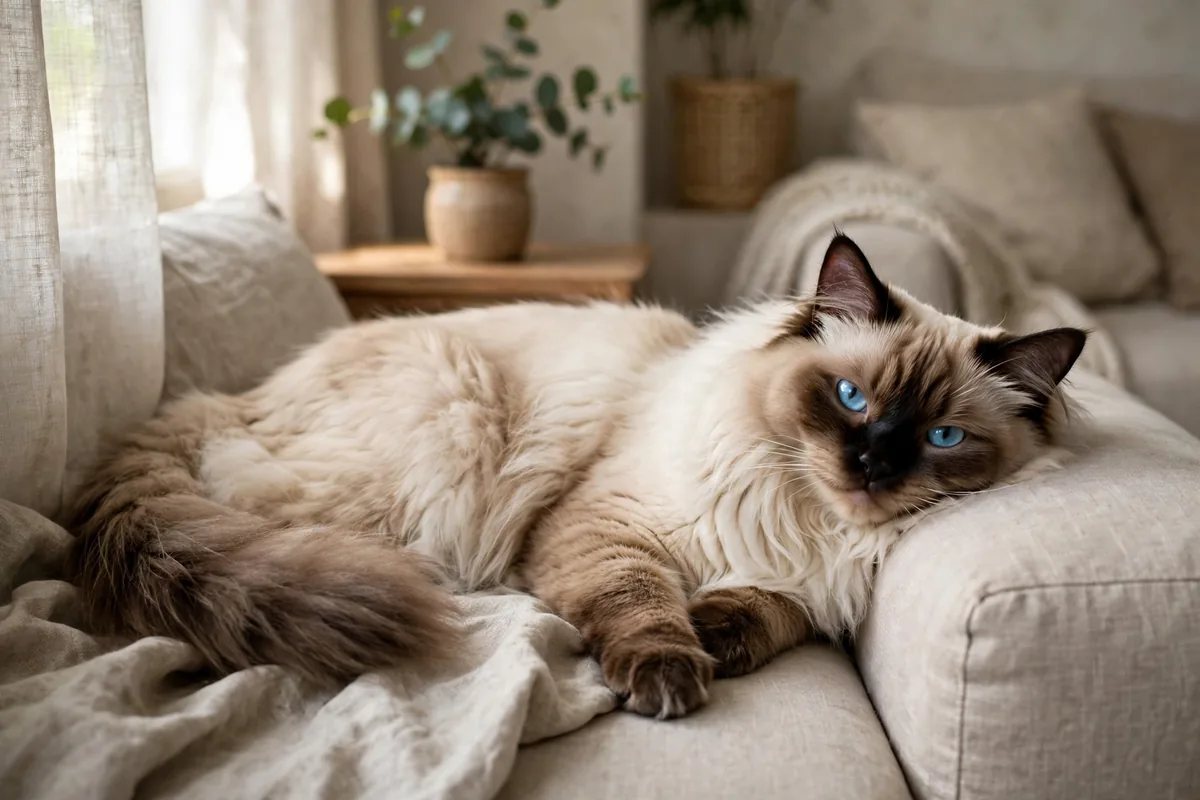
The Balinese is essentially a Siamese cat in a long, silky coat: the same sapphire-blue eyes, the same pointed colouring, and the same famously chatty, people-loving personality, wrapped in a graceful, flowing coat. Despite the name, the breed has nothing to do with the island of Bali. Breeders chose the name because the cats move with the grace of Balinese dancers.
If you love the Siamese personality but prefer a softer, more elegant look, the Balinese may be your perfect match. This guide covers the breed's origins, appearance, temperament, grooming needs, health, and the honest truth about the low-allergy claims you will see online.
Balinese at a Glance
The Balinese is a medium-sized, slender cat with a long, fine, silky coat and the colour-point pattern of the Siamese: a pale body with darker colour on the ears, face, paws, and tail. The four classic point colours are seal, chocolate, blue, and lilac, and the eyes are always a vivid, deep blue. The coat lies close to the body and has very little undercoat, which gives the cat a sleek, flowing outline rather than a fluffy one.
Adult Balinese usually weigh between 3.5 and 5.5 kilograms, with a long, elegant body, slim legs, and a plumed tail. They are athletic and graceful, and they carry themselves with the poise that gave the breed its name. Most Balinese live into their late teens, and they are generally healthy, active cats that stay playful well into adulthood.
Origin and History: The Longhaired Siamese
The Balinese appeared naturally in the United States in the mid-20th century, when longhaired kittens occasionally turned up in litters of purebred Siamese cats. At first, these kittens were considered a fault, but a few breeders saw their beauty and began breeding them deliberately. By the 1960s the longhaired Siamese had its own name and its own following.
The name Balinese was chosen for the cats' graceful movement, which reminded breeders of the dancers of Bali. The breed was recognised by major cat associations over the following decades, and today it is accepted as a distinct breed, though it remains closely related to the Siamese. The Balinese also gave rise to the Javanese, a related breed with a wider range of point colours, which shows how closely these elegant cats are all connected.
Appearance: Silk, Points, and Sapphire Eyes
The Balinese coat is one of the most beautiful in the cat world: long, fine, and silky, lying close to the body with a soft plume on the tail. Because it has almost no undercoat, it rarely mats the way a thick double coat can, which surprises many owners who expect a high-maintenance grooming routine. The coat flows when the cat moves, and the tail plume gives the Balinese a particularly elegant silhouette.
The colour-point pattern means the body stays pale while the extremities are darker, and the contrast is sharpest in cool weather. The head is a long wedge shape with large, pointed ears, and the eyes are almond-shaped and always blue, often a deep, vivid sapphire. Kittens are born almost entirely white, and their points darken gradually over the first year of life, which is one of the breed's most charming surprises for new owners.
Personality and Temperament: Chatty and Devoted
Balinese cats inherit the Siamese personality in full. They are intelligent, talkative, and deeply attached to their people. A Balinese will follow you around the house, comment on everything you do in a soft, musical voice, and expect to be part of whatever is happening. They are not a breed for someone who wants a quiet, independent cat that keeps to itself.
These cats bond closely with their families and often choose one favourite person, though they are friendly with the whole household. They enjoy learning tricks, playing fetch, and solving puzzle feeders, and they can become bored and unhappy if left alone for long hours every day. They are usually good with respectful children and with other pets, and they do best in a home where someone is around most of the time. If you work from home, a Balinese will happily supervise from your lap or your desk.
Grooming a Silky Coat: Easier Than It Looks
Despite the long coat, Balinese grooming is refreshingly simple. Because the coat has little undercoat, it rarely tangles, and a gentle comb-through once or twice a week is usually enough to keep it smooth and free of loose hair. Pay a little extra attention to the tail plume and the fur behind the ears, where tangles are most likely to start.
Balinese shed moderately, and regular grooming keeps loose hair under control. Baths are rarely needed. Beyond the coat, keep up the usual routine: trim nails every few weeks, check the ears, and brush the teeth regularly, since Siamese-type cats can be prone to dental problems. A tall scratching post and a window perch will keep your Balinese exercised and entertained.
Balinese Health and Lifespan
Balinese cats are generally healthy and long-lived, often reaching 15 to 20 years. Like the Siamese, they can be prone to a few inherited conditions, including dental disease and certain eye problems such as crossed eyes and progressive retinal atrophy. Responsible breeders screen their cats and are happy to discuss the health history of their lines, so always ask.
Respiratory issues can also appear in this breed family, so keep your home smoke-free and watch for persistent sneezing or noisy breathing. The most practical health advice is the same as for any cat: feed a good-quality diet in measured portions, keep the cat indoors, stay on top of dental care, and take your cat for a vet check at least once a year. A Balinese that is fed well and kept active often stays sprightly well into its teens.
Is the Balinese Right for You?
The Balinese is ideal for someone who wants a beautiful, intelligent, deeply affectionate companion and is happy to have a cat that talks, follows, and participates in daily life. It suits homes where someone is around during the day, families with older children, and owners who enjoy an interactive, playful cat.
It is not the right choice if you want a quiet, independent cat, or if you are away from home for very long hours, since a bored Balinese can become vocal and destructive. The breed can also be hard to find, and you may need to join a waiting list. But if a loyal, chatty, elegant companion sounds like your idea of a perfect cat, the Balinese is hard to beat.
Frequently Asked Questions
Are Balinese cats hypoallergenic?
No cat is truly hypoallergenic, but Balinese are often said to produce less of the Fel d 1 allergy protein than many breeds. The evidence for this is limited and varies from cat to cat, so allergy sufferers should spend time with a Balinese before deciding, and never rely on the claim alone.
Do Balinese cats shed a lot?
Shedding is moderate. The single-layer silky coat loses some hair, but because it has little undercoat, it tends to shed less than many longhaired breeds. A gentle comb once or twice a week keeps loose hair under control.
Are Balinese cats as talkative as Siamese?
Yes, Balinese are very talkative, though their voice is often described as softer and more musical than the Siamese. They will chat with you throughout the day, greet you when you come home, and let you know what they think about dinner being late.
Are Balinese cats good with children?
Yes, they are usually good with children, especially older children who play gently and respect the cat's space. Balinese enjoy interactive play and bond closely with family members, but they do not enjoy rough handling, so supervise younger children.
How long do Balinese cats live?
Balinese cats are long-lived, typically reaching 15 to 20 years with good care. Regular vet visits, dental care, a measured diet, and an indoor lifestyle all help them stay healthy into old age.