Bombay Cat: Complete Breed Guide
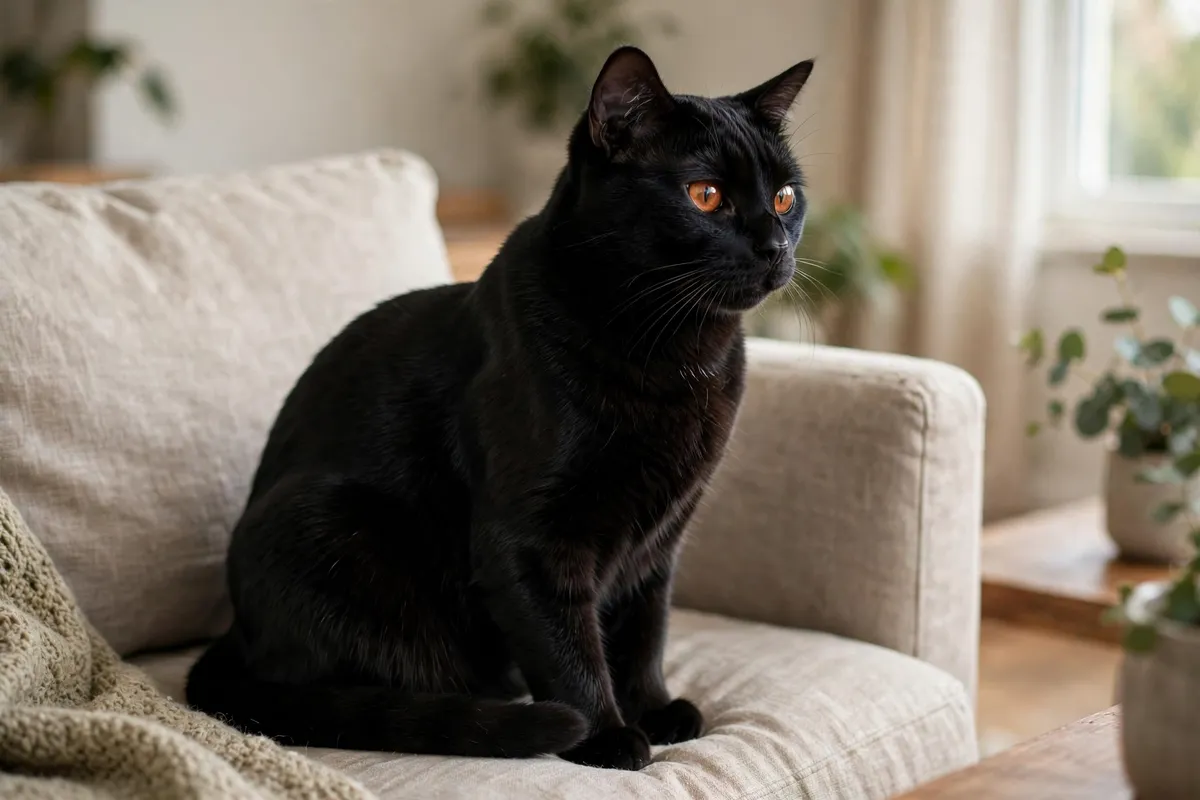
If you have ever wanted a miniature panther curled on your sofa, the Bombay is the breed that delivers it. Developed in the 1950s by crossing Burmese cats with black American Shorthairs, the Bombay was deliberately bred to look like a small black leopard — jet-black coat, copper eyes, muscular body — and the result is one of the most striking cats in the world, with a personality just as memorable.
Beneath the dramatic looks, Bombays are affectionate, talkative, people-loving cats that want to be involved in everything you do. They are not aloof showpieces; they are lap cats, greeters, and conversation partners. This guide covers what a Bombay looks like, how it behaves, what care it needs, and whether this little panther is the right cat for your home.
Appearance: A Miniature Panther
The Bombay standard is strict about looks: the coat must be solid black to the roots, short, fine, and with a satin-like sheen that catches the light as the cat moves. There should be no rusty tinge, no white hairs, and no tabby markings — a true Bombay looks like polished patent leather. The eyes are the other defining feature: large, round, and copper to gold in color, set wide apart in a rounded face with a short muzzle.
Bombays are medium-sized and surprisingly heavy for their size, typically 8 to 12 pounds, with a muscular, compact body that feels solid when you pick them up. They move with a panther-like grace, and breeders often say the goal is a cat that looks like a wild animal but behaves like a devoted pet. Kittens may have faint tabby ghost markings that fade as they mature, and the full adult coat and eye color can take up to two years to develop.
Temperament: Loving, Chatty, and Devoted
Bombays are famous for their people skills. They greet their owners at the door, follow them around the house, sleep on or beside them, and talk to them in a soft, distinctive voice — not loud, but frequent and conversational. Many owners describe Bombays as dog-like in their devotion: they learn routines, come when called, play fetch, and can even learn to walk on a leash with patience.
They are excellent family cats, generally good with children and other pets, including dogs, because they are confident and social rather than shy. They do, however, dislike being left alone for long stretches. A Bombay left alone all day may become bored, vocal, or destructive, and a second pet or a regular human presence helps enormously. If your household is out for ten hours a day, a Bombay may not be the best fit unless another cat or dog keeps it company.
Care: Easier Than It Looks
The short, fine coat is one of the Bombay's great practical advantages: a weekly brush is enough to remove loose hair and keep the sheen, and many Bombays enjoy the attention. Baths are rarely needed. Beyond the coat, care is standard — nail trims, dental care, and ear checks — but dental care deserves emphasis, since the Burmese side of the family is prone to dental issues and many Bombays need regular dental attention through life.
Bombays are indoor cats by preference and by safety: their black coats absorb heat in the sun, and black cats are unfortunately less visible to drivers and more at risk outdoors. An indoor life with window perches, climbing trees, and daily play suits them perfectly. They are intelligent and benefit from puzzle feeders and training games; a bored Bombay is an inventive Bombay, and invention in a cat usually involves your belongings.
Health and Lifespan
Bombays are generally healthy and long-lived, typically 12 to 16 years, with some reaching 20. The main breed-related concerns come from their Burmese ancestry. Burmese cats carry a risk of craniofacial defects in some lines, though responsible breeders screen carefully, and Bombay lines are generally selected away from this. Hypertrophic cardiomyopathy, a heart condition common in many breeds, occurs in Bombays too, so breeders should screen breeding cats, and senior Bombays benefit from periodic heart checks.
Weight management is the everyday health issue: Bombays love food, are muscular and compact, and can gain weight quietly if portions creep up. Keep treats measured, weigh your cat periodically, and use the rib test — you should feel ribs under a thin layer of fat. Dental disease is the other routine concern, so start tooth brushing early and keep up with vet dental checks.
Is a Bombay Right for You?
A Bombay is right for you if you want a beautiful, affectionate, interactive cat and you are home enough to enjoy it. They suit families, couples, and people who work from home, and they thrive in homes where someone is usually around. They are a poor fit for a household that is empty all day, for someone who wants an independent cat that keeps to itself, or for a home where a chatty, following cat would be a nuisance.
When looking for a Bombay, choose a breeder who health-screens for heart disease, raises kittens in the home, and can show you the parents. Be wary of anyone selling a black kitten simply as a Bombay without pedigree or health records — many black domestic cats look similar, and the Bombay temperament and eye color are part of the breed, not just the coat. Breed rescues and Burmese-family rescues occasionally have Bombays needing homes, and an adult Bombay's personality is already fully formed, which is a real advantage.
Living With a Bombay: A Day in the Life
A day with a Bombay is a social affair from start to finish. Expect a cat at the door when you come home, a cat on your lap the moment you sit down, and a cat that follows you into the kitchen to comment on dinner preparations. Bombays tend to sleep where their people sleep, play when their people play, and settle nearby — not across the room — when their people rest. They are not demanding in a loud way, but they are persistent in a quiet one: a Bombay that wants attention will sit beside you and stare until you notice, and most owners find they notice very quickly.
That devotion shapes the practical side of ownership. Bombays do best in homes where someone is around much of the day, or where another pet provides company. They adapt well to apartments because they bond to people more than to space, and they travel better than many cats because their confidence carries over to new rooms. The trade-off is real, though: a Bombay is not a cat you can ignore for a weekend and expect to find unbothered on Monday. If you want a companion that treats you as the center of its world — and you are happy to return the favor — there are few breeds that do it as thoroughly as the Bombay.
Are Bombay cats really all black?
Yes, the breed standard requires a solid black coat to the roots with no white hairs or tabby markings, plus copper or gold eyes. Kittens may show faint ghost markings that fade with age.
Are Bombay cats hypoallergenic?
No. No breed is truly hypoallergenic. Bombays shed lightly, which helps some allergy sufferers, but they still produce the Fel d 1 allergen, so spend time with the breed first if you have allergies.
Are Bombays good with children?
Yes, generally excellent. Bombays are confident, social, and tolerant, and they usually enjoy children who handle them gently. As with any cat, teach children to respect the cat's space.
Do Bombay cats like being alone?
Not for long periods. Bombays bond strongly to their people and can become bored or vocal when left alone all day. A second pet or regular company helps a lot.
How long do Bombay cats live?
Typically 12 to 16 years, with good care and regular vet checkups. Weight control and dental care are the two everyday factors that most affect their long-term health.