Burmese Cat: Complete Breed Guide
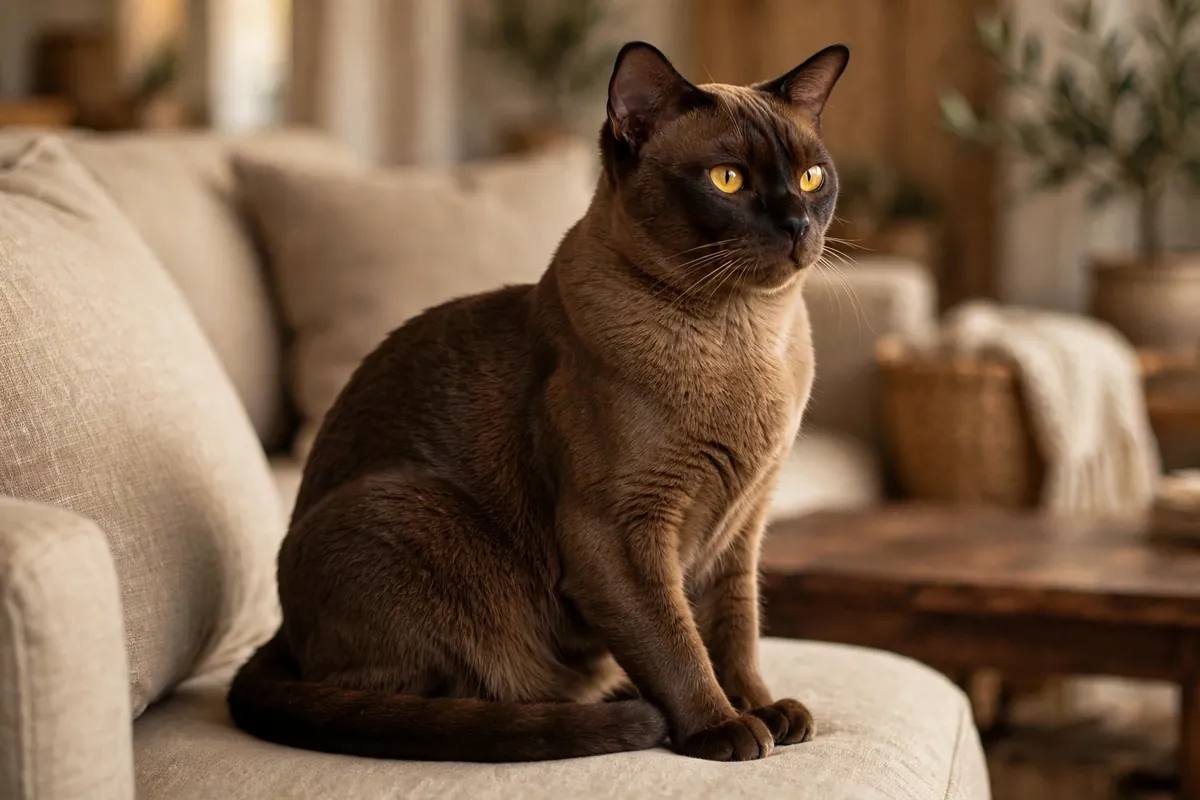
If you want a cat that acts more like a devoted companion than an independent roommate, the Burmese deserves a serious look. Burmese cats are famously people-oriented: they follow their owners from room to room, curl up on laps at every opportunity, and greet visitors at the door as if they were old friends. Beneath a sleek, muscular body and a coat that shines like polished satin sit large, expressive golden eyes and a playful, dog-like personality.
In this complete Burmese cat breed guide, we cover the breed's history, appearance, temperament, grooming and feeding needs, health considerations, and what daily life with a Burmese really looks like — so you can decide whether this affectionate breed is the right match for your home.
Burmese Cat History and Origin
The modern Burmese traces its roots to Southeast Asia, where brown cats with golden eyes were kept in temples and royal households in what is now Myanmar (formerly Burma). The breed as we know it today began in the 1930s, when a small brown cat named Wong Mau was brought to the United States and bred with a Siamese. Her kittens — some brown, some pointed — became the foundation of the Burmese breed in the West.
Over the following decades, breeders refined the Burmese into the compact, muscular cat recognized today, while breeders in Britain developed a slightly different type with a more moderate build. That is why you may hear about American and European (or British) Burmese: both share the same affectionate temperament, but their body shape and head type differ slightly. In the United States, the classic rich sable brown remains the best-known color, while other colors — including champagne, blue, and platinum — are also recognized.
Burmese Cat Appearance
Do not let their medium size fool you: Burmese cats are surprisingly heavy for how they look. Breeders sometimes call them "bricks wrapped in silk," because a compact, muscular body hides under a short, fine coat that lies close to the skin. Most adults weigh between 8 and 12 pounds, with males typically larger than females.
Their most striking feature is their eyes — large, round, and a rich gold or amber that seems to glow against the coat. The head is rounded with a short muzzle, medium ears set well apart, and a sweet, open expression. The coat itself is short, glossy, and remarkably soft, with very little undercoat, which is part of why Burmese cats feel so silky to stroke. While sable brown is the original and most iconic color, Burmese cats also come in champagne, blue, lilac, red, cream, and tortoiseshell variations.
Burmese Cat Temperament and Personality
Temperament is where the Burmese truly shines. These cats crave human company and are often described as dog-like in their loyalty. A Burmese will supervise your cooking, join your video calls, ride on your shoulder, and sleep curled against you at night. They are not cats that are content to admire you from across the room — they want to be involved.
Burmese cats stay playful well into adulthood. They love interactive toys, puzzle feeders, and games of fetch, and many learn to play fetch quite readily.
One honest caveat: a Burmese does not enjoy being left alone for long periods. A cat that is bored or lonely may follow you relentlessly, vocalize more, or get into mischief. If your household is empty all day, a second cat — ideally another sociable breed — can make a real difference.
Burmese Cat Care: Grooming, Feeding, and Play
Grooming a Burmese is refreshingly simple. A weekly brush with a soft bristle brush or grooming mitt removes loose hair and keeps the coat gleaming; many owners finish with a gentle rub using a soft cloth or chamois, which brings out the breed's famous satin sheen. Because the coat is short, shedding is light, but regular brushing still helps during seasonal changes.
As with all cats, routine care matters: trim nails every couple of weeks, brush teeth several times a week with a cat-safe toothpaste, and check ears for dirt or redness. Burmese cats are active and muscular, so they benefit from daily play sessions — wand toys, climbing trees, and puzzle feeders keep both body and mind busy. A tall cat tree near a window is almost always a hit.
When it comes to food, Burmese cats are enthusiastic eaters, and that enthusiasm can lead to weight gain if portions are not watched. Feed a high-quality, meat-based diet appropriate to your cat's age, measure portions rather than free-feeding, and keep treats to a small share of daily calories. Fresh water should always be available, and many Burmese enjoy a cat water fountain. If you are unsure about portions, your veterinarian can help you set a target weight and feeding plan.
Burmese Cat Health and Lifespan
Burmese cats are generally healthy and famously long-lived, often reaching 16 to 18 years with good care. Like all purebred cats, however, they have some breed tendencies worth knowing about. Responsible breeders screen for conditions including hypokalemia (low blood potassium, which can cause muscle weakness), certain eye conditions, and diabetes, which Burmese cats may be somewhat more prone to than average.
Dental disease is another area to watch, since Burmese cats can be prone to gum problems; regular tooth brushing and veterinary dental checks go a long way. Keeping your Burmese indoors, maintaining a healthy weight, and attending annual veterinary checkups — twice yearly for seniors — are the most effective steps you can take. Any sudden change in appetite, thirst, energy, or litter box habits deserves a prompt veterinary visit, whatever the breed.
Living With a Burmese Cat
A Burmese fits best in a home where people are present and engaged. They thrive in families, with couples, and with singles who work from home or spend plenty of time indoors. They generally adapt well to apartments, as long as they get playtime and enrichment, and they usually get along with other cats and cat-friendly dogs when introductions are gradual.
Because they are so people-focused, Burmese cats are also a good choice for first-time owners who want an interactive, forgiving companion — as long as you are prepared for a cat that will be on your lap, on your keyboard, and in your bed. If you prefer a cat that keeps its distance and values independence, a Burmese may feel a little intense. If you want a constant, affectionate shadow, you will rarely find a better match.
Is a Burmese Cat Right for You?
Choose a Burmese if you want a loyal, playful, talkative cat that treats you as the center of its world, and if you can offer daily attention, play, and companionship. Think twice if you are away from home for very long hours, or if you want a quiet, low-interaction pet. When buying from a breeder, look for health screening, kittens raised indoors with their mother until at least 12 weeks, and a breeder happy to answer questions; also consider breed-specific rescues, where adult Burmese cats sometimes need new homes.
With their golden eyes, satin coats, and famously loving nature, Burmese cats have a way of turning owners into lifelong fans. Give one attention, play, and a warm lap, and you will get back a companion that is with you for every moment of the day — happily.
Frequently Asked Questions
Are Burmese cats good with children?
Yes, Burmese cats are generally excellent with children. They are patient, playful, and social, and they usually enjoy being part of family activity. As with any pet, children should be taught to handle the cat gently and respect its space.
Do Burmese cats shed a lot?
No. Burmese cats have a short, fine, close-lying coat that sheds only lightly. A weekly brush is usually enough to remove loose hair and keep the coat glossy.
Are Burmese cats very vocal?
Burmese cats do talk, but their voice is softer and less demanding than a Siamese. Expect chirps, trills, and conversational meows, especially when they want attention or dinner.
Can a Burmese cat be left alone all day?
Not happily. Burmese cats are deeply people-oriented and can become lonely or bored if left alone for very long stretches. They do best in homes where someone is around much of the day, or with another friendly pet for company.
How long do Burmese cats live?
Burmese cats are known for longevity and often live into their mid-to-late teens, with many reaching 16 to 18 years when given good veterinary care, a healthy diet, and a safe indoor life.