British Longhair: Complete Breed Guide
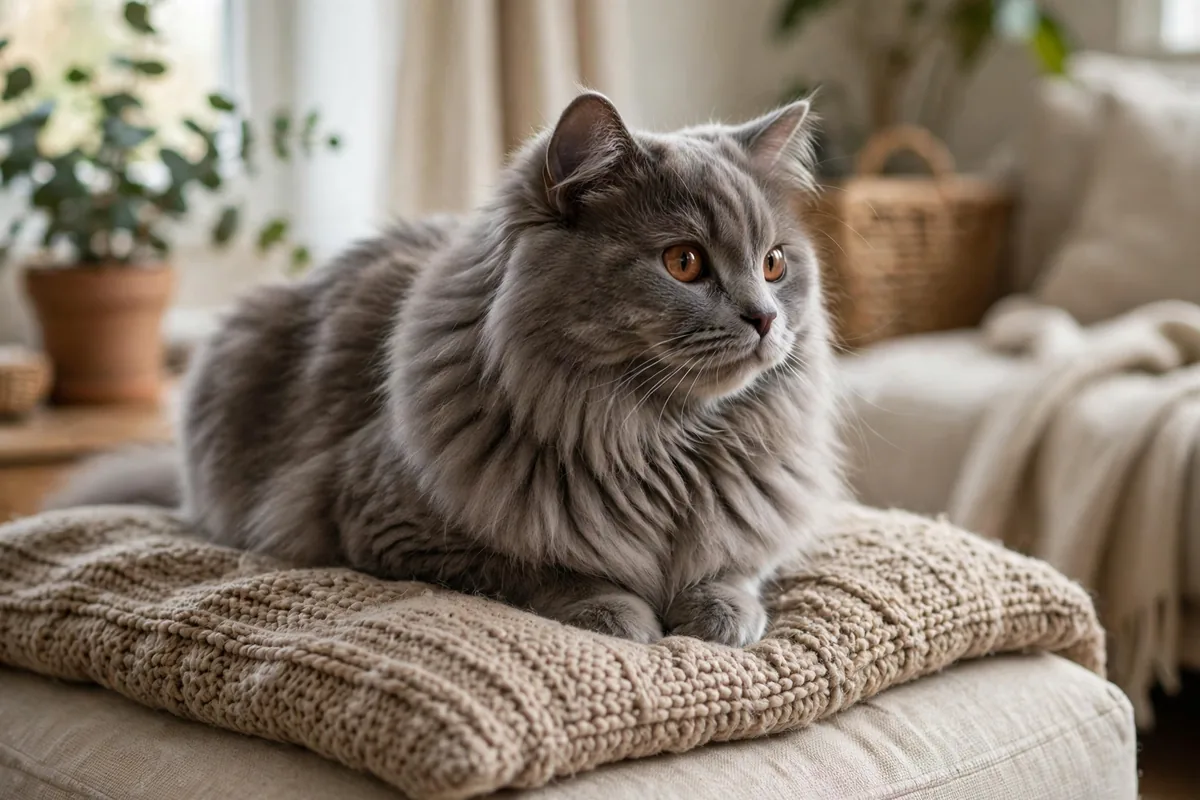
The British Longhair is the long-coated cousin of the famous British Shorthair: the same round face, the same calm and steady nature, and the same plush, teddy-bear charm, but with a flowing coat that makes it look even more like a soft toy. It is a gentle, dignified cat that asks for very little and gives a great deal of quiet companionship in return.
If you love the British Shorthair's personality but dream of a fluffier cat, the British Longhair may be exactly what you are looking for. This guide covers the breed's origins, appearance, temperament, grooming load, health, and whether it fits your home.
British Longhair at a Glance
The British Longhair is a medium to large cat with a broad chest, sturdy legs, and a thick, plush coat that can be any of the colours found in the Shorthair, including the classic British blue, black, white, cream, and tabby patterns. The face is round with full cheeks, a short nose, and large round eyes that are usually copper or orange, though blue and green eyes appear in some colours.
Adult British Longhairs usually weigh between 4 and 8 kilograms, with males noticeably larger than females. They are slow to mature and may not reach their full size and coat until they are three years old. They are calm, well-muscled cats with a quiet, unhurried way of moving, and they typically live into their mid to late teens with good care.
Origin and History: The Shorthair's Fluffy Sibling
The British Longhair shares its history with the British Shorthair, one of the oldest recognised cat breeds in Britain. During the 20th century, breeders crossed British Shorthairs with longhaired cats such as Persians to improve the coat and add variety, and longhaired kittens began appearing in Shorthair litters. For many years these kittens were simply considered Shorthairs with a long coat, but breeders eventually recognised them as a breed in their own right.
Today the British Longhair is recognised by several cat associations, though its status varies by country, and in some registries it is still shown as a longhaired variety of the British Shorthair. Whatever the paperwork says, the cat itself is unmistakable: a round-faced, plush-coated companion with the same steady British character as its shorter-coated sibling.
Appearance: A Teddy Bear in a Long Coat
The British Longhair's coat is its defining feature: dense, plush, and medium-long, with a thick ruff around the neck and a full, bushy tail. The coat stands out from the body rather than lying flat, which gives the cat a soft, rounded, teddy-bear outline. The classic British blue, a solid grey-blue, is the most famous colour, but the breed comes in a wide range of colours and patterns.
The head is broad and round, with full cheeks that are especially pronounced in males, small rounded ears set wide apart, and large round eyes that give the cat a gentle, slightly surprised expression. The body is compact and muscular, and the legs are short and sturdy. This is a cat that looks as soft as it feels, and many owners say the British Longhair is the closest thing to a living plush toy.
Personality and Temperament: Calm and Dignified
British Longhairs are calm, quiet, and undemanding. They enjoy being near their people and will follow you into the room to sit nearby, but they are not lap cats in the clingy sense, and they are perfectly happy to rest on their own. They rarely meow loudly, they do not demand constant attention, and they cope well with being left alone during the working day, which makes them a good fit for people with busy schedules.
They are gentle with children and usually tolerant of other pets, including dogs, as long as introductions are calm. They enjoy short play sessions, especially with a toy they can chase in bursts, but they are not high-energy cats, and they will not climb your curtains or race around the house at three in the morning. Their dignity is part of their charm: a British Longhair does everything at its own pace, and it expects you to respect that.
Grooming a Plush Coat: The Real Workload
The long coat is the one area where the British Longhair asks more of you than its Shorthair sibling. Brush the coat two to three times a week with a wide-toothed comb or a slicker brush, working gently through the dense fur and paying attention to the armpits, the belly, and the ruff, where mats form first. During seasonal shedding, you may need to brush daily for a week or two.
Regular grooming also reduces hairballs, which longhaired cats are prone to, and keeps loose hair off your furniture. Baths are rarely needed unless the coat gets dirty, but a warm, calm bath every few months can help during heavy shedding. Keep nails trimmed, check the ears, and brush the teeth regularly. A good scratching post and a comfortable bed near a window will complete your British Longhair's setup.
British Longhair Health and Lifespan
British Longhairs are generally healthy and typically live for 14 to 18 years. Like the British Shorthair, they can be prone to hypertrophic cardiomyopathy, a heart condition, so responsible breeders screen their breeding cats, and you should ask for evidence of screening before buying a kitten. They can also be prone to weight gain, because they are calm cats with a healthy appetite, so measured meals and play are important.
Polycystic kidney disease can appear in this breed family too, so a good breeder will test for it. Beyond these breed-specific risks, the usual feline health rules apply: regular vet checks, dental care, vaccinations, and parasite control. A British Longhair that is kept at a healthy weight and given regular vet care is a robust, long-lived companion.
Is the British Longhair Right for You?
The British Longhair suits owners who want a calm, beautiful, low-drama cat and are willing to brush a coat two or three times a week. It is a good choice for apartments, for working owners, for families with older children, and for anyone who likes a cat that is affectionate without being needy.
It is less suited to someone who wants a highly interactive, talkative, or athletic cat, or to someone who cannot commit to regular grooming, since a neglected long coat mats quickly and causes the cat real discomfort. If you want a dignified, plush companion that will quietly share your home for many years, the British Longhair is an excellent choice.
Frequently Asked Questions
Do British Longhair cats shed a lot?
Yes, they shed moderately to heavily, especially during seasonal coat changes. The dense, plush coat loses hair year-round, so expect to brush two to three times a week and to find some hair on soft furnishings. Regular grooming keeps it manageable.
Are British Longhair cats good with children?
Yes, they are usually patient and gentle with children, especially older children who treat them calmly. They are not fond of rough handling or being carried around a lot, so teach children to let the cat come to them and to respect its space.
How often should I groom a British Longhair?
Brush two to three times a week with a wide-toothed comb, and daily during heavy seasonal shedding. Pay attention to the armpits, belly, and neck ruff, where mats form first. Regular grooming also reduces hairballs.
Are British Longhair cats lap cats?
They are affectionate but not typically clingy lap cats. A British Longhair likes to be near you, often sitting beside you rather than on you, and it enjoys gentle petting on its own terms. It is a calm companion rather than a demanding one.
How long do British Longhair cats live?
With good care, British Longhairs typically live 14 to 18 years. Keeping them at a healthy weight, brushing their teeth, and having regular vet check-ups, including heart screening, all help them live a long, healthy life.