Burmilla: Complete Breed Guide
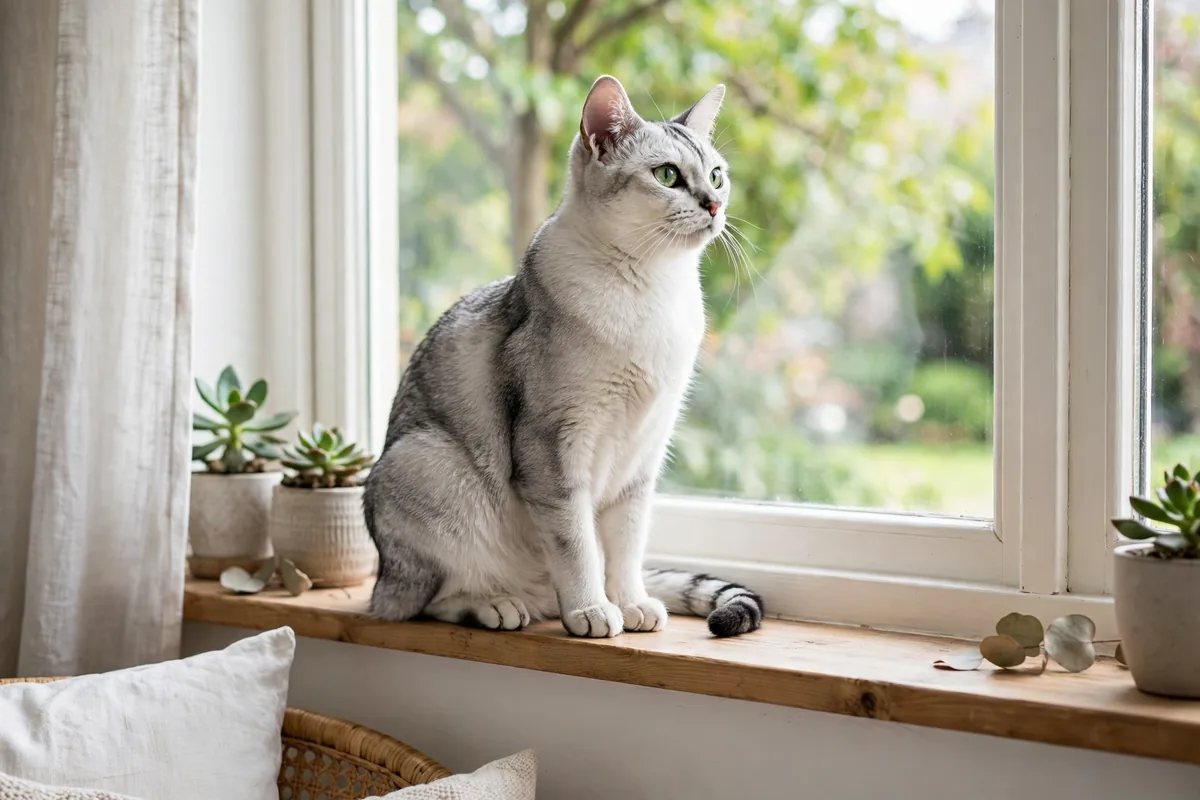
The Burmilla is one of the cat world's happiest accidents. In 1981, a Chinchilla Persian and a Burmese cat in England produced a litter of kittens with a silver-shaded coat and a sweet, playful nature, and breeders quickly realised they had something special. The result is a cat that combines the Burmese personality with a coat that looks dusted in silver.
If you want a sociable, gentle cat with an unusual and beautiful coat, the Burmilla is well worth considering. This guide covers the breed's origins, appearance, temperament, grooming needs, health, and whether it fits your home.
Burmilla at a Glance
The Burmilla is a medium-sized cat with a short, dense coat that is shaded or tipped in silver, black, blue, chocolate, lilac, or other colours over a pale background. The tipping gives the coat a sparkling, frosted appearance that is the breed's signature. A semi-longhaired variety also exists, with a slightly longer, silkier coat. The eyes are large and expressive, usually green, and outlined in a dark line that makes them stand out.
Adult Burmillas usually weigh between 4 and 6 kilograms, with a well-muscled, elegant body and a medium-length tail. They are sturdy without being heavy, and they move gracefully. Most Burmillas live into their mid-teens with good care, and they are generally healthy cats that stay playful well into adulthood.
Origin and History: A Happy Accident
The Burmilla story begins in the United Kingdom in 1981, when a lilac Burmese male and a Chinchilla Persian female, kept in the same household, produced a litter of kittens. The kittens had the Burmese body shape and temperament, but their coats were shaded silver like the Chinchilla parent. The breeder, Miranda von Kirchberg, recognised the appeal of the combination and began a deliberate breeding programme.
The new breed was called the Burmilla, a blend of Burmese and Chinchilla, and it was recognised in the UK in the 1990s. The breed has since spread to other countries, though it remains less common than its parent breeds, which means prospective owners may need to join a waiting list. Its accidental origin is part of its charm: the Burmilla was not designed on paper, it was discovered.
Appearance: A Coat Dusted in Silver
The Burmilla coat is what most people notice first. The short variety has a dense, close-lying coat with silver tipping that makes it look as though the cat has been dusted with frost. The shaded pattern is strongest on the back and sides, while the belly and chest are paler. The semi-longhaired variety has a slightly longer coat with the same beautiful tipping and a plumed tail.
The head is a gentle wedge with a short nose, large ears, and big, expressive eyes that are usually green, though amber is possible in some colours. The eyes are outlined in dark, which gives the Burmilla a striking, almost made-up look. The body is medium in length and well muscled, and the legs are slim and elegant. Kittens are born with their silver tipping already visible, and it becomes clearer as they grow.
Personality and Temperament: Playful but Gentle
Burmillas inherit the best of both parent breeds: the Burmese playfulness and people-loving nature, and the Chinchilla's gentleness. They are affectionate, social cats that enjoy being part of family life, and they will follow you around the house, sit beside you, and join in games. They are playful without being hyperactive, and they enjoy interactive toys, puzzle feeders, and a good game of fetch.
They are also famously tolerant and even-tempered, which makes them excellent family cats. They are usually good with children and with other pets, and they cope well with visitors. Unlike some very demanding breeds, the Burmilla is happy to entertain itself for a while, though it does not enjoy being left alone for very long hours every day. A Burmilla with a companion cat or a family member at home is a happy Burmilla.
Grooming and Everyday Care
The short-coated Burmilla is easy to groom: a weekly brush with a soft brush or grooming mitt removes loose hair and keeps the silver-tipped coat looking its best. The semi-longhaired variety needs brushing two or three times a week, especially during seasonal shedding, to prevent tangles. Shedding is moderate in the short variety and a little heavier in the semi-longhaired one.
Give your Burmilla a scratching post, a few toys, and a window perch, and play with it for ten to fifteen minutes a day. Feed a good-quality complete food in measured portions, keep fresh water available, and keep up the routine care: nail trims, dental care, and regular vet check-ups. Burmillas are indoor cats by nature and are happiest inside, where their coat stays clean and their people are close by.
Burmilla Health and Lifespan
Burmillas are generally healthy cats with a lifespan of around 12 to 16 years. Because the breed is a cross of two established breeds, it has a reasonably wide genetic base, but it can inherit health issues from either parent line. Polycystic kidney disease, which can appear in Persian-related lines, is one condition responsible breeders test for, so ask about screening before buying a kitten.
Like many cats, Burmillas can also develop dental disease and weight gain if they are overfed and under-exercised. Keep portions measured, offer play every day, and take your cat for a vet check at least once a year. Any sudden change in appetite, weight, drinking, or litter box habits is worth a prompt vet visit.
Is the Burmilla Right for You?
The Burmilla suits owners who want a sociable, affectionate, beautiful cat that fits easily into family life. It is a great choice for first-time owners, for families with children, and for homes with other pets. It does well in apartments and houses alike, as long as it gets attention and play.
It is less suited to someone who is away from home for very long hours every day, since the Burmilla is a social cat that misses its people. It can also be hard to find, and you may need to wait for a kitten from a reputable breeder. If a gentle, playful, silver-coated companion sounds right, the Burmilla is an excellent choice.
Frequently Asked Questions
Do Burmilla cats shed a lot?
Shedding is moderate. The short coat loses some hair year-round, with a little more during seasonal changes. A weekly brush keeps it under control. The semi-longhaired variety sheds a bit more and benefits from brushing two or three times a week.
Are Burmilla cats good with children?
Yes, Burmillas are usually wonderful with children. They are patient, playful, and tolerant, and they enjoy interactive games. As with any cat, teach children to handle the cat gently and to give it space when it wants to rest.
Are Burmilla cats good with other pets?
Yes, they are usually good with other cats and with cat-friendly dogs, especially when introduced gradually. Burmillas are social cats that enjoy company, and many do better in a home with another pet than living entirely alone.
Are Burmilla cats hypoallergenic?
No cat is truly hypoallergenic, and the Burmilla is no exception. Its short coat and moderate shedding may mean less hair around the house, but it still produces the allergy-causing protein, so allergy sufferers should spend time with the breed first.
How long do Burmilla cats live?
With good care, Burmillas typically live around 12 to 16 years. Regular vet check-ups, a measured diet, dental care, and an indoor lifestyle all help them reach a healthy old age.