Can Cats Eat Asparagus?
The Short Answer: Yes, Cooked and Plain Only
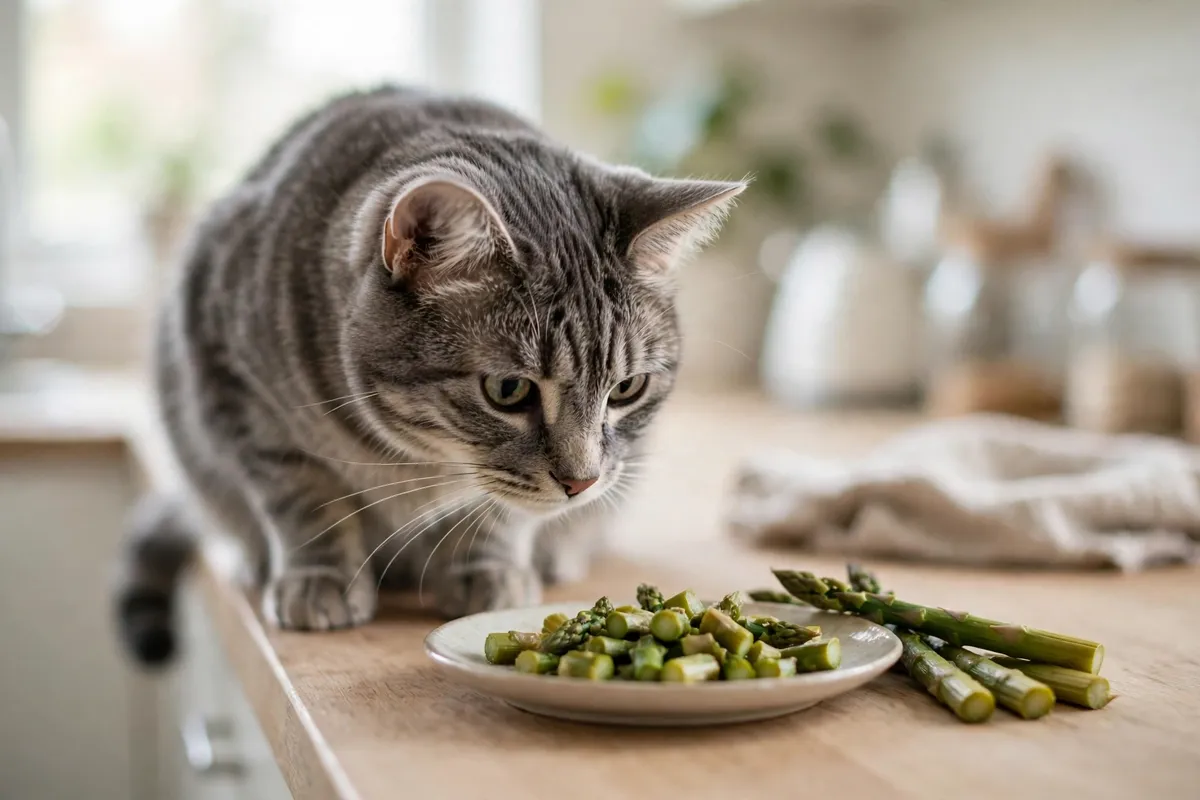
Yes, cats can eat asparagus — but only when it is cooked, plain, and cut into small pieces. Cooked asparagus is safe: nothing toxic to cats, and easy to digest once softened by cooking. The rules are firm: snap off the woody ends, cook the spears until soft, let them cool, and serve them plain with no salt, butter, oil, or seasoning.
Raw asparagus is a different story. A raw spear is tough and fibrous, hard for a cat to chew, and the woody end is a genuine choking risk. And asparagus served the way people usually eat it — roasted in oil, wrapped in bacon, or covered in hollandaise — is not safe at all, because the toppings are the problem, not the vegetable. Keep reading for the cooked-versus-raw difference, the woody-end trick, and the right portion.
Is Asparagus Safe for Cats?
Asparagus is safe for cats. It contains no compounds that are toxic to them, unlike onions, garlic, grapes, and chives, which are all dangerous. Cooked asparagus is soft, mild, and easy to digest — in the same safe group as green beans and zucchini.
That safety comes with two conditions. First, it must be cooked — raw asparagus is so tough that a cat cannot chew it properly, and the woody end can catch in the throat. Second, it must be plain. The seasonings and toppings people put on asparagus are where the real danger hides: butter and oil add unneeded fat, salt adds sodium, and garlic is toxic. Always cut your cat's portion before you season the rest.
Cooked vs Raw Asparagus for Cats
Cooked asparagus is the only kind your cat should eat. Steaming or boiling softens the tough fibers so the spear can be cut and chewed easily. A few minutes in boiling water or a steamer is enough — tender but not mushy. Let it cool completely before offering it.
Raw asparagus is not worth the risk. A raw spear is woody and stringy, and cats do not chew the way people do — they shear food with their teeth and tend to swallow small chunks whole. A piece of raw asparagus can be hard to swallow and digest, and the tough fibers can irritate the stomach. Grilled asparagus is also off the list, because grilling usually means oil and seasoning, and the charred edges are too tough.
The Woody End Problem
Every asparagus spear has a woody end — the pale, tough bottom part that never softens. For people, it is just unpleasant. For a cat, it is a choking hazard: the fibers at the bottom are dense and rigid, and a swallowed piece can catch in the throat or pass through undigested.
Removing the woody end is easy: hold the spear in both hands and bend it gently near the bottom, and it will snap naturally where the tender part ends and the woody part begins. Throw the woody ends away — do not cook them, do not chop them, and do not leave them where your cat can find them. After snapping, cook only the tender green part and cut it into pea-sized pieces — this one step removes the biggest physical risk in the whole vegetable.
How to Prepare Asparagus for Your Cat
Preparing asparagus takes a few minutes. Start by snapping off the woody ends and washing the spears well under running water. Then steam or boil them for a few minutes until tender — steaming is gentlest, but plain boiling works just as well. Do not salt the water, and do not cook the asparagus in butter, oil, or broth.
Let the spears cool to room temperature, then cut them into pieces no bigger than a pea. Serve the pieces plain in a small bowl, with nothing added — no salt, butter, oil, lemon, or seasoning. Offer them on their own, so you can see how much your cat eats. If your cat gulps the pieces, make them even smaller next time. Never offer asparagus from a seasoned dish, even if you scrape the topping off — the seasoning has already soaked in.
How Much Asparagus Can a Cat Eat?
One or two small pieces — about a teaspoon — is a good serving, once or twice a week at most. Asparagus is a treat, not a food, and the ten-percent rule still applies: all treats combined should stay under ten percent of your cat's daily calories. The limit is about fiber — too much at once can loosen your cat's stool.
Start with a single tiny piece. Many cats will sniff asparagus and walk away, which is completely normal — cats are suspicious of new foods, and asparagus has a mild, grassy smell that does not excite a cat's nose. If your cat eats the piece happily and its digestion stays normal, you can offer a full small serving next time. Do not offer more just because your cat enjoys it; the portion rule stays the same.
Can Kittens Eat Asparagus?
Kittens can have a tiny taste of asparagus once they are eating solid food, usually from around eight weeks old — but only prepared exactly as for an adult cat: woody ends removed, cooked soft, cooled, and cut smaller than a pea. A kitten's throat is even narrower, so the choking risk is higher, and a kitten's stomach is small, so even a little extra fiber can upset it.
For kittens, one tiny piece is the whole serving, and kitten food should remain their main diet. Asparagus offers a kitten nothing it needs, so there is no reason to make it a regular treat. A soft, well-cooked option like a tiny piece of zucchini is a gentler first choice. For kittens under eight weeks, skip vegetables entirely and stick to nursing or a kitten milk replacer as your vet advises.
What Happens If My Cat Eats Asparagus?
If your cat ate a few properly prepared pieces, there is nothing to worry about. Most cats digest a small serving without trouble, and the worst outcome of overdoing it is a slightly softer stool for a day. Offer fresh water, feed the next meal as normal, and skip the next vegetable treat until things settle.
If your cat ate raw asparagus or a woody end, watch it closely for a few hours. Signs of trouble include gagging, retching, pawing at the mouth, drooling, or vomiting. If your cat stops eating, becomes lethargic, or cannot pass stool normally, call your vet right away. And if your cat stole asparagus from your plate, check how it was cooked: bacon-wrapped, garlic-butter-roasted, or sauce-covered asparagus can be dangerous because of the toppings, not the vegetable. Garlic and onion are toxic to cats, so call your vet if the asparagus was seasoned with either.
Asparagus is safe for cats when cooked, plain, and cut small — with the woody ends always removed. Raw asparagus is too tough, and seasoned asparagus is a different food entirely, so the rule is simple: snap, steam, cool, chop, and serve plain. Keep the portion to a teaspoon or two, watch the first serving, and remember that asparagus is a treat, not a food.
Can cats eat asparagus?
Yes. Cooked asparagus is safe for cats when served plain, in small pieces, with the woody ends removed. Raw asparagus is too tough to digest.
Is asparagus safe for cats?
Yes, asparagus contains nothing toxic to cats. It is low in calories and easy to digest once cooked and cut small. The risks are the tough woody ends and any seasoning.
Can cats eat raw asparagus?
Raw asparagus is not recommended. It is very tough and fibrous, which makes it hard to chew and digest, and the woody ends are a choking risk. Always cook it first.
How do I prepare asparagus for my cat?
Snap off the woody ends, steam or boil the spears until soft, let them cool, and cut them into pieces no bigger than a pea. Serve plain, with no salt, butter, oil, or seasoning.
Can kittens eat asparagus?
Kittens can have a tiny taste of soft, cooked, plain asparagus once they are eating solid food, usually from around eight weeks old. Kitten food should remain their main diet.
How much asparagus can a cat eat?
One or two small pieces, about a teaspoon, once or twice a week at most. All treats combined should stay under ten percent of your cat's daily calories.