Can Cats Eat Beans?
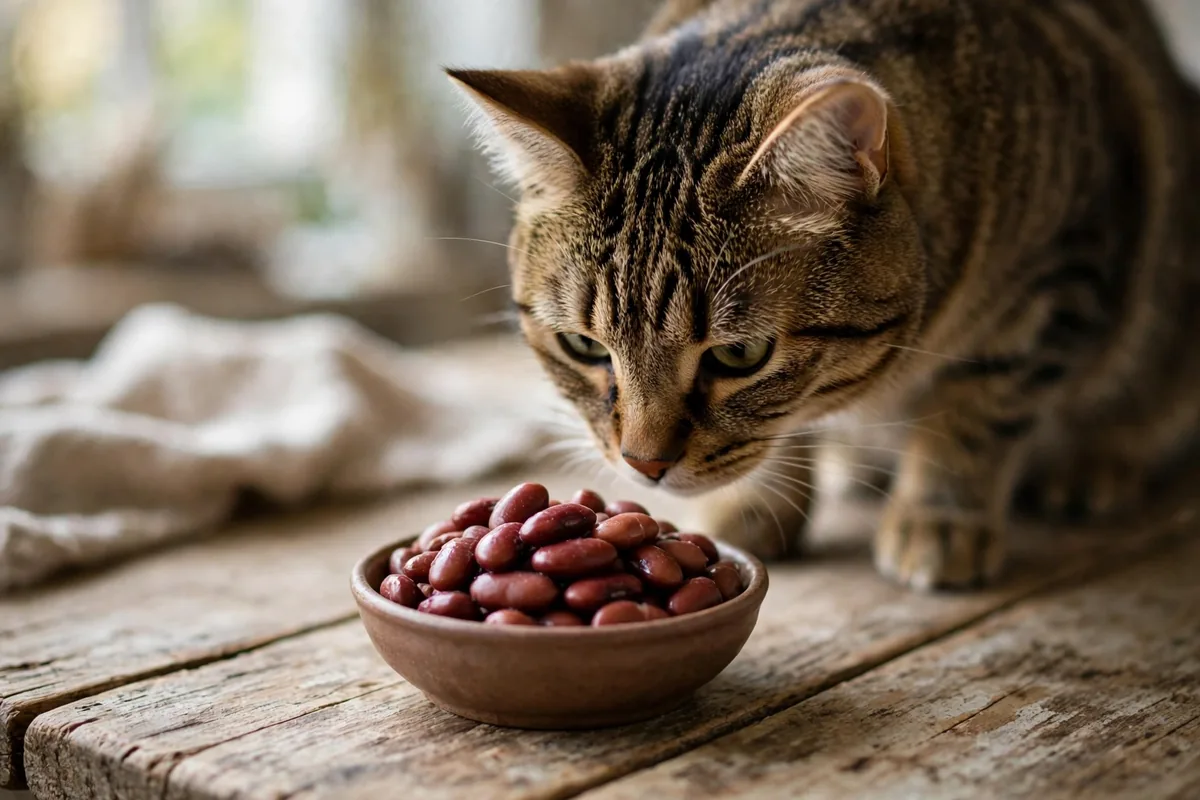
Yes — cats can eat beans, but only cooked, plain beans, and only two or three at a time. A few plain cooked beans are not toxic, but beans are not a food cats need, and the forms beans usually come in — raw or dried, straight from a salty can, or baked in a sweet sauce — are the ones that cause trouble. So the odd plain bean offered carefully is unlikely to cause harm, but beans should never become a regular part of your cat's diet.
This guide explains why beans are a poor fit for an obligate carnivore, why raw and dried beans are genuinely dangerous, what makes canned beans a salt problem, and what to do if your cat has already eaten some.
The Verdict: Can Cats Eat Beans?
Verdict: CAUTION. Cooked plain beans are not toxic, and two or three offered occasionally are harmless for a healthy adult cat. But beans give your cat nothing they actually need, and they are famous for causing gas and gut upset — even in people. Raw or dried beans are a different story entirely and must never be eaten.
Share beans with your cat only when they are fully cooked, completely plain and unseasoned, cut small, and offered rarely. If the beans came from a can, a baked-bean tin, or a seasoned dish, they are not shareable — assume they contain salt, sugar, or onion and garlic.
Why Beans Are a Poor Fit for Cats
Cats are obligate carnivores, which means their bodies are built to get their nutrition from animal tissue. They need nutrients that only meat provides in the right form — taurine for the heart and eyes, arachidonic acid for skin and coat health, and vitamin A that their bodies cannot make from plant sources. Beans contain none of these. A cat that eats beans is eating a food that fills the stomach without feeding the body.
Beans are also very high in fiber and complex sugars that a cat's short digestive tract is not designed to break down. This is why beans cause gas in people — and the same thing happens in cats, often more noticeably because their stomachs are so much smaller. A few beans can leave your cat gassy, bloated, and uncomfortable for hours, and larger amounts can cause soft stools or diarrhea.
That matters most. Beans take up room in a stomach that should be filled with a complete, balanced cat food, and a cat that fills up on beans eats less of the food that actually keeps them healthy.
Raw and Dried Beans: The Real Danger
This is the danger most owners do not think about. Raw and undercooked kidney beans contain lectins — natural plant compounds that are toxic when the beans are not cooked thoroughly. Eating raw or dried beans can cause severe vomiting, diarrhea, and stomach pain in cats, and the small, hard dried beans are also a choking hazard for a cat that tries to swallow one whole.
The risk is higher for kittens and small cats, and for any cat that gulps food without chewing. Dried beans sitting in a pantry or spilled on a kitchen floor are a real hazard: a curious cat can bat one around and swallow it before you notice. Store dried beans in sealed containers, sweep up any that fall, and never offer your cat a bean that has not been fully cooked until soft.
Cooking destroys the lectins in kidney beans — but only thorough cooking does the job. Beans that are only soaked, or only briefly heated, may still contain enough lectins to cause trouble, so if you are not sure the beans were fully cooked through, do not share them.
The Canned Bean Problem: Salt
Most of the beans in a kitchen come from a can, and canned beans are a salt problem. The liquid in a can of beans is very salty, and even beans that have been drained and rinsed still carry far more sodium than a cat should eat. A cat's small body handles excess sodium poorly — extra thirst, vomiting, and stomach upset are the usual signs.
Rinsing helps, but it does not make canned beans a good choice. If you do share beans from a can, rinse them very thoroughly under running water first, and offer only a couple of beans. Even then, home-cooked dried beans that you have boiled yourself until soft, with no salt added, are the safer option.
And then there are the flavored cans. Baked beans are cooked in a sweet sauce that often contains onion and garlic, both of which are toxic to cats. Chili beans, refried beans, and seasoned bean mixes all contain spices, salt, and often onion or garlic powder. None of these should ever be shared with a cat, no matter how small the amount.
Is Beans Safe for Cats?
Plain, fully cooked beans, with nothing added, are safe in tiny amounts for a healthy adult cat. They are not toxic, and two or three beans are unlikely to cause any trouble beyond a little gas. But "safe" and "a good idea" are different things — beans offer no nutrition your cat needs, and many cats will not even eat them.
The versions of beans that are not safe are the ones most people actually eat: raw or dried beans, salty canned beans, baked beans in sauce, and seasoned bean dishes. If the beans on your plate have any sauce, seasoning, or salt on them, keep them away from your cat.
Can Kittens Eat Beans?
No — kittens should not eat beans. A kitten's stomach is small and much more sensitive to fiber and salt than an adult cat's, and their growth depends on a complete kitten food that delivers the right balance of protein, fat, and minerals. Beans take up precious room in a tiny stomach and give nothing back.
Wait until your cat is an adult before offering even a couple of plain cooked beans, and even then, keep it rare. If your kitten is curious about the beans on your plate, let them sniff them from a safe distance and give them a proper kitten treat instead.
How Much Beans Can a Cat Eat?
If you share beans at all, keep it to two or three small plain cooked beans, offered rarely — not daily, and never a handful or a bowlful. Cut larger beans in half, make sure they are completely unseasoned, and offer them one at a time.
Watch your cat over the next day. If you see gas, bloating, soft stools, or a skipped meal, their stomach did not appreciate the beans, and beans should stay a one-time experiment. And if your cat shows no interest at all, that is fine too — no cat needs beans, and a meat-based treat is always the better choice.
What Happens If My Cat Eats Beans?
If the beans were plain and fully cooked, almost certainly nothing worse than a little gas. A few plain beans usually pass through without any trouble, though some cats may get bloated or have soft stools from the fiber.
Raw or dried beans, or salty canned beans, are more likely to cause vomiting, diarrhea, and extra thirst over the next few hours. The serious case is a cat that ate raw kidney beans or a large amount of baked beans with onion and garlic. Watch for repeated vomiting, refusal to drink, weakness, bloating that does not ease, or lethargy, and call your vet if you see any of these signs.
What to Do If Your Cat Already Ate Beans
Work through these steps:
- Take the beans away so your cat cannot eat more, and check what kind they were — plain cooked, canned, baked in sauce, or raw and dried.
- Check the ingredients first. If the beans contained onion, garlic, or a salty or sweet sauce, note how much your cat ate and call your vet for advice, even if your cat seems fine.
- Offer fresh water and let your cat drink freely, especially if the beans were salted or from a can.
- Watch for 24 hours. Mild gas, bloating, or one soft stool usually settles on its own.
- Call your vet right away if you see repeated vomiting, refusal to drink, weakness, bloating that does not ease, or if the eater was a kitten, or if your cat ate raw or dried beans.
Never try to make your cat vomit at home unless your vet specifically tells you to. For more on safe snacks, see our guides to whether cats can eat cheese and whether cats can eat rice, or browse the full Cat Food section on the Purrfect Paws homepage.
Frequently Asked Questions
Is beans safe for cats?
Cooked plain beans are not toxic to cats in small amounts, but they are not a good food for them. Raw or dried beans are not safe, and canned beans are usually too salty to share.
Can kittens eat beans?
No. Kittens should not eat beans — their small stomachs are sensitive to fiber and salt, and they need a complete kitten food to grow properly. Beans take up room that should go to the nutrition they need.
What happens if my cat eats beans?
A few plain cooked beans usually cause nothing worse than gas. Raw or dried beans, or salty canned beans, can cause vomiting, diarrhea, and extra thirst. Watch for bloating or discomfort and call your vet if it does not pass.
How much beans can a cat eat?
Two or three small plain cooked beans, offered rarely, is plenty. Serve them unseasoned, cut small, and never as a regular part of your cat's diet.
Can cats eat baked beans?
No. Baked beans are cooked in a sweet, salty sauce that often contains onion and garlic — all of which can upset a cat's stomach. Only plain, cooked beans with nothing added are even a maybe.