Can Cats Eat Beets?
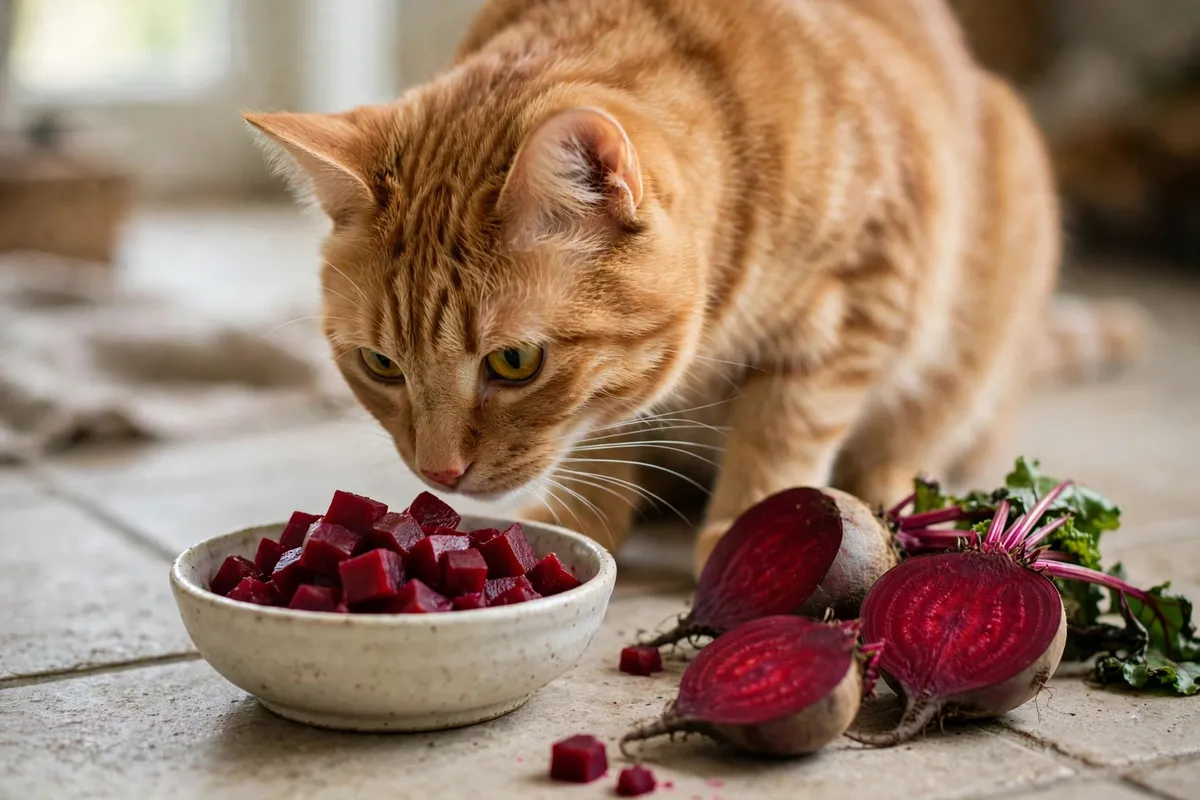
The Short Answer: Yes, Cooked Beets in Small Amounts
Yes, cats can eat beets. Cooked beets, in small amounts, are safe for cats. Beets are not toxic to cats, and a few small pieces of plain, cooked beetroot make a fine occasional treat. The one thing that catches most owners off guard is what comes next: red or pink stool, which looks alarming but is usually harmless and has a name — beeturia.
Beets are a root vegetable, and like most vegetables they offer a cat almost nothing it actually needs — cats are obligate carnivores, and their real food is meat. But as a rare treat, beets are safe. Keep reading for the red-stool explanation, the cooked-versus-raw difference, the right portion, and the beet greens and juice question.
Are Beets Safe for Cats?
Yes. Beets contain no compounds that are toxic to cats. They are low in calories, a good source of fiber and water, and carry folate and manganese. A cat that eats a few pieces of plain cooked beet is not in any danger, and the vegetable is far safer than many foods owners worry about.
The safety rule is that the beet must be plain. Beets are often served pickled, roasted with oil and herbs, or in salads with dressing, and those versions are not safe. Pickled beets sit in vinegar with salt and sometimes sugar, and seasoned beets can carry garlic or onion, which are toxic to cats. Always cut a fresh, plain piece for your cat before you season the rest.
The Red Stool Alarm: Beeturia Explained
Here is the part most articles skip, and the reason many owners panic: after eating beets, a cat's stool — or its urine — can turn pink or red. This is called beeturia, and it is the same effect people see in themselves after eating beetroot. The red pigment in beets, called betanin, is not fully broken down during digestion, so some of it passes straight through and colors what comes out.
Beeturia is harmless and passes on its own, usually within a day or two, once the beet is out of your cat's system. The color is usually a soft pink or reddish tint, and your cat will act completely normal. If the red color appears without any beet in your cat's recent meals, or your cat seems unwell, that is a different story and you should call your vet.
The practical tip is simple: remember the beet. If your cat ate beetroot yesterday and the litter box looks pink today, the two are almost certainly connected. If the red color lasts more than two days, or you see straining, lethargy, or loss of appetite, call your vet.
Raw vs Cooked Beets: Which Is Safer?
Cooked beets are the safer choice. Raw beetroot is hard and dense, and a cat that tries to chew a raw chunk can struggle with it or swallow a piece that is too large. Cooking softens the beet until it is easy to chew and digest, which is what you want for a small animal.
Boil or steam the beet until a fork slides through it easily, then let it cool before serving. Skip roasting with oil, butter, salt, or seasoning — plain boiled or steamed beet, cut into pea-sized pieces, is the right way to offer it.
Can Cats Eat Beet Greens and Beet Juice?
Beet greens — the leafy tops — are safe for cats in small amounts, and they are the most nutritious part of the plant. They are soft, mild, and similar to other leafy greens cats can eat, such as lettuce. Wash them well, chop them finely, and offer a small amount. As with the root, serve them plain, with no dressing or seasoning.
Beet juice is a different matter. A small lick is not dangerous, but juice concentrates the beet's sugars and pigment, so it stains the stool more and offers less than the whole root. Pickled beet juice from a jar should never be offered: it is full of vinegar and salt.
How Much Beet Can a Cat Eat?
A few pea-sized pieces — about a tablespoon of diced cooked beet — is a good serving for an adult cat, offered once or twice a week at most. The ten-percent rule for treats still applies: all treats combined should stay under ten percent of your cat's daily calories, and beets are a treat, not a food.
Start with one small piece the first time. Many cats will sniff beet and walk away — the earthy smell puts some cats off. If your cat eats it happily and its digestion stays normal, you can offer a full small serving next time.
How to Serve Beets to Your Cat
Wash the beet well, peel it, and boil or steam it until soft. Let it cool completely, then dice it into pieces no bigger than a pea. Serve the pieces plain, at room temperature, with nothing added — no salt, no butter, no oil, and no seasoning of any kind.
Offer the pieces in a small bowl on their own, or mix a couple into your cat's regular food. Do not serve beets from a salad bowl or a pickled jar — a piece that has touched dressing or pickling liquid is no longer plain.
Can Kittens Eat Beets?
Kittens can have a tiny taste of cooked beet once they are eating solid food, usually from around eight weeks old. Offer one or two pea-sized pieces of plain boiled beet. Kitten food should remain the center of a kitten's diet — beets are only a small extra, and a kitten's stomach is small.
For kittens under eight weeks, skip vegetables entirely and stick to nursing or a kitten milk replacer as your vet advises. And remember the red-stool effect applies to kittens too — if a kitten's stool looks pink after a beet taste, it is almost certainly the pigment, but call your vet if the kitten seems unwell in any way.
What Happens If My Cat Eats Beets?
If your cat ate plain cooked beet, there is nothing to worry about. Most cats digest a small serving without trouble, and the most likely outcome is a pink-tinted stool for a day or two — beeturia, which is harmless. Offer fresh water and feed the next meal as normal.
If your cat ate pickled beets, check the jar: vinegar and salt in small amounts usually cause only mild stomach upset, but if the liquid contained garlic or onion, call your vet. If your cat ate a large amount at once, expect a softer stool for a day and skip the next vegetable treat.
Beets are a safe, simple treat for cats — cooked, plain, and in small amounts. A few diced pieces once or twice a week add a little fiber and variety without risk, and the red stool that sometimes follows is a harmless pigment effect, not a sign of illness. The only real rules are to keep the beet plain and cooked, to skip the pickled jar, and to remember what your cat ate before you panic over a pink litter box. Serve it boiled, diced small, and seasoning-free, and beets become one of the easiest root-vegetable treats you can share. For more ideas, browse the Purrfect Paws home page or the full Cat Food section.
Can cats eat beets?
Yes. Plain cooked beets are safe for cats in small amounts. Offer a few pea-sized pieces of boiled or steamed beetroot, once or twice a week.
Are beets safe for cats?
Yes. Beets contain nothing toxic to cats. The danger is pickled or seasoned beets, which can carry vinegar, salt, garlic, or onion.
Why is my cat's poop red after eating beets?
That is beeturia: the red pigment in beets passes through undigested and colors the stool pink or red. It is harmless and usually clears within a day or two.
Can cats eat raw beets?
Cooked beets are safer. Raw beetroot is hard and difficult for a cat to chew, while boiled or steamed beet is soft and easy to digest.
Can kittens eat beets?
Yes, from around eight weeks old — one or two pea-sized pieces of plain cooked beet. Kitten food should remain the main diet.
How much beet can a cat eat?
About a tablespoon of diced cooked beet, once or twice a week at most. Larger amounts can cause a softer stool and a pink tint.