Can Cats Eat Sweet Potato? Vet Answer
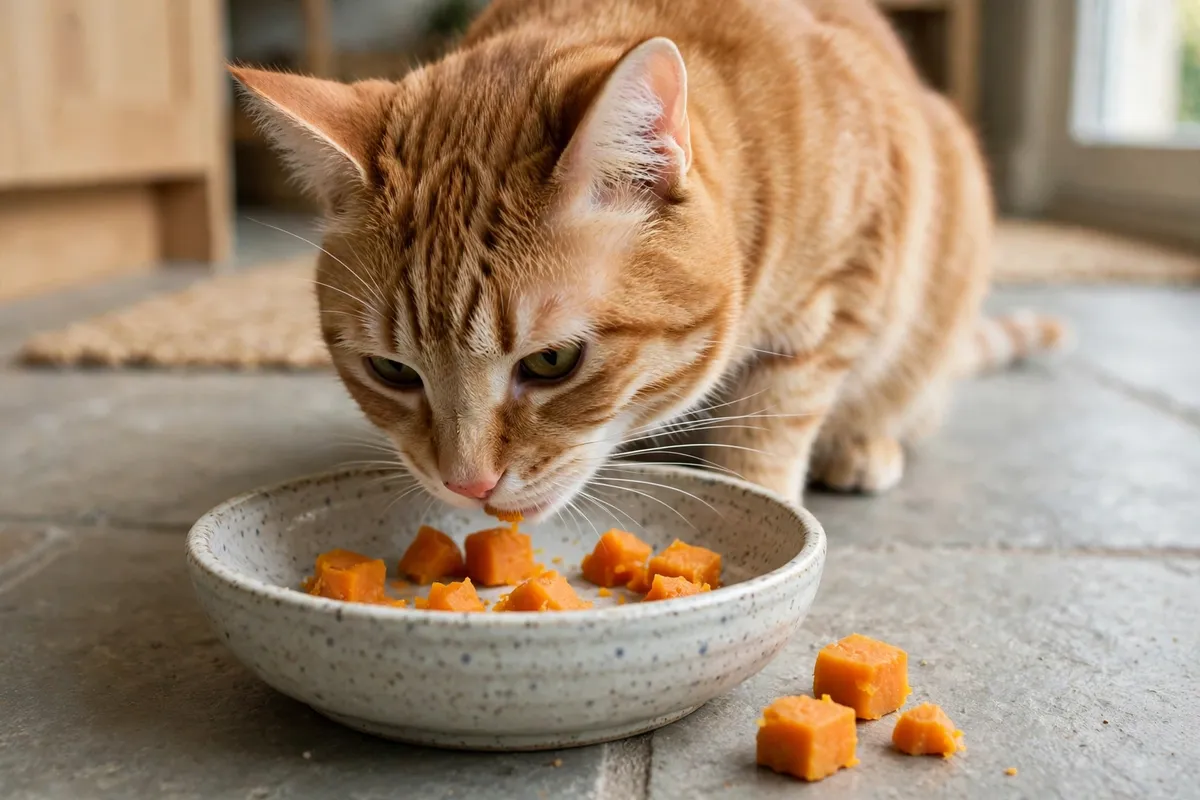
Yes, cats can eat sweet potato — but only when it is cooked, plain, and served in small amounts as an occasional treat. Raw sweet potato is hard to digest and should never be given to a cat, and sweet potato dishes made for people, such as sweet potato casserole topped with marshmallows, sugar, butter, or spices, are not safe for cats. A little mashed, boiled, or baked sweet potato with nothing added is the only version that belongs in a cat's bowl, and even then it should never replace their regular, meat-based food.
Cats are obligate carnivores, which means meat must form the foundation of their diet. Sweet potato does not provide the animal protein, taurine, and other nutrients cats need to stay healthy, so think of it as a small extra — a spoonful here and there — rather than a meaningful part of their nutrition. If your cat enjoys it and tolerates it well, it can be a harmless, low-fat treat. If they turn their nose up at it, that is completely normal too, and they are missing out on nothing essential.
Is Sweet Potato Safe for Cats?
Plain, cooked sweet potato is generally considered safe for healthy adult cats in small quantities. Cooking softens the dense, starchy flesh so it is easier to digest, and it removes the toughness that makes raw sweet potato a choking risk and a stomach upset waiting to happen. Once cooked and mashed, sweet potato is gentle on most cats' stomachs and is sometimes even included in commercial cat foods as a source of digestible carbohydrate and fiber.
That said, "safe in small amounts" is very different from "good for cats every day." A cat's digestive system is built for animal protein and fat, not for large amounts of plant matter. Too much sweet potato can fill your cat up without providing the nutrients they actually need, and it can loosen their stools or cause gas. The key word with sweet potato, as with any human food offered to a cat, is moderation.
It is also worth noting that sweet potato is not the same as regular potato. White potatoes belong to the nightshade family, and their raw skins, sprouts, and green parts contain solanine, a compound that is toxic to cats. Sweet potatoes are a different plant entirely and do not carry that same concern, but the rule stays the same: serve them cooked and plain, with the skin removed.
Nutritional Benefits of Sweet Potato for Cats
Sweet potato brings a few modest benefits to the table, even if none of them are essential for a cat already eating a complete and balanced cat food. It is rich in beta-carotene, which the body converts to vitamin A, and it provides vitamin C, vitamin B6, potassium, and manganese. It is also a source of soluble fiber, which can help keep digestion moving steadily in cats that are prone to mild constipation.
Because sweet potato is low in fat and relatively low in calories for its volume, a tiny portion can add variety to a treat rotation without adding much energy — helpful if you are trying to avoid the calorie load of richer treats. Its natural sweetness also appeals to some cats, although many cats show little interest in sweet foods at all, since they lack sweet taste receptors in the same way humans have them.
None of this makes sweet potato a health food for cats in the way it is marketed for people. A cat eating a good-quality complete cat food already gets vitamin A, potassium, and fiber in the right balance. Sweet potato is best viewed as a bonus: a little extra fiber and a change of texture, not a supplement and not a substitute for proper cat food.
Risks and What to Avoid
The biggest risks come not from sweet potato itself, but from how it is prepared and how much is given. Raw sweet potato is hard, difficult to chew, and difficult to digest — it can cause vomiting, diarrhea, or a blockage risk in small cats and kittens, so it should never be offered raw. The skin should also be removed, as it can be tough and may carry dirt or pesticide residue even after washing.
People-food versions are where the real danger lies. Sweet potato casserole with marshmallows, brown sugar, butter, cream, or pecans is far too rich and sugary for a cat. Seasoned sweet potato fries may contain salt, garlic, onion powder, or chili — garlic and onion are toxic to cats even in small amounts. Fried versions add unnecessary fat that can upset a sensitive stomach and, over time, contribute to weight gain.
Portion size matters too. A cat that eats a large amount of sweet potato in one sitting may develop soft stools, gas, or a reduced appetite for their proper food. Cats with diabetes or weight problems should only have sweet potato if their veterinarian agrees, since it is a starchy carbohydrate that can affect blood sugar. Kittens, senior cats, and cats with digestive conditions should also skip new foods unless a vet has given the go-ahead.
How to Prepare Sweet Potato for Your Cat
Preparing sweet potato for a cat is simple, and plain is the whole point. Start by washing the sweet potato and peeling it, then cut it into small cubes. Boil or steam the cubes until they are completely soft all the way through — a fork should slide in with no resistance. Baking works too, as long as the flesh ends up fully soft and no oil, salt, or seasoning is added.
Once cooked, let it cool completely to room temperature. Mash it well with a fork until there are no lumps or firm chunks left, since small pieces can be a choking hazard. Offer just a teaspoon or two on a small plate or mixed into a little of their regular wet food, and watch how they react. Some cats will lick it up happily; others will eat around it or walk away, and both reactions are fine.
Store any leftovers in a sealed container in the refrigerator and use them within two to three days. Never serve sweet potato that has been sitting out at room temperature for hours, and do not reheat it with butter or seasoning. If you cooked a batch for yourself, set your cat's plain portion aside before you add anything to the rest.
How Much Sweet Potato Can a Cat Eat?
As a treat, sweet potato should stay within the general rule that treats make up no more than about ten percent of a cat's daily calories. In practice, that means roughly one to two teaspoons of mashed sweet potato, offered once or twice a week at most. For a smaller cat, even a single teaspoon is plenty.
Introduce it gradually. Offer a tiny amount the first time and wait a day to see how your cat's stomach responds before offering it again. If you notice soft stools, vomiting, or a loss of appetite afterward, stop offering it and mention it to your veterinarian if the symptoms persist. A food that suits one cat may not suit another, and a cat that does not tolerate sweet potato loses nothing by skipping it.
Sweet Potato in Commercial Cat Food
You may already have noticed sweet potato listed as an ingredient in some wet and dry cat foods. In that context, it plays a different role: manufacturers use it as a digestible carbohydrate and fiber source in a recipe that is otherwise built around meat and balanced with the vitamins, minerals, and amino acids cats need. That is very different from feeding sweet potato on its own.
Seeing sweet potato on a cat food label is not a reason to add extra sweet potato at home, and a food that lists it as an ingredient is not automatically better than one that does not. What matters most is that the food is labeled complete and balanced for your cat's life stage. If your cat already eats a food containing sweet potato, an extra spoonful as a treat is still fine occasionally, but it adds nothing they are not already getting.
When to Call Your Vet
Most cats that nibble a little plain sweet potato will be perfectly fine, but contact your veterinarian if your cat vomits repeatedly, has diarrhea lasting more than a day, refuses food and water, or seems lethargic after eating it. Seek help promptly if your cat may have eaten a seasoned, sugary, or garlic- or onion-containing sweet potato dish, or if a kitten or a cat with diabetes or kidney disease has eaten a large amount. When in doubt, a quick call to your vet is always better than waiting to see if things improve on their own.
Frequently Asked Questions
Can cats eat sweet potato?
Yes, in small amounts — but only cooked and plain. Raw sweet potato is hard to digest, and sweetened or seasoned dishes made for people are not safe for cats.
Can cats eat raw sweet potato?
No. Raw sweet potato is tough and difficult to digest, and it can cause vomiting, diarrhea, or a choking risk. Always boil, steam, or bake it until completely soft, and remove the skin.
How much sweet potato can I give my cat?
About one to two teaspoons of mashed, plain sweet potato once or twice a week is plenty. Treats should stay within roughly ten percent of your cat's daily calories.
Is sweet potato casserole safe for cats?
No. Casseroles made with marshmallows, sugar, butter, cream, or pecans are too rich and sugary for cats, and seasoned versions may contain garlic or onion, which are toxic to cats.
Can kittens eat sweet potato?
Kittens have sensitive stomachs and very specific nutritional needs, so it is best to check with your veterinarian before offering sweet potato to a kitten. Their regular kitten food should always come first.