Can Cats Eat Bell Peppers?
The Short Answer: Yes, Plain and Seedless
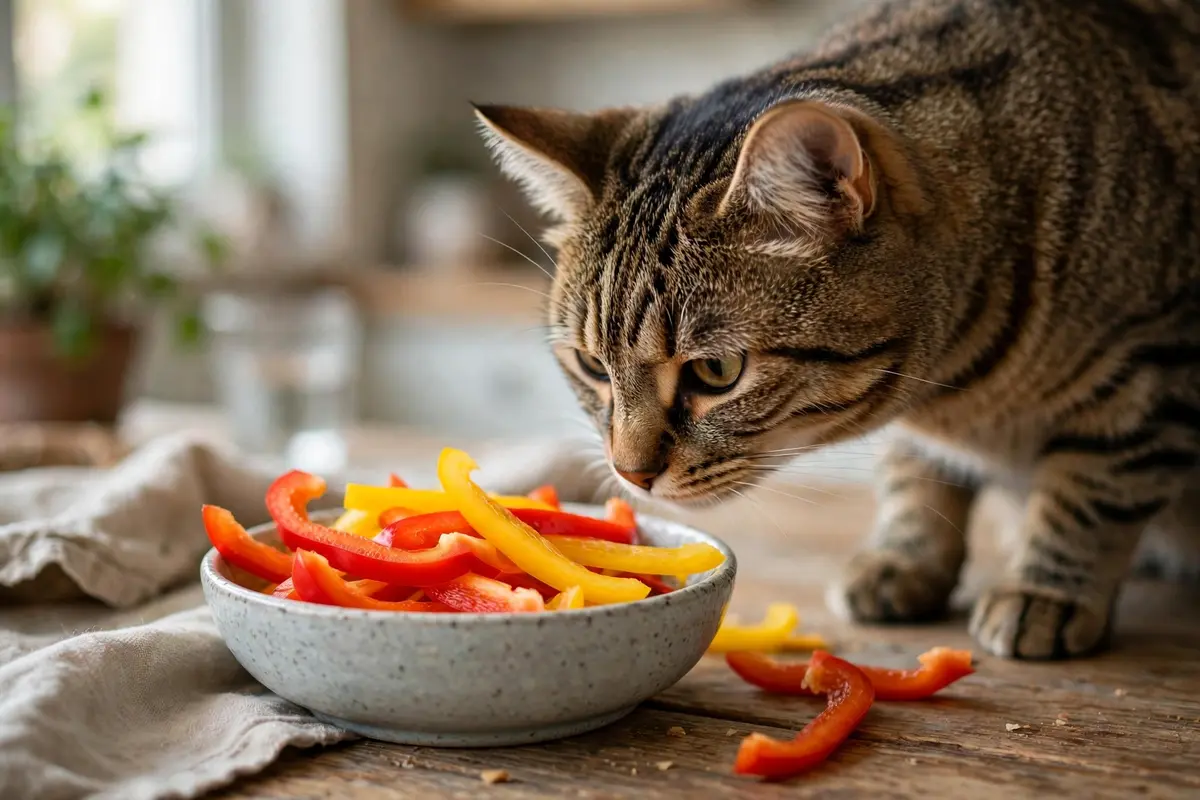
Yes, cats can eat bell peppers. Bell peppers are safe for cats when they are served plain, with the seeds and stem removed — raw or cooked, any color. Red, yellow, orange, or green, the color does not matter. What matters is the seasoning, or rather the lack of it.
Bell peppers are mild, crunchy, and low in calories, and they contain no compounds that are toxic to cats. That puts them in the small group of vegetables that are genuinely safe to share. Keep them plain, keep the portion small, and a few strips of bell pepper are a fine occasional treat.
Are Bell Peppers Safe for Cats?
Bell peppers are safe for cats. They belong to the nightshade family, which sounds alarming until you know the detail: the ripe fruit of a bell pepper is perfectly safe, and the parts of the plant that are a problem — the leaves, stems, and unripe green fruit of some nightshades — are not what you serve. The sweet pepper on your cutting board is a different thing from a hot chili or a raw potato, and it does not carry their risks.
The one firm rule is to remove the seeds and the stem. Bell pepper seeds are not toxic, but they are bitter, hard, and a mild choking hazard, and the stem is tough and indigestible. Cut the pepper open, scoop out the seeds and the white inner ribs, and cut the flesh into small strips or pieces.
Hot peppers are a different matter entirely. Chili peppers, jalapeños, and anything spicy are not safe for cats — capsaicin irritates a cat's mouth, stomach, and eyes, and a cat that eats a hot pepper can end up drooling, vomiting, and in real discomfort. This article is only about sweet bell peppers, and hot peppers should never be offered.
Red, Yellow, Orange, or Green — Does Color Matter?
The color does not matter for your cat: red, yellow, and orange peppers are simply riper, sweeter, and slightly softer versions of the green pepper, with a little more vitamin A and C. Nutritionally the differences are small.
If your cat is trying bell pepper for the first time, a red or yellow pepper is the friendlier choice — sweeter, softer, and less likely to be rejected for bitterness. But if all you have is a green pepper, it is equally safe. Choose whichever color you have on hand and focus your attention on the preparation instead.
What does matter is the seasoning. A bell pepper roasted with garlic, tossed in a spiced stir-fry, or stuffed with seasoned filling is no longer a plain vegetable. Garlic and onion are toxic to cats, and the salt, oil, and spices in a cooked dish add problems of their own. The pepper your cat gets should come straight from the cutting board, not from the finished dish.
How Much Bell Pepper Can a Cat Eat?
A few small pieces — about a tablespoon of chopped bell pepper — is a good serving, offered two or three times a week at most. Bell peppers are light, but the ten-percent rule for treats still applies: all treats combined should stay under ten percent of your cat's daily calories.
Start with one small piece the first time. Many cats will sniff a bell pepper and walk away — the crunch and the smell are unfamiliar, and cats are famously suspicious of new foods. That is normal and fine. If your cat eats it happily and its digestion stays normal, you can offer a full small serving next time.
Do not be surprised if your cat prefers cooked pepper to raw, or the other way around. Raw pepper has a satisfying crunch, while a lightly cooked piece is softer and sweeter. Try both and let your cat decide.
How to Prepare Bell Peppers for Your Cat
Wash the pepper, cut off the top, and scoop out all the seeds and the white inner ribs. Cut the flesh into strips or cubes no bigger than a pea — small pieces are easier to chew and swallow, and they remove any choking risk. Serve the pieces raw for crunch, or steam them for two to three minutes until just soft.
Serve them plain and at room temperature, with nothing added. No salt, no oil, no dressing, no dip, no garlic, no onion. A pepper from a salad with dressing on it does not count as plain — wash off any dressing, or better, cut a fresh piece before you dress the salad.
Keep hot peppers far away from this process. If you are chopping chilies in the same session, use a clean board and knife for your cat's pepper, and wash your hands before handling it — capsaicin residue on a sweet pepper can still irritate a cat's mouth.
Can Kittens Eat Bell Peppers?
Kittens can have a tiny taste of cooked bell pepper once they are eating solid food, usually from around eight weeks old. Cook it until soft, cut it into very small pieces, and offer just one or two. Kitten food should remain the center of a kitten's diet — bell pepper is only a small extra.
Raw bell pepper is better left until a kitten is older and chewing well, because the crunch can be hard for a small mouth. For kittens under eight weeks, skip vegetables entirely and stick to nursing or a kitten milk replacer as your vet advises.
What Happens If My Cat Eats Bell Peppers?
If your cat ate plain bell pepper, seeds removed, there is nothing to worry about. Most cats digest a small serving without any trouble, and the worst outcome of overdoing it is a slightly softer stool or a bit of gas. Offer fresh water and feed the next meal as normal.
If your cat swallowed a few seeds, watch for mild stomach upset but do not panic — bell pepper seeds are not toxic, just bitter and hard to digest. If your cat ate pepper from a seasoned dish, check the ingredients: garlic and onion are toxic to cats, so call your vet if either was in the dish.
If your cat ate a hot pepper by mistake, watch for drooling, pawing at the mouth, vomiting, or diarrhea, and call your vet for advice. Do not offer milk to soothe the burn unless your vet tells you to — most cats are lactose intolerant, and milk can make the stomach upset worse. Fresh water and a calm call to the vet are the right first steps.
Bell peppers are a safe, crunchy treat for cats — any color, raw or cooked, as long as they are plain and the seeds and stem are removed. A tablespoon a few times a week is plenty, and the only real rules are to skip the seasoning and keep hot peppers far away. If your cat likes the crunch, you have found one of the simplest vegetable treats there is.
Can cats eat bell peppers?
Yes. Plain bell peppers are safe for cats, raw or cooked, with the seeds and stem removed. Any color is fine.
Do bell peppers need to be cooked for cats?
No. Raw bell pepper is safe for most adult cats. Lightly cooked pepper is softer and sweeter, and better for kittens and seniors.
Can cats eat green bell peppers?
Yes. Green, red, yellow, and orange bell peppers are all safe. Red and yellow peppers are sweeter, so they are a friendlier first try.
Are bell pepper seeds safe for cats?
Bell pepper seeds are not toxic, but they are bitter and a mild choking hazard. Always remove the seeds, stem, and white ribs before serving.
Can kittens eat bell peppers?
Yes, from around eight weeks old — a tiny amount of soft cooked bell pepper. Raw pepper is better left until a kitten is older.
What should I do if my cat eats a hot pepper?
Watch for drooling, pawing at the mouth, vomiting, or diarrhea, and call your vet. Do not offer milk unless your vet tells you to.