Can Cats Eat Bone Broth?
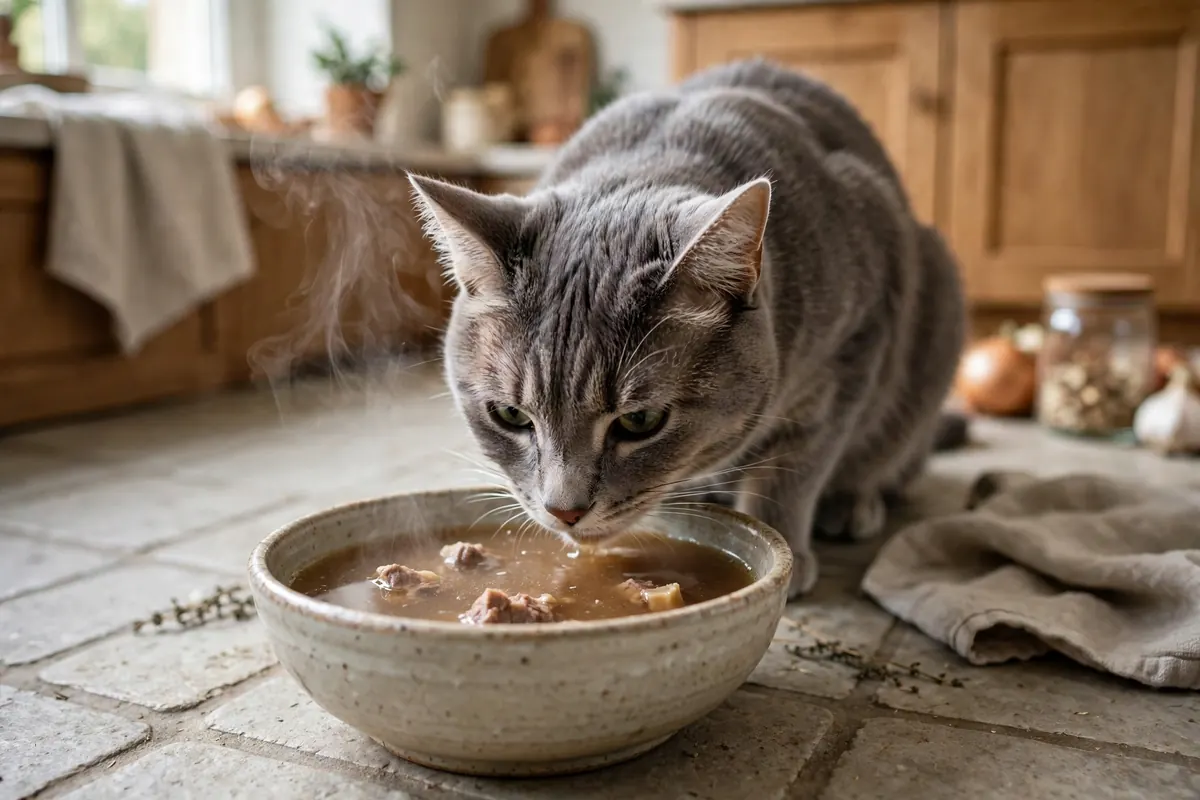
Yes — cats can eat bone broth, and many of them love it. Plain bone broth, made from bones simmered in water with nothing else added, is safe for cats, easy to digest, and a wonderful way to add hydration to a cat that does not drink enough. It is also a favourite trick for tempting a sick, elderly, or fussy cat to eat.
The catch is the word plain. Most bone broth sold in shops is made for people, and it usually contains salt, onion, and garlic — three things a cat should never have. This guide explains how to choose or make a safe broth, how much to serve, and how to use it for a cat that will not eat or drink.
The Verdict: Can Cats Eat Bone Broth?
Verdict: SAFE. Plain bone broth — bones simmered in water, with no salt, no onion, no garlic, and no other seasonings — is safe for cats and can be a genuinely useful addition to their diet. It is hydrating, gentle on the stomach, and most cats find it delicious, which makes it a great topper for dry food and a helpful trick for a cat that will not eat or drink.
The only rule is that the broth must be plain. Shop-bought broth made for people is almost never plain, and a broth with onion or garlic in it is unsafe for cats. Always check the label, or make your own — it takes little more than bones, water, and time.
Why Cats Love Bone Broth: Hydration, Appetite, and Comfort
Bone broth works for cats because it hits three needs at once. The first is hydration: many cats do not drink enough water, and cats that eat mostly dry food are the worst offenders. A bowl of broth is water a cat actually wants to drink, and better hydration supports the kidneys and the urinary tract. The second is appetite: broth smells strongly of meat, and that smell can tempt a cat that has gone off its food after illness, surgery, or a stressful move. The third is gentleness: warm broth is easy to lap up and easy on a sore mouth or a sensitive stomach, which is why vets often suggest it for recovering cats.
Broth is not a meal on its own — it does not replace a complete cat food — but as a topper, a drink, or a short-term appetite trick, it is one of the most useful foods in a cat owner's kitchen.
The Store-Bought Broth Label Trap
Most bone broth on supermarket shelves is made for people, and the label is where the danger hides. Here is what to watch for:
- Salt. Almost all shop-bought broth is salted, and a cat's small body handles excess sodium poorly. A broth that tastes lightly salted to you is heavily salted for a cat.
- Onion and garlic. Many broths list onion, garlic, or onion powder among the ingredients — and both are toxic to cats, because they damage red blood cells.
- Other seasonings. Herbs, spices, yeast extract, and flavourings are common in shop broth, and none of them belong in a cat's bowl.
- Fat and bones. Some broths are very fatty, which can upset a cat's stomach, and any broth sold with small bones in it should be strained before serving.
Look for a broth made specifically for pets, with a short ingredients list — bones and water, and nothing else. If the label lists onion, garlic, or salt, put it back on the shelf.
How to Make and Serve Bone Broth Safely
The safest bone broth is the one you make yourself, and it is simpler than it sounds. Put bones — chicken, turkey, or beef — in a pot, cover them with water, and simmer gently for several hours, then strain out every bone and let the broth cool. Do not add salt, onion, garlic, herbs, or any seasoning at all. Skim the fat off the top once it has cooled, and store the broth in the fridge for a few days or freeze it in small portions.
To serve it, warm a small amount until it is lukewarm — never hot — and pour it over your cat's dry food, offer it in a separate bowl as a drink, or mix a spoonful into wet food. Always strain the broth first, because even a small bone fragment can be a choking hazard, and never serve broth that has gone off or been left out overnight.
How Much Bone Broth Can a Cat Eat?
Bone broth is a topper and a drink, not a meal, so keep portions modest. A good starting point is two to three tablespoons poured over food or offered in a bowl, once a day, and you can offer it a little more often for a cat that is ill or dehydrated — your vet can advise on the right amount for your cat.
Watch your cat's stools when you first introduce broth: a cat that is not used to it may have softer stools for a day or two, and that usually settles as the cat gets used to it. If the soft stools continue, cut back the amount or stop for a few days. And remember that broth adds calories, so if your cat is on a weight plan, count the broth as part of its daily food, not on top of it. For more on portion sizes, see our guide to how much to feed your cat.
Can Kittens Drink Bone Broth?
Yes — kittens can drink plain bone broth, and it can be a helpful way to tempt a young kitten to eat. A kitten that is being weaned, or one that has gone off its food, will often lap up warm broth when it ignores a bowl of kibble — and the extra hydration is a bonus for a small body that dehydrates quickly.
Keep portions small — a tablespoon or two is plenty for a kitten — and always use plain broth with no salt, onion, or garlic. Bone broth is a topper and a treat, not a replacement for kitten food: a kitten's growth depends on a complete kitten food, and broth should never fill a kitten up so much that it skips its proper meals.
Is Bone Broth Good for a Sick Cat? When to Skip It
Bone broth is one of the most useful foods for a sick cat, and vets recommend it often: it hydrates, it tempts a cat that will not eat, and it is gentle on a sore mouth or an upset stomach. For a cat recovering from surgery or illness, a little warm broth can be the difference between eating and not eating — and eating is what recovery needs.
There are times to skip it, though. If your cat has been told to follow a low-sodium diet, check with your vet first, because even homemade broth contains some natural sodium from the bones. If your cat has kidney disease, ask your vet how much broth is appropriate — the extra fluid is usually welcome, but the amount matters. And if a cat will not eat or drink at all for more than a day, broth is not a substitute for a vet visit. For more on feeding choices, see our guide to wet vs dry cat food and the Cat Food section on the Purrfect Paws homepage.
Frequently Asked Questions
Is bone broth safe for cats?
Yes. Plain bone broth — bones simmered in water with no salt, onion, garlic, or seasonings — is safe for cats. Shop-bought broth made for people usually contains salt, onion, and garlic, so check the label or make your own.
Can kittens drink bone broth?
Yes, kittens can drink plain bone broth in small amounts — a tablespoon or two is plenty. It can help tempt a weaning or fussy kitten to eat, but it should never replace a complete kitten food.
How much bone broth can a cat eat?
Two to three tablespoons poured over food or offered as a drink, once a day, is a good starting point. You can offer a little more for an ill or dehydrated cat, but ask your vet if your cat has kidney disease or is on a low-sodium diet.
Is bone broth good for a sick cat?
Yes, bone broth is one of the best foods for a sick cat — it hydrates, smells strongly of meat, and is gentle on a sore mouth or sensitive stomach. If a cat will not eat or drink at all for more than a day, though, it needs a vet visit, not just broth.
Can I give my cat store-bought bone broth?
Only if the label is clean — bones and water, with no salt, onion, garlic, herbs, or flavourings. Most shop-bought broth is made for people and contains salt and onion, so a pet-specific broth or homemade broth is usually the safer choice.