Can Cats Eat Bones?
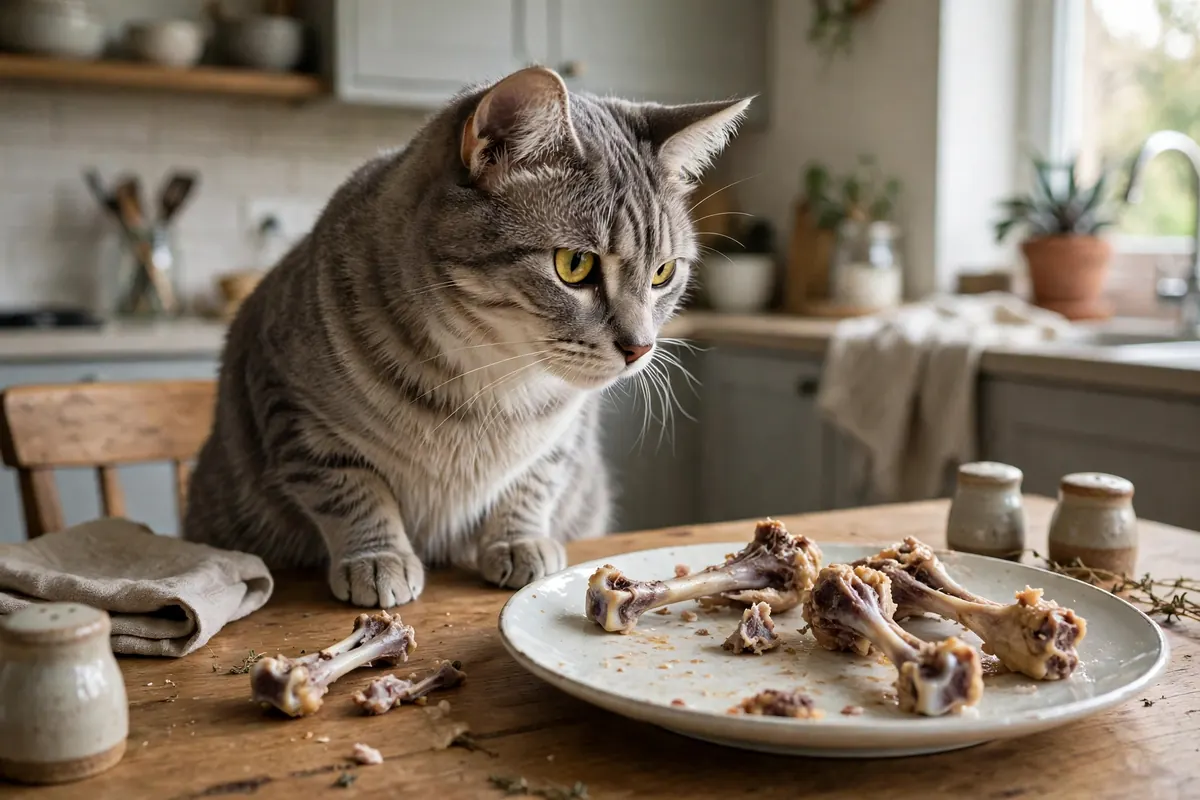
No — cats should not eat bones. Cooked bones are the real danger: heat makes them brittle, so they splinter into sharp fragments that can cut the mouth, get stuck in the throat, or tear the stomach and intestines. Raw bones are softer but still risky — they can choke a cat or block the gut. Wild cats do eat the small bones of their prey, but the bones on your dinner plate are a very different thing.
This guide explains why cooked bones splinter, whether raw bones are any safer, which bones are the worst offenders, what to do if your cat has already eaten one — and the one safe way to give your cat the goodness of bones without any of the risk.
The Verdict: Can Cats Eat Bones?
Verdict: UNSAFE. Bones are not safe food for cats. Cooked bones — chicken, turkey, pork, beef, or fish — become brittle when heated and splinter into sharp shards that can cut the mouth, lodge in the throat, or puncture the stomach and intestines. Raw bones are less likely to splinter, but they can still choke a cat, break a tooth, or cause a blockage in the gut.
Do not offer bones of any kind as a treat or a chew, and do not leave plates with bones where your cat can reach them. If your cat has eaten a bone, watch them closely and contact your vet — especially if the bone was cooked, small, or swallowed whole. The safe alternative is bone broth, which gives your cat the flavour and hydration of bones with none of the danger.
Why Cooked Bones Splinter
Cooking changes the structure of bone. Heat dries bone out and makes it brittle, so instead of bending or breaking cleanly, a cooked bone snaps into sharp, jagged pieces. Those shards are the danger: they can cut the gums and tongue as a cat chews, lodge across the throat, or scrape and puncture the stomach and intestines as they pass through.
Chicken bones are the worst offenders because they are small, thin, and hollow — exactly the kind of bone a cat can swallow in one gulp. Turkey bones are larger but just as brittle. Pork rib bones and chop bones splinter too, and beef bones are hard enough to crack a tooth before they break. Fish bones are a separate problem: they are thin, needle-sharp, and easy to swallow, and they can lodge in the throat or gut. No cooked bone is safe for a cat, whatever the animal it came from.
Are Raw Bones Any Safer?
Raw bones are softer and less likely to splinter, which is why some raw-feeding guides allow them — but less likely is not the same as safe, and a pet cat is not a wild cat. Wild cats eat the small, soft bones of mice and birds whole, as part of a fresh kill, and they have a lifetime of practice. A pet cat offered a raw chicken wing or a raw beef bone faces a different risk: the bone is larger, the cat may gulp it, and a piece that is too big can choke the cat or block the intestines.
Raw bones also carry bacteria such as salmonella, which can make both your cat and your household ill. And raw bones do nothing a balanced cat food does not already do — commercial cat food is carefully formulated with the right calcium and minerals, so your cat does not need bones for nutrition. If you feed raw, talk to your vet first about whether bones belong in your cat's diet at all, and never offer raw bones as a casual treat.
Are Bones Safe for Cats?
No — bones are not safe for cats, cooked or raw. The risk is not about one bad bone; it is about how bones break, how easily they are swallowed, and how serious the damage can be when something goes wrong. A cat that has chewed bones for years without a problem has been lucky, not safe.
The good news is that you can give your cat everything bones are supposed to offer — flavour, minerals, and hydration — without the bone itself. Plain bone broth, made without salt, onion, or garlic, is the safe alternative: it is a tasty, hydrating topper that many cats love, and it carries none of the splintering or choking risk. For more on safe foods, see our guide to whether cats can eat chicken and our guide to whether cats can eat tuna.
Can Kittens Eat Bones?
No — kittens must never eat bones. A kitten's small throat and gut make choking and blockage more likely, and a kitten's teeth are still developing, so a hard bone can damage them. Kittens also have no nutritional need for bones at all — a complete kitten food already contains the right balance of calcium and minerals for healthy growth.
If a kitten does manage to eat a bone, call your vet the same day even if the kitten seems fine, because kittens can go downhill faster than adult cats and a blockage can develop over hours. Keep plates, bins, and takeaway containers well out of a kitten's reach.
What Happens If My Cat Eats Bones?
Signs depend on what the bone did and where it went. A bone stuck in the throat causes gagging, retching, pawing at the mouth, drooling, and distress — an emergency. A bone that reached the stomach may cause vomiting, loss of appetite, and abdominal pain. A bone that damaged the gut can cause bloody vomit or bloody stools, and a bone that blocked the intestines causes repeated vomiting, a swollen belly, and a cat that stops eating and passing stools.
Some signs appear at once, and some take a day or two to show, as a sharp fragment slowly irritates the gut. That delay is why a cat that ate a bone should be watched for at least 48 hours, even if it seems fine at first. If you see any of these signs, call your vet the same day — do not wait to see whether they pass.
What to Do If Your Cat Already Ate Bones
Work through these steps:
- Take the bones away so your cat cannot eat more, and note what kind of bone it was — cooked or raw, chicken, fish, or another animal — and roughly how much was eaten.
- Check for choking signs first. Pawing at the mouth, gagging, or distress means a bone may be stuck — call your vet or an emergency clinic immediately.
- Do not try to make your cat vomit. Vomiting can push a sharp fragment back up through the throat and cause more damage, so never induce vomiting at home unless your vet specifically tells you to.
- Do not give laxatives, bread, or home remedies. None of these safely move a bone through the gut, and some can make things worse.
- Watch for 48 hours. Look for vomiting, bloody stools, loss of appetite, a swollen belly, or a cat that stops passing stools.
- Call your vet right away if you see any of those signs, or if the bone was cooked, sharp, or swallowed whole, or if the eater was a kitten.
Your vet may want to take an X-ray to see where the bone is. For more food guidance, browse the full Cat Food section on the Purrfect Paws homepage.
Frequently Asked Questions
Is it safe for cats to eat bones?
No. Cooked bones splinter into sharp fragments that can cut the mouth and tear the gut, and raw bones can choke a cat or cause a blockage. Do not offer bones of any kind as a treat or a chew.
Can kittens eat bones?
No. Kittens must never eat bones — their small throats and guts make choking and blockage more likely, and their developing teeth can be damaged by hard bones. A complete kitten food already provides the calcium they need.
What happens if my cat eats a chicken bone?
A cooked chicken bone can splinter and cut the mouth or gut, or get stuck in the throat. Watch for gagging, vomiting, loss of appetite, bloody stools, or a swollen belly, and call your vet the same day — even if your cat seems fine at first.
Can cats eat raw bones?
Raw bones are less likely to splinter than cooked bones, but they can still choke a cat, break a tooth, or block the gut, and they can carry bacteria such as salmonella. They are not recommended as a casual treat — talk to your vet first.
What is a safe alternative to bones for cats?
Plain bone broth is the safe alternative — it gives your cat the flavour and hydration of bones with none of the splintering or choking risk. Choose or make broth with no salt, onion, or garlic, and serve it as a topper or a drink.