Can Cats Eat Bread? The Truth
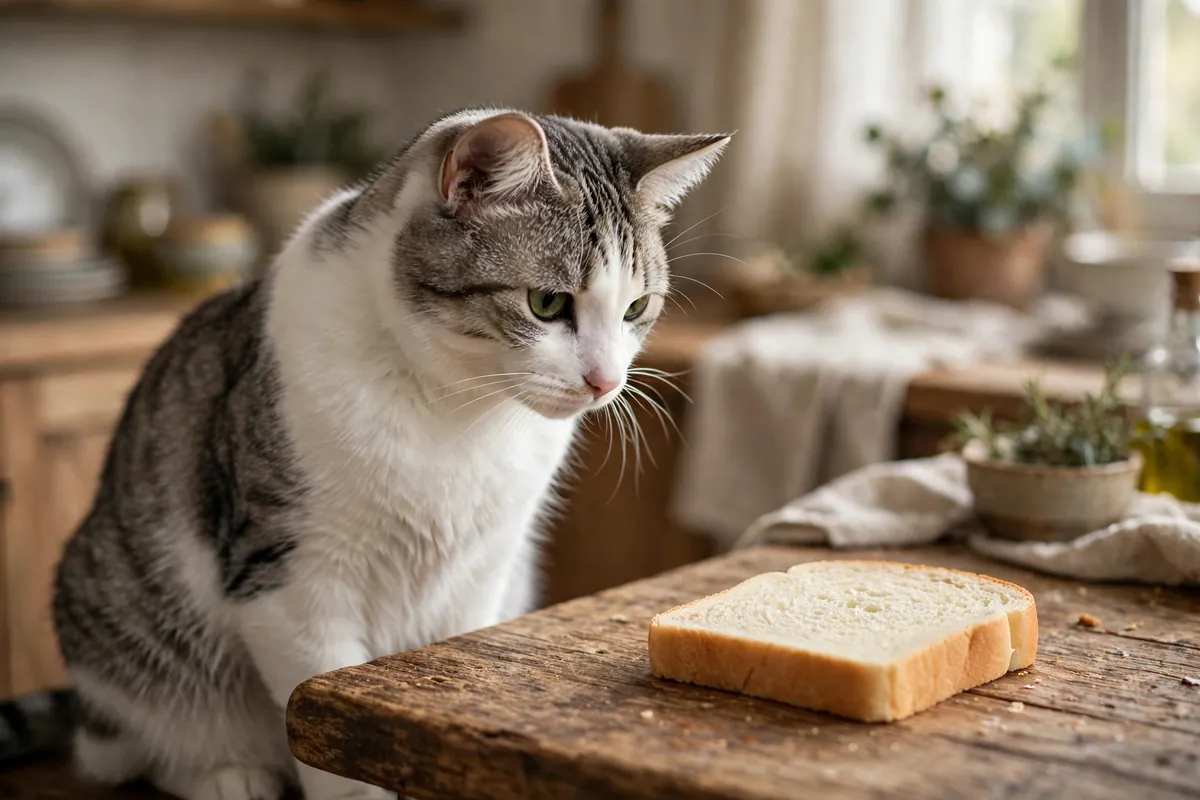
It usually starts with the crust. You leave your sandwich on the table for a moment, turn your back, and return to find your cat enthusiastically chewing the corner of your toast. So here is the truth, straight up: a small piece of plain, baked bread is not toxic to cats — a nibble of crust will not harm a healthy cat. But that reassuring headline comes with a much longer and more important story, because bread is nutritionally empty for felines, some breads are genuinely dangerous, and raw dough is a true emergency. This guide separates the harmless from the hazardous so you know exactly when to shrug and when to call your vet.
Plain Baked Bread: Not Toxic, But Not Food Either
Let us get the main question out of the way first. A piece of ordinary, fully baked bread — white, whole wheat, sourdough, or a plain dinner roll — contains nothing that poisons cats. If your cat swipes a bite of your toast, you do not need to panic. The flour, water, salt, and yeast in basic bread are all non-toxic to felines in the tiny amounts found in a stolen nibble.
But here is where the truth gets less comfortable: bread is, for a cat, the definition of empty calories. Cats are obligate carnivores — their bodies are engineered to extract nutrition from meat, not grains. Bread is almost entirely starch, and a cat's digestive system has limited tools for processing carbohydrates. They produce very little of the enzymes that break starches down efficiently, which means bread mostly passes through as filler. It provides no taurine, no vitamin A in usable form, no arachidonic acid — none of the nutrients a cat actually needs.
Every crumb of bread also takes up space in a small stomach. A cat that fills up on toast is a cat that may eat less of their complete, balanced cat food — and it is that food, not the bread, that keeps their heart, eyes, and immune system working. Think of bread for cats the way you would think of cotton candy for humans: not poisonous, but about as far from nourishing as food can get. Our Cat Food guides walk through what genuinely belongs in your cat's bowl.
The Real Danger: Raw Bread Dough
If there is one section of this article to remember, it is this one. Raw, unbaked bread dough is genuinely dangerous to cats — and it is dangerous in two different ways at once.
First, dough keeps rising. A cat's stomach is warm and moist — essentially the perfect proofing box. If a cat swallows raw dough, the yeast continues to ferment and the dough continues to expand inside the stomach. This can cause painful bloating, and in severe cases the swelling can twist the stomach, cutting off its blood supply. That is a life-threatening emergency that needs immediate surgery.
Second, fermentation produces alcohol. As yeast digests the sugars in dough, it releases ethanol — the same alcohol in beer and wine. A cat's small body cannot handle alcohol at all. Alcohol poisoning in cats can cause disorientation, dangerously low body temperature, slow breathing, seizures, and coma. The combination of an expanding mass and rising blood alcohol makes raw dough one of the most dangerous things a cat can eat in a home kitchen.
This is not a theoretical risk. Home bakers leave dough to rise on counters, and curious cats are excellent climbers. If you bake, keep rising dough in a closed oven, a latched microwave, or another room your cat cannot access — and wipe up any dropped bits immediately. If your cat eats raw dough, do not wait for symptoms: call your veterinarian or an emergency clinic right away. Time matters enormously here.
Breads That Are Actually Dangerous for Cats
Plain bread is one thing; flavored and sweetened breads are quite another. Many common varieties contain ingredients that are genuinely toxic to cats:
- Garlic bread and onion bread. Garlic, onion, leeks, and chives are all toxic to cats. They damage red blood cells and can cause anemia, weakness, pale gums, and lethargy — sometimes days after the cat ate them. This includes bread with garlic butter, onion rolls, and savory breads topped with alliums.
- Raisin bread and fruit loaves. Grapes and raisins are toxic to cats and dogs alike and can cause sudden kidney problems. Raisin bread, currant buns, and fruit-studded loaves should never be within paw's reach.
- Chocolate bread and chocolate-chip varieties. Chocolate contains theobromine and caffeine, both of which are toxic to cats. Chocolate babka, pain au chocolat, and chocolate-chip muffins are all off-limits.
- "Sugar-free" breads and baked goods. Some sugar-free products are sweetened with xylitol (also called birch sugar), which is extremely toxic to pets. Always check the ingredient list on any sugar-free baked good before assuming it is safe.
- Bread with macadamia nuts. Macadamia nuts are toxic to pets and can cause weakness, vomiting, and tremors. Nut-topped artisan loaves belong far from curious cats.
The pattern is simple: the plainer the bread, the safer the nibble — and the fancier the bread, the more you need to check the ingredients. When in doubt, assume a flavored bread is unsafe until you have read the label. For a full rundown of kitchen dangers, see our guide to human foods that are poisonous to cats.
White Bread vs. Whole Wheat: Does It Matter for Cats?
Cat owners often ask whether whole wheat bread is the "healthy" option for their cat. The honest answer is that the difference is meaningless from a feline perspective. Whole wheat bread contains a little more fiber and a few more minerals than white bread — differences that matter for humans but are irrelevant to an animal that should be getting almost no grain at all.
In fact, the extra fiber in whole wheat can be slightly harder on a cat's stomach than soft white bread, and some cats with sensitive digestion handle plain white bread a touch better. But neither one provides anything a cat needs, and neither one should be offered as anything more than the rarest of accidental nibbles. If your cat has stolen a corner of your whole-grain toast, it is no better and no worse than if they had stolen white — it is simply a crumb of filler either way.
The same logic applies to sourdough, rye, pita, and flatbreads. Once baked, the type of grain is a footnote. What matters is what was added to the bread — salt is fine in normal amounts, but garlic, onion, raisins, chocolate, xylitol, and nuts are not.
How Much Bread Is Too Much? Portion Guidance
For a healthy adult cat, the safe upper limit of plain baked bread is best described as a pea-sized nibble, offered only occasionally — think a crumb torn from a crust once every few weeks, not a slice every morning. Bread should never become a routine snack, a meal replacement, or a training treat.
Why such a strict limit? Three reasons. First, bread is pure carbohydrate with no nutritional payoff — it is filler that displaces real food. Second, regular grain intake can contribute to weight gain in a species already prone to obesity when overfed. And third, some cats develop mild grain sensitivities: repeated exposure to wheat can cause itchy skin, soft stools, or intermittent vomiting in sensitive individuals, and you will never identify the pattern if bread is a daily habit.
Kittens, senior cats, and cats with diabetes, kidney disease, or digestive disorders deserve an even stricter rule: no bread at all. Kittens need every bite to build growing bodies, diabetic cats cannot afford the carbohydrate load, and sensitive stomachs do not need the extra work. If your cat has any health condition, run even "harmless" human foods past your veterinarian first — what is a harmless crumb for a healthy cat can be an unhelpful one for a cat managing an illness.
Signs Your Cat Ate Something Bad in Bread
A plain crumb rarely causes drama, but a cat that got into a flavored loaf — or a larger amount of bread — may show signs of trouble. Watch for:
- Vomiting or diarrhea within a few hours — the most common reaction to unfamiliar or rich foods.
- Bloating or a swollen-looking belly — especially after possible raw dough ingestion. Treat this as urgent.
- Wobbliness, disorientation, or unusual sleepiness — possible signs of alcohol effects from fermented dough.
- Pale gums, weakness, or rapid breathing — can indicate red blood cell damage from garlic or onion, sometimes appearing a day or two later.
- Refusal to eat or drink — a cat that turns away from food after a bread incident may have more than a mild tummy ache.
Mild, brief digestive upset after a small piece of plain bread usually resolves on its own within a day — keep water available and let their normal food do the rest. But call your veterinarian promptly if symptoms are severe, if they do not settle within a day, if you suspect raw dough or a toxic ingredient was involved, or if your cat is a kitten, a senior, or managing a health condition. With dough and toxic add-ins, do not watch and wait — call first.
Better Treat Alternatives to Bread
Cats rarely beg for bread because they love bread — they beg because they love being included in what you are doing. You can honor that impulse with treats their bodies are actually designed to enjoy:
- Tiny pieces of plain cooked chicken or turkey — high-protein, easy to digest, and the closest thing to a perfect cat treat.
- A small flake of plain cooked fish like salmon or tuna (in water, no added salt) — the aroma alone will win your cat over.
- Freeze-dried single-ingredient meat treats — all the convenience of a packaged treat, with nutrition a cat can use.
- A lick of meat-based baby food (no onion or garlic powder in the ingredients) — a handy high-value reward for training or medication time.
- Commercial treats with meat as the first ingredient — portion-controlled and formulated for cats.
The next time your cat eyes your toast, tear off a shred of chicken instead of a corner of crust. You will satisfy the ritual they actually want — a special moment with you — while giving their body something it can genuinely use. For more on building a healthy diet from the ground up, explore our Cat Food guides, or start at the Purrfect Paws homepage.
Frequently Asked Questions
Is bread toxic to cats?
Plain baked bread is not toxic to cats. The real dangers come from what is in or on the bread — garlic, onion, chocolate, xylitol, raisins — and from raw, unbaked dough, which is genuinely dangerous.
What happens if a cat eats raw bread dough?
Raw dough is an emergency. The warm stomach lets the yeast keep rising, which can bloat the belly and even twist it, and fermentation produces alcohol that can cause alcohol poisoning. Call your veterinarian immediately.
Can cats eat garlic bread?
No. Garlic and onion are toxic to cats and can damage their red blood cells, leading to anemia. Even small amounts of garlic bread, onion rolls, or bread with garlic butter should be kept away from cats.
Is whole wheat bread better for cats than white bread?
Nutritionally, neither one suits a cat — cats are obligate carnivores built to run on meat, not grains. Whole wheat has a little more fiber, but it offers no meaningful advantage to a cat over white bread.
How much bread can I give my cat?
Keep it to a pea-sized nibble of plain baked bread, offered only occasionally. Bread is nutritionally empty for cats, so it should never become a habit — there are far better treats.