Can Cats Eat Chives?
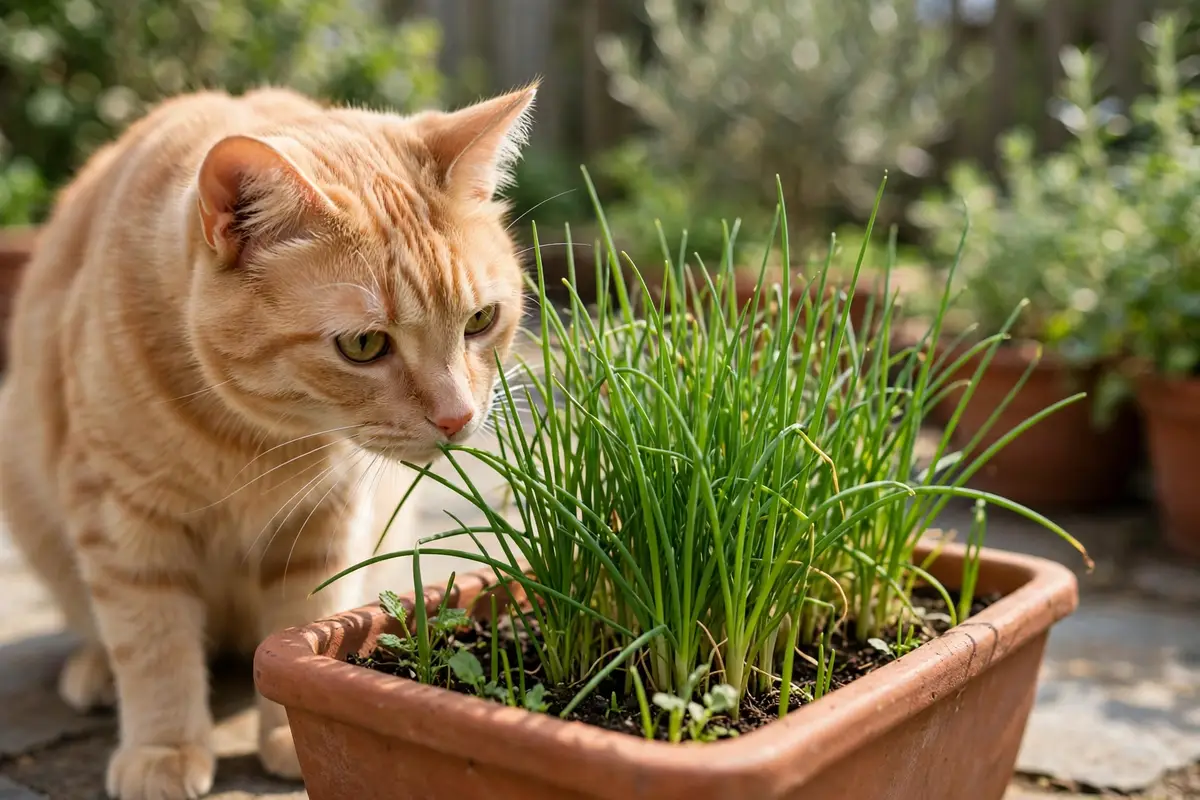
The Short Answer: No — Chives Are Toxic to Cats
No, cats should never eat chives. Chives belong to the allium family — the same plant family as onions, garlic, and leeks — and every form is toxic to cats: fresh, cooked, dried, or powdered. Even a small amount can damage a cat's red blood cells and lead to anemia.
The most common way cats get into chives is by accident. A cat may nibble a herb plant in the garden, steal a garnish from a plate, or lick a dip seasoned with chives. Because chives look like harmless green grass, it is easy to forget they are dangerous for cats. Keep reading for the warning signs, what to do if your cat has already eaten some, and the sources to watch for.
Is Chives Safe for Cats?
No, chives are not safe for cats in any amount. Unlike cat grass, which is harmless, chives contain compounds that damage a cat's red blood cells. Cooking does not make chives safe — heat does not destroy the harmful compounds — and neither does drying or grinding them into powder.
Cats are more sensitive to allium vegetables than many other animals, and their small body size means even a modest amount can matter. There is no safe serving size for chives, and no way to prepare them that makes them safe. Keep chives out of your cat's bowl and out of reach. Our cat food safety guide covers the full list of foods that can harm cats.
Why Are Chives Toxic to Cats?
Chives contain sulfur compounds called thiosulfates, the same substances that make onions and garlic toxic to cats. When a cat eats chives, these compounds attack the red blood cells, damaging them so they can no longer carry oxygen properly. Over time the damaged cells break down, and the cat can develop anemia. The damage does not always show up right away, so a cat may seem fine for a day or two before the signs appear.
Chives are easy to underestimate because they are small and mild. A single blade looks harmless, and a sprinkle of chopped chives looks like nothing at all. But size does not change the chemistry: chives should be treated with the same caution as onion and garlic.
Symptoms of Chive Poisoning in Cats
If your cat has eaten chives, watch for stomach upset first: vomiting, diarrhea, loss of appetite, and stomach pain are the most common early symptoms. Your cat may drool or refuse its next meal.
The more serious signs come from anemia, and they can take a day or more to appear. Watch for weakness, unusual tiredness, and pale gums — lift your cat's lip gently and check whether the gums look paler than their usual pink.
Any of these signs after your cat has eaten chives is a reason to call the vet the same day. Do not wait to see whether the symptoms pass on their own.
Can Kittens Eat Chives?
No, kittens should never eat chives. Kittens are smaller and still developing, so they are even more vulnerable to the compounds in chives than adult cats. A curious kitten may nose at a herb pot on a windowsill or nibble a blade in the garden — so keep chive plants well out of reach.
What Happens If My Cat Eats Chives?
It depends on how much your cat ate and how quickly you act. A single blade may cause nothing more than mild stomach upset, while a larger amount can lead to vomiting, diarrhea, and anemia over the following days. There is no reliable way to predict the outcome from the amount eaten.
Do not try to make your cat vomit, and do not offer milk, oil, or home remedies. These can make things worse and delay proper treatment. Offer fresh water, keep your cat calm and indoors, and note when your cat ate the chives and roughly how much.
If your cat shows vomiting, pale gums, weakness, or dark urine, call the vet right away.
What to Do If Your Cat Ate Chives
If you catch your cat eating chives, act quickly and calmly:
- Move the chives away. Take the plant, plate, or garnish away from your cat so it cannot eat any more.
- Call your vet. Do this right away, even if your cat seems fine. Tell the vet what your cat ate, how much, and when.
- Do not induce vomiting. Never try to make your cat vomit at home unless your vet tells you to.
- Keep your cat indoors and calm. Offer fresh water and a quiet place to rest.
- Watch for symptoms. Check for vomiting, lethargy, pale gums, and dark urine over the next few days, and tell your vet about anything unusual.
Chives in the Garden: The Nibbling Risk
The garden is the biggest chive risk for cats. Chives grow in clumps of thin green blades that look almost exactly like grass, and cats love to nibble grass. An outdoor cat wandering through a herb bed may chew a few blades without anyone noticing, and an indoor cat may reach a pot of chives on a windowsill.
If you grow chives, keep them where your cat cannot reach them — on a high shelf, in a closed greenhouse, or in a part of the garden your cat does not visit. Better still, grow a pot of safe cat grass or catnip nearby, so your cat has something harmless to nibble instead.
How Much Chives Can a Cat Eat?
None. There is no safe amount of chives for a cat — not a single blade, not a pinch of garnish, and not a spoonful of chive dip. If you want a green treat, choose something known to be safe, such as a few blades of cat grass or a small piece of cucumber, offered only occasionally.
Hidden Sources of Chives: Garnishes, Dips, and Seasoning Blends
Chives hide in more dishes than most people realize. They are sprinkled over baked potatoes, stirred into sour cream dips, mixed into cream cheese spreads, and folded into omelets and salads. A cat that licks a plate or steals a bite of a chive-topped dish has eaten chives, even though the green flecks are easy to miss.
Dried chives and chive powder are hidden sources too, turning up in spice blends, soup mixes, and ready meals. Check the ingredients of any seasoning, sauce, or dip before letting your cat near it.
Safe Alternatives to Chives
If your cat likes nibbling green things, give it a safe outlet. A pot of cat grass — usually wheat, oat, or barley grass — is made for exactly this, and most cats love it. A small piece of cucumber or a few green beans are also gentle choices.
Cats are obligate carnivores: meat is the center of their diet, and vegetables are only an occasional extra.
Chives may look like harmless grass, but for cats they are a poison. Fresh, cooked, dried, or powdered, every form carries the same risk of red blood cell damage and anemia, and there is no safe amount. The danger is most likely a nibble in the herb garden or a garnish stolen from a plate, so keep chive plants out of reach. If your cat does eat chives, call your vet the same day.
Can cats eat chives?
No. Chives are toxic to cats in every form — fresh, cooked, dried, or powdered — and should never be fed to a cat.
Are chives toxic to cats?
Yes. Chives contain compounds that damage a cat's red blood cells and can lead to anemia.
Can cats eat cooked chives?
No. Cooking does not remove the harmful compounds in chives, so cooked chives, chive garnish, and dishes seasoned with chives are all unsafe for cats.
Can kittens eat chives?
No. Kittens are even more vulnerable than adult cats because they are smaller and still developing, so chives should never be offered to a kitten.
What happens if my cat eats chives?
Your cat may develop vomiting, diarrhea, and loss of appetite, followed by signs of anemia such as weakness and pale gums. Call your vet the same day if your cat ate chives.
How much chives can a cat eat?
None. There is no safe amount of chives for a cat — not a single blade, not a pinch of garnish, and not a spoonful of chive dip.