Can Cats Eat Raisins?
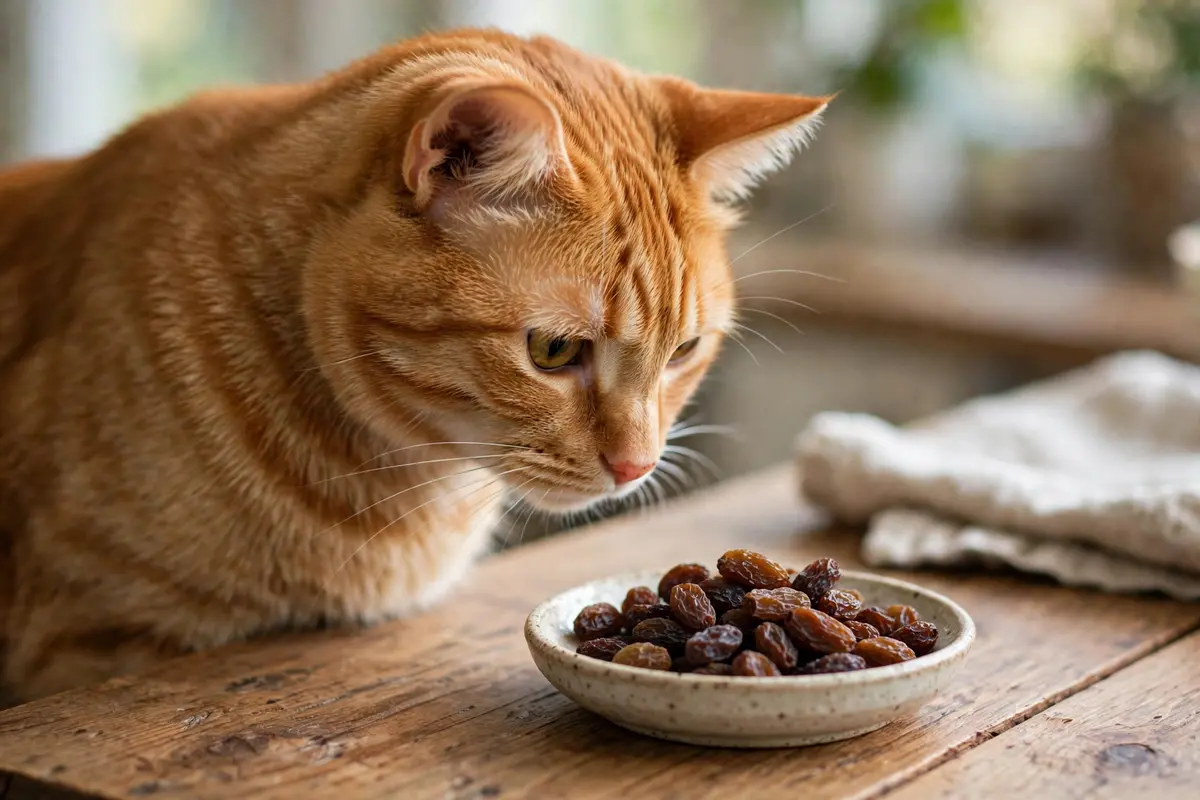
No, cats must never eat raisins. Raisins are unsafe for cats — even a few can cause serious kidney damage. Raisins are dried grapes, and grapes carry an unknown toxin that can trigger sudden kidney failure in cats and dogs. Drying concentrates the fruit, so a small handful of raisins packs the same risk as a much larger bunch of grapes. There is no safe amount, no safe preparation, and no age at which raisins become okay.
Raisins hide in more foods than most people realize: fruitcake, trail mix, oatmeal cookies, some breads and cereals, and granola bars. That is what makes them dangerous — a cat does not need to eat a bowl of raisins to get into trouble. A few stolen from a muffin or a dropped trail-mix handful can be enough to need a vet. This guide explains why raisins are so risky, where they hide, the warning signs, and exactly what to do if your cat eats them.
Why Are Raisins Dangerous for Cats?
Raisins, like grapes, contain a toxin that can damage the kidneys — and scientists still have not identified exactly what it is. The best current research points to tartaric acid, a compound naturally present in grapes, but the picture is not fully settled, and other compounds may play a role. What is settled is the outcome: eating grapes or raisins can cause sudden kidney failure in cats and dogs, sometimes after only a small amount.
Drying makes the risk worse, not better. A raisin is a grape with the water removed, so the toxin is concentrated into a much smaller package. A cat that eats five or six raisins has taken in far more grape material than a cat that eats five or six grapes. And because cats are small, the dose per pound of body weight climbs fast. There is no way to predict which cat will react badly — some cats eat grapes with no symptoms, others become seriously ill from a few raisins. That unpredictability is why the rule is absolute: no raisins, ever.
Hidden Raisins: Foods That Catch Owners Out
Most raisin accidents do not involve a bowl of raisins. They involve foods where raisins are mixed in and easy to miss. Fruitcake and Christmas pudding are the worst offenders, packed with raisins and currants. Trail mix, granola, oatmeal raisin cookies, raisin bread, cinnamon raisin bagels, some breakfast cereals, and certain snack bars all hide raisins too. A cat that steals a bite of a muffin or licks crumbs off a plate can eat raisins without the owner ever noticing.
Currants and sultanas carry the same risk — they are all dried grapes, and the same unknown toxin applies. If a food label lists raisins, currants, sultanas, or grape juice concentrate, treat it as off-limits for your cat. Keep these foods in closed containers and off counters, clean up crumbs promptly, and be extra careful during the holidays, when fruitcake and mince pies are everywhere. If you bake with raisins, keep your cat out of the kitchen while you work.
Symptoms of Raisin Poisoning in Cats
Symptoms usually begin within a few hours of eating raisins. Early signs include vomiting, diarrhea, drooling, loss of appetite, and stomach pain. Your cat may seem quiet, hide away, or refuse food and water. These early signs are easy to miss, especially if you did not see your cat eat the raisins — a cat that vomits once and then seems fine can still be in trouble.
The more serious signs appear as the kidneys struggle: your cat may drink more water than usual and then urinate less, or stop urinating altogether. Weakness, trembling, bad breath, and a swollen belly can follow. Kidney damage can develop over 24 to 72 hours, so a cat that seems better the next morning is not necessarily safe. Any suspected raisin eating deserves a vet call the same day, even if your cat looks fine.
Can Kittens Eat Raisins?
Absolutely not. Kittens are smaller, their kidneys are still developing, and they are far more vulnerable to toxins than adult cats. A few raisins that might only upset an adult cat can seriously harm a kitten. Kittens should eat kitten food and nothing else — there is no treat, snack, or human food that a kitten needs.
This is a lifelong rule, not a wait-until-adult one. Raisins are never safe for cats at any age. If you have a kitten and raisins in the house, store them where the kitten cannot reach them and clean up any that fall on the floor right away.
What to Do If Your Cat Eats Raisins
Treat this as an emergency and call your vet or an emergency animal poison line right away — do not wait for symptoms. Note how many raisins your cat ate, when it happened, and whether they were plain raisins or part of a food like fruitcake or trail mix. Your vet may ask you to bring your cat in immediately, even if it seems fine, because early treatment makes a real difference with kidney toxins.
At the clinic, treatment may include inducing vomiting if the raisins were eaten very recently, giving activated charcoal, and starting intravenous fluids to protect the kidneys. Your vet will likely run blood tests to check kidney function and may keep your cat for monitoring. Do not try to induce vomiting at home unless a vet tells you to, and do not give milk or home remedies. Quick action is the single most important thing you can do.
Raisins are one of the clearest no’s in cat feeding. The toxin is still unidentified, drying concentrates it, and even a few raisins can damage a cat’s kidneys. They hide in fruitcake, trail mix, cookies, and breads, so the protection is simple: keep raisin foods out of reach, clean up crumbs, and call your vet immediately if your cat eats any. No snack is worth a kidney emergency.
Can cats eat raisins?
No. Raisins are unsafe for cats — even a few can cause kidney damage. There is no safe amount and no safe preparation.
Why are raisins dangerous for cats?
Raisins are dried grapes, and grapes contain an unknown toxin that can cause sudden kidney failure. Drying concentrates the toxin into a smaller package.
Are currants and sultanas safe for cats?
No. Currants and sultanas are also dried grapes and carry the same kidney risk as raisins. Keep them away from cats too.
What foods hide raisins?
Fruitcake, trail mix, oatmeal raisin cookies, raisin bread, some cereals, and granola bars. Check labels and keep these foods out of reach.
Can kittens eat raisins?
No. Kittens are smaller and their kidneys are still developing, so raisins are even more dangerous for them. This is a lifelong no.
What should I do if my cat eats raisins?
Call your vet or an emergency poison line immediately, even if your cat seems fine. Note how many were eaten and when. Do not wait for symptoms.