Can Cats Eat Cinnamon?
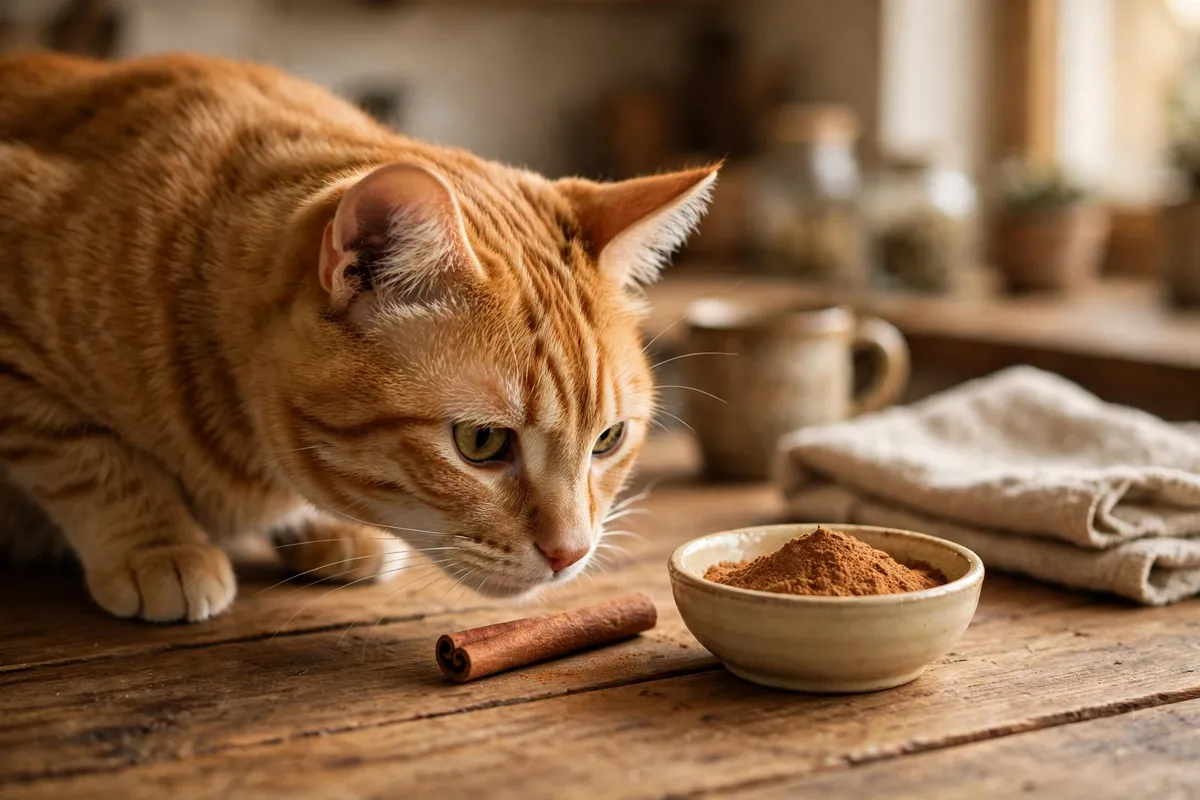
Can cats eat cinnamon? The short answer is: a tiny amount of cinnamon in baked food is usually not an emergency, but cinnamon is not a safe treat to offer your cat on purpose. Cinnamon powder can irritate a cat's lungs and stomach when inhaled or eaten in quantity, and concentrated cinnamon oil is toxic to cats. The form matters more than the spice itself — a pinch baked into a muffin is very different from a spoonful of powder or a bottle of essential oil.
This guide explains the powder-versus-oil distinction, why cinnamon brooms and potpourri are a hidden risk, how much cinnamon is too much, and what to do if your cat gets into the spice jar. It also covers kittens, who are more sensitive than adult cats.
The Verdict: Can Cats Eat Cinnamon?
Verdict: CAUTION. Cinnamon is not toxic to cats in the same way as chocolate or grapes, but it is not a safe food to share either. Small amounts baked into human food — a pinch in a cake or a dusting on a pastry — are unlikely to harm a healthy adult cat that steals a bite. Larger amounts of ground cinnamon, and especially concentrated cinnamon oil, are a different story and can cause real irritation and illness.
Do not feed your cat cinnamon on purpose, and keep the spice jar, cinnamon sticks, and especially cinnamon oil out of reach. If your cat eats a small amount of a baked food containing cinnamon, watch them — and if they get into cinnamon oil or a large amount of powder, call your vet right away.
Why Cinnamon Needs Caution
Cinnamon's main problem for cats is irritation. Ground cinnamon is a fine, dry powder, and when a cat sniffs it, licks it, or eats a spoonful of it, the powder can irritate the mouth, throat, stomach, and lungs. Cats have small, sensitive airways, so inhaling a cloud of powder can trigger coughing, sneezing, and breathing difficulty.
Cinnamon also contains coumarin, a natural compound that in large amounts can affect the liver. A cat that eats a large quantity of the spice takes in far more of it, and cats' livers are less able to process many plant compounds than a human liver is. That is why quantity matters so much: a dusting is a minor exposure, while a spoonful is a real one.
The common cassia cinnamon sold in most supermarkets contains more coumarin than Ceylon cinnamon, sometimes called true cinnamon — another reason not to guess at safe amounts.
Cinnamon Powder vs Cinnamon Oil: The Key Difference
This is the distinction that matters most. Ground cinnamon powder and concentrated cinnamon essential oil are not the same risk at all, and confusing them is how most cinnamon accidents become serious.
- Ground cinnamon powder. Irritating in quantity, especially if inhaled or eaten by the spoonful. A pinch in baked food is a low-level exposure; a mouthful of powder is not.
- Cinnamon essential oil. Toxic to cats. Essential oils are highly concentrated, and cinnamon oil in particular can cause vomiting, diarrhea, tremors, and liver problems. Never use cinnamon oil around cats, and never add it to food, water, or a diffuser in a room your cat uses.
- Cinnamon sticks. Less risky than powder or oil, but still not a cat toy or treat — a chewed stick can splinter and irritate the mouth.
- Cinnamon brooms and potpourri. A hidden holiday hazard: decorative brooms and potpourri are heavily scented with cinnamon oil, and a cat that chews them or sleeps beside one can get oil on its fur — and then lick it off while grooming.
Keep cinnamon-scented candles, air fresheners, and potpourri in rooms your cat cannot enter. Never diffuse cinnamon oil in a home with cats — diffusers spread fine oil droplets that a cat breathes in and grooms off its coat.
Is Cinnamon Safe for Cats?
A small amount of cinnamon baked into human food is generally considered low risk for a healthy adult cat. That means a stolen crumb of cinnamon toast or a lick of frosting with a pinch of cinnamon in it is unlikely to cause trouble beyond, at most, mild stomach upset. The cinnamon is diluted through the whole dish, and the amount your cat actually eats is tiny.
That does not make cinnamon a treat. Cats gain nothing from spices, and cinnamon-flavoured human foods also tend to bring sugar, fat, and other ingredients a cat should not eat. If your cat begs for a bite of your cinnamon pastry, offer a small piece of plain cooked chicken or a commercial cat treat instead.
Be extra careful with foods where cinnamon is the star rather than a background note — cinnamon sugar toast, churros, and spice cakes all contain far more cinnamon per bite than a lightly spiced muffin. If your cat eats a generous portion, watch for vomiting or coughing and call your vet if anything seems off.
Can Kittens Eat Cinnamon?
No — kittens should not eat cinnamon. A kitten's airways are even smaller than an adult cat's, so inhaled powder is more likely to cause coughing and breathing trouble, and a kitten's developing liver is less able to handle coumarin. Kittens are also more likely to investigate a spice jar or a cinnamon broom out of pure curiosity.
Keep cinnamon powder, sticks, and oil in a closed cupboard, and decorative cinnamon brooms and potpourri out of rooms your kitten uses. A kitten's diet should be a complete kitten food, with treats limited to products made for kittens.
What Happens If My Cat Eats Cinnamon?
What happens depends on the form and the amount. A small bite of a cinnamon-flavoured baked food usually causes nothing, or at most a little stomach upset that passes within a day. A larger amount of ground cinnamon is more likely to cause vomiting, diarrhea, and a sore mouth, and a cat that inhales a cloud of powder may cough, sneeze, and struggle to breathe.
Cinnamon oil is the serious case. A cat that licks cinnamon oil, chews a cinnamon broom, or grooms oil off its fur can develop vomiting, diarrhea, drooling, tremors, lethargy, and in severe cases liver problems. Signs may appear within hours, and a cat that has been exposed to oil should be seen by a vet promptly rather than watched at home.
Watch for coughing or wheezing after a powder exposure, and for vomiting, drooling, or unusual drowsiness after an oil exposure. If your cat is struggling to breathe or becomes very lethargic, treat it as an emergency. For more on foods that can harm cats, see our guide to human foods that are poisonous to cats.
What to Do If Your Cat Already Ate Cinnamon
Work through these steps:
- Take the cinnamon away so your cat cannot eat or inhale more, and work out what form it was — a pinch in baked food, a spoonful of powder, a cinnamon stick, a broom, or essential oil — and roughly how much.
- If your cat inhaled powder, move them to fresh air and watch their breathing. Ongoing wheezing or laboured breathing needs a vet at once.
- If oil is on your cat's fur or skin, do not let them groom it off. Gently wipe it away with a damp cloth and call your vet for advice on cleaning it safely.
- Offer fresh water and let your cat drink freely.
- Call your veterinarian if your cat ate a large amount of powder, any cinnamon oil, or a cinnamon broom, or if you see vomiting, diarrhea, tremors, or breathing trouble. Bring the packaging if you can.
- Watch for 24 hours. Any worsening signs mean a vet visit.
Never try to make your cat vomit at home unless your vet specifically tells you to. For more safe-snack ideas, see our guides to whether cats can eat cheese and whether cats can eat tuna, or browse the full Cat Food section on the Purrfect Paws homepage.
Frequently Asked Questions
Is cinnamon safe for cats?
In tiny amounts baked into food, cinnamon is usually low risk for a healthy adult cat. But cinnamon powder irritates the lungs and stomach in quantity, and cinnamon oil is toxic to cats. Do not offer cinnamon to your cat on purpose.
Can kittens eat cinnamon?
No. Kittens are more sensitive to cinnamon than adult cats because their airways are smaller and their livers are still developing. Keep cinnamon powder, sticks, and oil out of a kitten's reach.
What happens if my cat eats cinnamon?
A small bite of cinnamon-flavoured food usually causes no trouble. A large amount of powder can cause vomiting, diarrhea, and coughing, while cinnamon oil can cause vomiting, tremors, and liver problems and needs prompt vet care.
How much cinnamon can a cat eat?
There is no recommended amount — cinnamon is not a food for cats. A pinch baked into a dish is a low-level exposure, but a spoonful of powder or any cinnamon oil is a serious one. Keep the spice jar away from your cat.
Are cinnamon brooms dangerous for cats?
Yes, they can be. Decorative cinnamon brooms and potpourri are heavily scented with cinnamon oil, and a cat that chews them or grooms oil off its fur can become ill. Keep them out of rooms your cat uses.