Can Cats Eat Coconut?
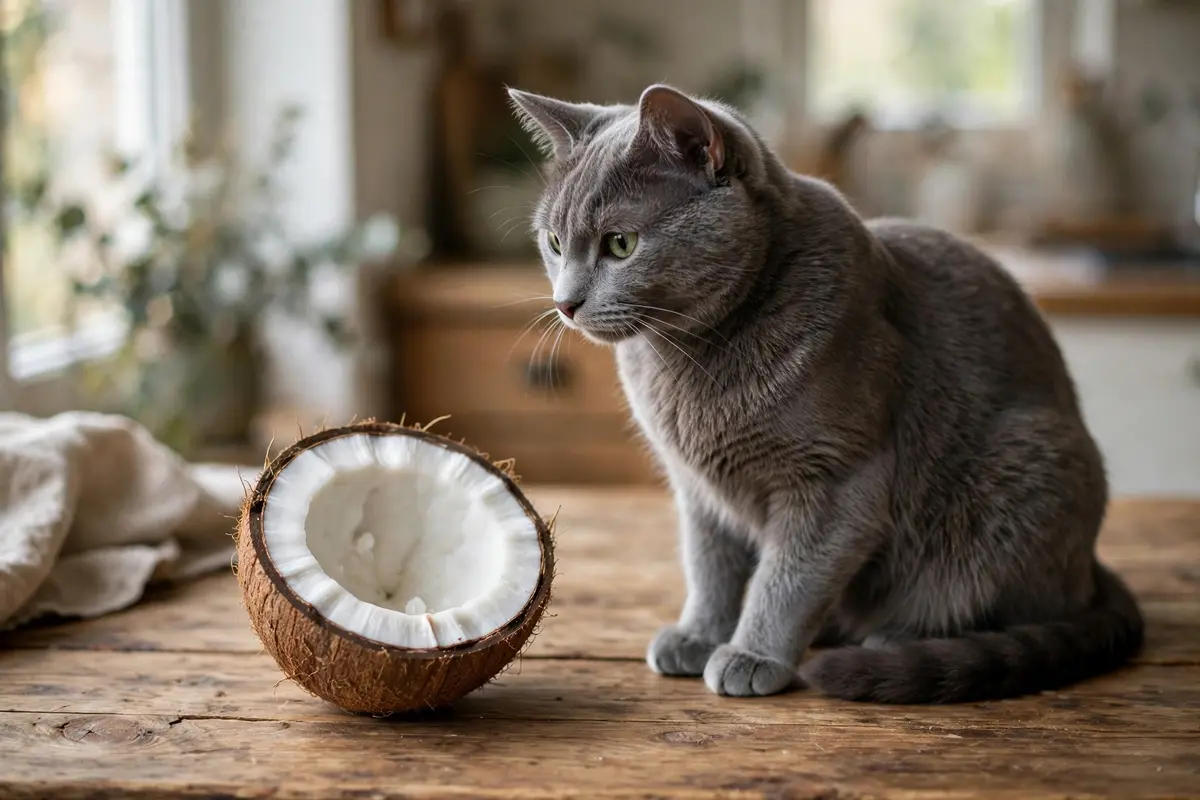
Yes, cats can eat coconut — with caution. A tiny piece of plain coconut flesh is not toxic to cats, and most cats can handle an occasional small taste. But coconut is not a food cats need, and two of its common forms come with real warnings: coconut water is high in potassium and should be avoided, and coconut oil is so calorie-dense that even a little can upset a small stomach. The safe rule is simple: flesh in tiny amounts only, water never, oil sparingly and only if your vet is fine with it.
Coconut shows up in a lot of kitchens, from baking and curries to coconut water bottles and jars of coconut oil. It is easy to see why cat parents ask the question — and why the answer needs care. The flesh, the water, and the oil are three very different foods, and treating them as one thing is how cats end up with stomach trouble. This guide explains each form separately, how much flesh is safe, why the water is a no, and what to do if your cat eats too much.
Is Coconut Safe for Cats?
Coconut flesh is not listed as toxic to cats. Unlike grapes or onions, it contains no compound known to poison a cat, and a small piece of fresh, plain coconut meat is unlikely to cause harm. That puts coconut in the “caution” category rather than the “never” category — safe in principle, but not something to serve freely. If you are looking for a treat you can offer without worry, a commercial cat treat is always the simpler choice.
The caution comes from what coconut is: very high in fat and fiber. A cat’s digestive system is built for animal protein, and a rich plant food like coconut can cause vomiting, diarrhea, or stomach pain, especially in a cat with a sensitive gut. Coconut is also calorie-dense — a small chunk carries far more calories than a cat treat should. So while coconut flesh is not dangerous in the toxic sense, it is easy to overdo, and overdoing it is what causes problems.
Coconut Flesh: How Much and How to Serve It
If you want to offer coconut flesh, keep it tiny: a piece about the size of your thumbnail, once in a while, is plenty for an adult cat. Offer it plain and fresh — no sweetened coconut flakes, no toasted coconut, no coconut coated in sugar or chocolate. Shredded baking coconut is often sweetened and is not a good choice. Fresh coconut meat, cut into a small piece, is the only form worth offering.
Watch your cat after the first taste. Some cats love the texture and crunch; others sniff it and walk away, which is fine — cats do not need coconut, and a cat that is not interested is making a good choice. If your cat does eat it, check the litter box and appetite over the next day. Loose stool or vomiting means coconut does not agree with your cat, and you should not offer it again. Never make coconut a regular treat — the occasional tiny taste is the limit.
Coconut Water: Why Cats Should Skip It
Coconut water is the form to avoid. It is high in potassium, and while potassium is a normal nutrient, a concentrated dose from coconut water can be too much for a cat, especially a cat with kidney disease. Cats with kidney problems already struggle to manage potassium, and an extra load can make them feel worse. Coconut water is also a sugary drink that adds calories without nutrition a cat needs.
Plain fresh water is always the right drink for a cat. Coconut water offers nothing that water does not, and the potassium and sugar make it a poor trade. If your cat laps at your coconut water, do not panic over a lick or two — a tiny taste is unlikely to cause harm — but do not offer it as a drink, and keep bottles and glasses out of reach. A cat that drinks enough water from its bowl has no need for coconut water at all, and a cat that does not drink enough needs a vet visit, not a sports drink.
Coconut Oil: Helpful or Hype?
Coconut oil is often praised for skin and coat health, and some cat parents rub a little on dry skin or add a drop to food. The honest picture is mixed. Coconut oil is pure fat — about 120 calories per tablespoon — so even a small amount is a lot of calories for a cat. A quarter teaspoon a few times a week is the most most vets would consider, and many would say skip it entirely.
Used on the skin, a small amount of coconut oil can help with dry patches, but cats groom themselves, so anything on the fur gets eaten — which brings the calorie and stomach-upset problem right back. It can also make the coat greasy and attract dirt. If your cat has dry skin or a dull coat, the first step is to check the diet and talk to your vet, not to reach for coconut oil. There are cat-specific supplements and foods that do the job better, without the guesswork.
Can Kittens Eat Coconut?
Kittens should not eat coconut. A kitten’s gut is still developing and is far more sensitive to rich, fatty foods than an adult cat’s, so even a small piece of coconut flesh can cause diarrhea or vomiting. Kittens also have tiny calorie budgets — every bite should be kitten food, which is formulated for growth, not treats.
Wait until your cat is a full-grown adult before even considering a tiny taste of coconut flesh, and skip coconut water and oil for kittens entirely. There is no age at which coconut becomes necessary for a cat, so if you never offer it, your cat loses nothing.
What to Do If Your Cat Eats Too Much Coconut
If your cat eats a large piece of coconut flesh, a spoonful of coconut oil, or laps up a good amount of coconut water, stay calm. Offer fresh water and watch for vomiting, diarrhea, or a loss of appetite over the next 12 to 24 hours. Most cases of overeating coconut cause mild stomach upset that settles on its own with plain meals and water.
Call your vet if vomiting or diarrhea lasts more than a day, if your cat refuses food or water, seems lethargic, or has a swollen belly. Also call if your cat has kidney disease and drank coconut water, because of the potassium load. Do not try to induce vomiting at home unless a vet tells you to, and do not give milk or home remedies. Note how much was eaten and which form — flesh, water, or oil — because your vet will ask.
Coconut is a caution food, not a forbidden one — but the caution matters. A thumbnail-sized piece of plain flesh now and then is fine for most adult cats, while coconut water should be skipped and coconut oil used sparingly, if at all. Keep portions tiny, watch for stomach upset, and remember that plain water and a complete cat food already give your cat everything it needs.
Can cats eat coconut?
Yes, with caution. Plain coconut flesh in tiny amounts is not toxic, but coconut water should be avoided and coconut oil used only sparingly.
Is coconut water safe for cats?
No. Coconut water is high in potassium and sugar. It can be a problem for cats with kidney disease, and plain water is always the better drink.
How much coconut can a cat eat?
A thumbnail-sized piece of plain flesh, once in a while, is plenty. Coconut is high in fat and calories, so a little goes a long way.
Is coconut oil good for cats?
It is mixed. A tiny amount on the skin may help dry patches, but cats lick it off, adding calories and risking stomach upset. Ask your vet first.
Can kittens eat coconut?
No. Kittens have sensitive stomachs and tiny calorie budgets. Stick to kitten food and skip coconut until your cat is a grown adult.
What should I do if my cat eats too much coconut?
Offer fresh water and watch for vomiting or diarrhea for 12 to 24 hours. Call your vet if symptoms last more than a day or your cat stops eating or drinking.