Can Cats Eat Pineapple?
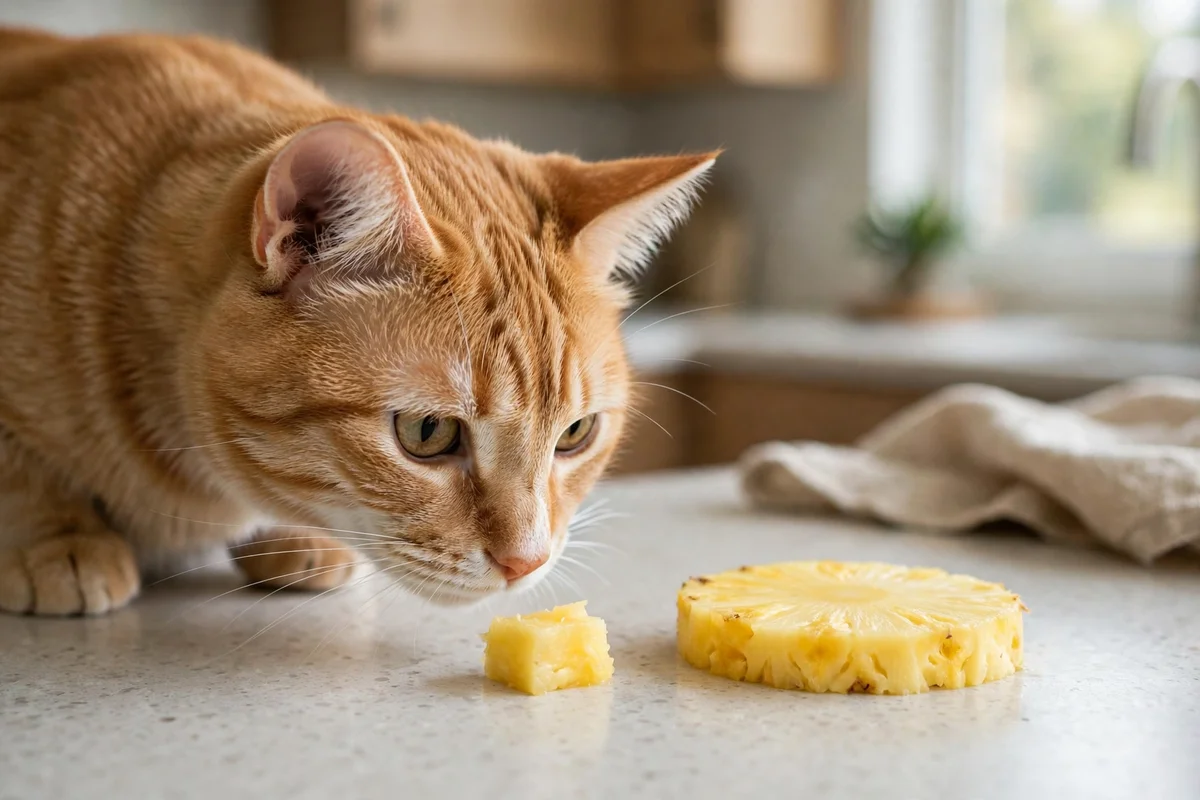
Yes, cats can eat pineapple — but only a small piece of fresh flesh, with the core, skin, and leaves removed. That narrow definition is the whole answer: fresh pineapple flesh is non-toxic to cats, but the tough core, the spiky skin, and especially canned pineapple in syrup are all off the menu.
The other caution is acidity. Pineapple is one of the more acidic fruits, and that acidity can irritate a cat's stomach even when the fruit itself is safe. So the portion stays truly small — a single bite-sized piece, once in a while — and cats with sensitive stomachs should skip it altogether.
Is Pineapple Safe for Cats?
Fresh pineapple flesh is not toxic to cats. It is not on any list of dangerous fruits — that list is headed by grapes and raisins — and a small piece of ripe flesh will not poison a cat. What it will do, in larger amounts, is irritate the stomach, thanks to its acidity and its fiber, and that is why the safe portion is so small.
Pineapple contains vitamin C, manganese, and an enzyme called bromelain, which helps break down protein. For humans those are selling points; for cats they are mostly irrelevant, because cats get their protein from meat and do not need fruit nutrients. The enzyme angle is worth a mention only because bromelain in large amounts can irritate the mouth and stomach lining — another reason to keep the piece small and the frequency low.
What matters most is which part of the pineapple you are talking about. The flesh is the only safe part. The core is hard, fibrous, and a genuine choking and blockage risk. The skin is tough, spiky, and indigestible. The crown of leaves is sharp and can injure the mouth or gut. Fresh flesh only, cut small, with everything else in the bin.
The Acidity Caution
Pineapple is noticeably acidic, and acidity is the main reason pineapple is a more cautious treat than a berry. A cat's stomach is built for meat, not for sharp, acidic fruit, and even a small piece can cause discomfort in a sensitive cat — drooling, lip-smacking, or turning away from food after eating it are signs the acidity did not agree with them.
Ripeness helps but does not remove the issue. A fully ripe pineapple is sweeter and less sharp than an underripe one, so if you are going to offer a piece, choose a ripe one: fragrant, slightly soft, golden rather than green. Even then, keep it to one small piece and watch your cat afterwards. If your cat has a history of vomiting, acid reflux, or a sensitive stomach, skip pineapple entirely — there are gentler treats that carry none of this risk.
One more acidity-adjacent warning: pineapple juice. Juice concentrates the acid and the sugar while removing the fiber, and it is far too sharp for a cat's stomach. Do not offer pineapple juice, pineapple smoothies, or drinks containing pineapple, even if they look natural.
How Much Pineapple Can a Cat Eat?
One small, bite-sized piece — roughly the size of your cat's kibble, or a cube about half an inch across — once in a while is plenty.
Offer that single piece the first time and watch for the rest of the day. Normal appetite, normal litter box, no vomiting or soft stool means the treat agreed with them. If your cat vomits, drools, or has loose stool, pineapple goes on the skip list — individual cats react differently, and acidity tolerance varies.
Cats with diabetes should skip pineapple unless their vet approves it. Pineapple is relatively high in natural sugars, and diabetic diets depend on tight sugar control. The same caution applies to overweight cats: sugary fruit treats work against a weight-loss plan, even in small amounts.
How to Serve Pineapple Safely
Start with a ripe, fresh pineapple. Cut away all skin, the tough core, and any eyes or hard bits left in the flesh, and cut the flesh into a single small cube. Wash your hands and the knife first — pineapple juice on the skin can carry bacteria from the rind into the flesh as you cut.
Serve the cube plain, fresh, and at room temperature. Do not cook it into anything, do not add sugar or honey, and do not offer dried pineapple, which is concentrated sugar and often contains added sweeteners or preservatives. Candied pineapple is even worse — it is essentially sugar with pineapple flavoring.
Canned pineapple deserves its own warning: canned in syrup is out completely, because the syrup is liquid sugar and the fruit has been soaking in it. Even canned pineapple in juice is a poor choice, since it is softer, sweeter, and more acidic than fresh flesh, and the canning liquid adds sugar your cat does not need. Fresh flesh only, and only a little.
Can Kittens Eat Pineapple?
Kittens should stick to kitten food. Their growth depends on precisely balanced nutrition, and acidic fruit is a particularly poor addition to a young, sensitive stomach. There is no benefit to giving a kitten pineapple, and the acidity makes it more likely than a berry to cause an upset stomach.
Once a cat is an adult, a single small cube as a rare treat is reasonable. The kitten months pass quickly, and there will be plenty of time later for a cautious taste. If a kitten has already eaten a tiny piece with no ill effects, there is no need to panic — just save future pieces for adulthood.
What Happens If My Cat Eats Too Much Pineapple?
Too much pineapple usually means a short bout of stomach upset: vomiting, soft stool, or diarrhea, sometimes with drooling or lip-smacking from the acidity. This generally settles within a day once the fruit has passed, provided the cat keeps drinking water and eating normally otherwise.
The situation is more serious if your cat ate the core, skin, or leaves. Those parts are hard and fibrous, and they can cause choking or, worse, a blockage in the gut. Signs of a blockage include repeated vomiting, straining without producing stool, a painful or swollen belly, and refusing food — that is a veterinary emergency, not a wait-and-see situation.
Also watch for a reaction to canned pineapple in syrup or a sweetened product: a large sugar load can cause vomiting and diarrhea, and products containing xylitol are a genuine emergency. If your cat ate anything listing xylitol, call your vet immediately and bring the packaging if you can.
When to Call the Vet
Call your vet if vomiting or diarrhea lasts more than 24 hours, if you see blood in vomit or stool, or if your cat becomes lethargic, hides, or refuses food and water. Call immediately — do not wait — if your cat may have swallowed core, skin, or leaves and shows signs of choking, repeated vomiting, or a painful belly.
Cats with diabetes, kidney disease, or ongoing stomach problems deserve a quicker call than a healthy cat, because even a small dietary upset can matter more for them. When in doubt, a short phone call to your vet costs nothing and beats guessing.
Do Cats Actually Need Pineapple?
No. Cats are obligate carnivores, and a complete, balanced cat food already gives them everything they need. Pineapple adds nothing essential, and given its acidity, it is one of the least necessary fruit treats you could offer. Its value is purely as a rare novelty.
If your cat enjoys a tiny cube now and then, that is fine. If your cat sniffs it and walks away, nothing is lost — and honestly, for pineapple, a lack of interest is a perfectly good outcome. Offer a piece of plain cooked chicken instead, which your cat's biology actually values, and keep the pineapple for yourself.
Is pineapple toxic to cats?
No. Fresh pineapple flesh is non-toxic to cats, but it is acidic, so the portion must stay tiny — one small cube, once in a while.
Can cats eat the pineapple core or skin?
No. The core is hard and fibrous and can cause choking or a gut blockage, and the skin is tough and indigestible. Serve only the flesh.
Can cats eat canned pineapple?
No. Canned pineapple in syrup is liquid sugar, and even canned in juice is sweeter and more acidic than fresh flesh. Fresh only.
Can kittens eat pineapple?
Kittens should stick to kitten food. Save fruit treats for adulthood, when a single small cube as a rare treat is reasonable.
What if my cat eats too much pineapple?
Expect possible vomiting or diarrhea for a day. If symptoms last more than 24 hours, or your cat may have eaten core or skin, call your vet.