Can Cats Eat Mango?
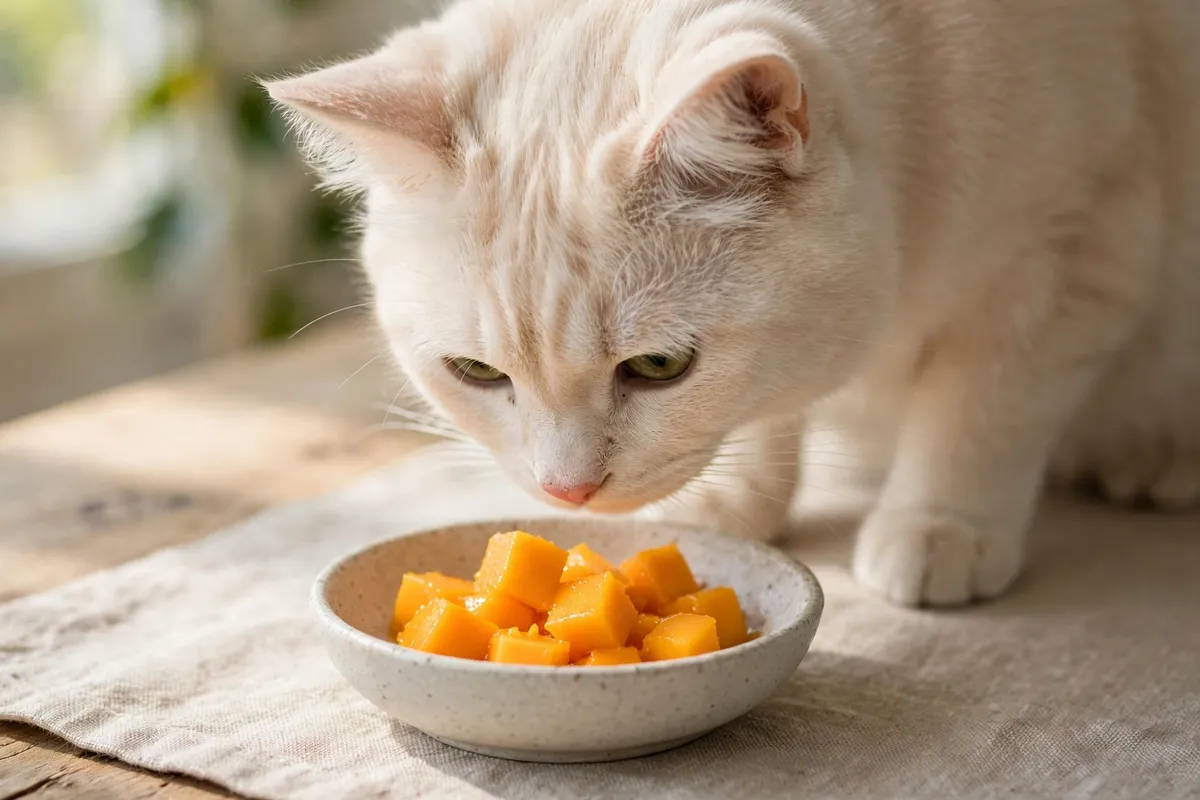
Yes, cats can eat mango — but only the flesh, and only in small cubes. A few tiny pieces of ripe mango flesh, with the pit and skin completely removed, make a safe occasional treat for a healthy adult cat. Mango flesh is not toxic to cats, and its soft, juicy texture appeals to some cats. The rules matter more than with many fruits, though: the pit is large and hard, the skin is tough and hard to digest, and mango is quite sugary, so diabetic cats should skip it.
As with all fruit, mango is a treat, not a cat food. Cats are obligate carnivores, and their bodies are built for animal protein, not fruit sugar. Mango adds nothing essential to a cat's diet, but a few small cubes once in a while are harmless for a healthy cat and can be a fun bit of enrichment. Here is the nutrition picture, the diabetes caution, the right portion, and how to serve mango safely.
Is Mango Safe for Cats?
Mango flesh is safe for cats. It is mostly water, with vitamin A, vitamin C, potassium, and a small amount of fiber, and it is low in fat. None of that makes mango a health food for cats — cats absorb plant nutrients poorly and cannot taste sweetness — but it does mean a few small pieces will not harm a healthy cat. The flesh is soft and easy to chew, which is a plus for older cats, as long as the pieces are cut small enough to prevent gulping.
The parts to avoid are the pit and the skin. The pit is large, hard, and smooth — a genuine choking hazard, especially for a cat that tries to carry or gnaw it — and it also contains small amounts of compounds best kept out of a cat's diet. The skin is tough, fibrous, and hard to digest, and it can carry pesticide residue. Mango leaves and stems are not part of the fruit you would serve anyway, but keep them away from curious cats too. Only the soft orange flesh belongs in the bowl.
The Diabetes Caution: Mango Is High in Sugar
Mango is one of the sweeter fruits, and that is its main caution. A few small cubes are fine for a healthy cat, but the sugar adds up fast, and for a diabetic cat it is a direct problem — mango should be skipped for diabetic cats unless a vet specifically approves it. Overweight cats are also better off with a lower-sugar treat, since extra sugar contributes to weight gain and dental problems over time.
The sugar caution also rules out mango products. Dried mango concentrates the sugar into a chewy, sticky piece that clings to teeth. Mango juice delivers sugar with no chewing to slow it down. Mango sorbet, mango sticky rice, and mango-flavored desserts add more sugar and often dairy or other ingredients cats should not have. Fresh, plain mango flesh is the only version that belongs near a cat, and only occasionally.
How Much Mango Can a Cat Eat?
Keep it to a few small cubes — about the size of your cat's kibble — once or twice a week at most. For a first taste, offer just two or three cubes and watch for the next 24 hours: normal appetite, normal litter box habits, no vomiting or soft stool. If everything is normal, that small portion can become an occasional treat. A whole slice is already too much for a cat, and a large serving can easily cause stomach upset from the sugar and fiber.
The 10-percent rule applies here too: all treats combined should stay under about 10 percent of your cat's daily calories. For an average indoor cat, that leaves room for only a few small treats a day, and mango should replace another treat on the day it is offered, not pile on top of a full treat allowance.
How to Serve Mango to Your Cat
Choose a ripe mango — it should give slightly when pressed and smell sweet at the stem end. Wash the outside, then cut the flesh away from the pit in slabs, score it, and scoop out the flesh without any skin. Dice the flesh into small, pea-sized cubes, and check each piece for stray bits of skin or pit fiber. Serve the cubes plain, at room temperature, and discard anything uneaten after a short while, since cut mango spoils quickly.
Do not add sugar, cream, chili, lime, or any topping, and do not offer unripe mango — it is hard, sour, and much more likely to upset a stomach. Frozen mango should be thawed fully and cut small before serving, since frozen chunks are hard and can be a choking risk. If your cat sniffs the cubes and walks away, that is normal; many cats ignore fruit, and a piece of plain cooked chicken is a treat your cat's biology actually values.
Can Kittens Eat Mango?
Kittens should stick to kitten food. Their growth needs precise nutrition, and fruit treats displace that nutrition without adding anything useful. A kitten's stomach is also small and more easily upset by sugary new foods. Wait until your cat is an adult, around twelve months old, before offering mango, and even then start with a single tiny cube to test tolerance.
The same restraint applies to senior cats and cats with health conditions. A diabetic cat should skip mango, a cat with kidney disease should have any new food cleared by the vet first, and a cat recovering from vomiting or diarrhea should not be given a novel treat until fully recovered. When in doubt, ask your vet before the first cube, not after a stomach upset.
What Happens If My Cat Eats Mango Pit or Skin?
If your cat chews or swallows a piece of mango skin, the most likely result is mild stomach upset — vomiting or soft stool — since the skin is tough and hard to digest. Remove any remaining skin, offer fresh water, and return to normal food. If the skin piece was large and your cat is gagging, drooling, or pawing at its mouth, it may be stuck, and you should call your vet promptly.
The pit is the bigger concern. A whole pit is a choking and intestinal-blockage risk, not a poisoning risk, but a blockage is serious: vomiting, loss of appetite, lethargy, or straining in the litter box after pit ingestion all warrant an urgent vet visit. Do not try to induce vomiting at home unless a vet tells you to. In practice, the safest approach is prevention — never leave a mango pit where a cat can reach it, and always cut the flesh well away from the pit.
When to Call the Vet
Mango is a sweet, soft, safe-in-small-amounts treat for a healthy adult cat — as long as the pit and skin never reach the bowl. Flesh only, tiny cubes, occasional frequency, and a hard pass for diabetic cats: follow those rules and mango becomes a harmless tropical extra. Keep the main diet a complete cat food, and your cat can enjoy the occasional mango cube without any worry.
Is mango safe for cats?
Yes. Ripe mango flesh is non-toxic to cats and safe in small, occasional portions, with the pit and skin completely removed.
How much mango can a cat eat?
A few pea-sized cubes once or twice a week is plenty. Start with two or three cubes the first time and check your cat's stomach handles it.
Can kittens eat mango?
Kittens should stick to kitten food. Wait until your cat is an adult, around twelve months, before offering mango, and then only a tiny cube.
Can diabetic cats eat mango?
Generally it is best to skip mango for diabetic cats because it is high in natural sugar. Ask your vet first if you want to offer a small piece.
Are mango pits dangerous for cats?
Yes — the pit is a choking and intestinal-blockage hazard. Never leave a pit where a cat can reach it, and call your vet promptly if one is swallowed.
What if my cat eats mango skin?
Mango skin is tough and hard to digest and may cause mild vomiting or soft stool. Remove any remaining skin and call your vet if gagging, drooling, or ongoing upset follows.