Can Cats Eat Cod?
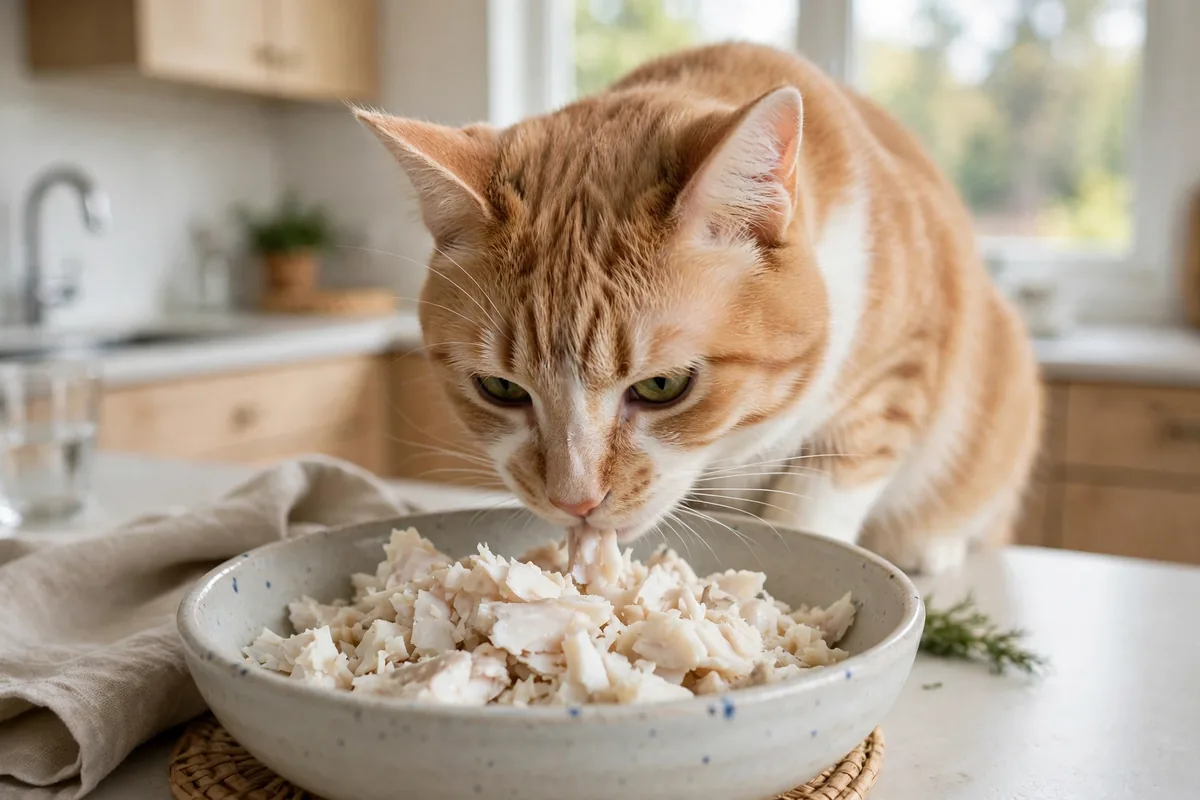
The Short Answer: Yes — Plain, Cooked, Boneless Cod Is Safe
Yes, cats can eat cod. Plain, cooked, boneless cod is a safe lean fish for most cats when served in small amounts. It is mild, easy to digest, and most cats enjoy its soft texture and gentle flavor.
Three rules decide whether cod is safe: it must be cooked, plain with no seasoning, and boneless. Raw cod, battered fish, and cod cooked with garlic, onion, salt, or sauce are not safe to share. Our cat food safety guide covers the full list of foods that can harm cats.
Is Cod Safe for Cats?
Yes, cod is safe for cats when it is cooked plain and served boneless. Cod is a lean white fish, which means it is lower in fat than oily fish such as salmon or sardines. That makes it a good choice for cats that need a lighter treat, or for cats that do not do well with rich, fatty fish.
Cod is a real animal protein, and cats are obligate carnivores, so fish protein fits naturally into their diet. It is also a mild fish, so cats with sensitive stomachs often handle it well. Like all treats, cod should stay a small part of the diet.
Why the Bones Matter Most With Cod
Cod is a lean, healthy choice, but it comes with one real risk: the bones. Cod fillets often hide thin pin bones, and even a fillet sold as boneless can contain a stray bone. Fish bones are sharp, and they can choke a cat, get stuck in the mouth or throat, or injure the stomach lining.
Never serve cod straight from the fillet without checking it first. Flake the cooked fish apart with your fingers or a fork, and run your fingers through each piece to feel for bones. Pick out every bone you find. If you are not sure a piece is bone-free, do not serve it.
This check matters more with cod than with canned fish, where the bones are softened by canning. Fresh or frozen cod needs a careful check every time.
How to Cook Cod for Your Cat
Cooking cod for a cat is simple, and plain is the whole point. Bake, steam, or poach a small fillet with no oil, butter, salt, or seasoning until it is cooked all the way through and flakes easily. Let it cool to room temperature before serving.
Do not serve raw cod. Raw fish can carry bacteria and parasites, and it contains an enzyme that breaks down thiamine, a vitamin cats need. Cooking destroys that enzyme and kills the germs.
Skip the batter and the breading. Fish sticks, battered cod, and fried cod are cooked in oil and coated in batter with salt and seasonings. If you want to share cod from a family meal, cut a piece from the plain inside of the fillet, away from any batter or sauce.
Can Kittens Eat Cod?
Yes, kittens can have a tiny taste of cod, as long as it is plain, cooked, boneless, and cut into a very small piece. A piece about the size of a pea is plenty for a kitten, and it should only be offered once in a while.
Kittens are still growing, and their main food should be a complete and balanced kitten food. Cod is a treat, not a meal, and it should never replace kitten food.
What Happens If My Cat Eats Cod?
If the cod was plain, cooked, and boneless, nothing bad should happen — your cat will simply have enjoyed a tasty treat. Plain cod is one of the gentler fish for cats, and most cats digest it easily.
If your cat ate raw cod, cod with bones, or heavily seasoned cod, watch for stomach upset over the next day: vomiting, diarrhea, or a reduced appetite. If your cat ate a bone, watch for pawing at the mouth, drooling, gagging, or trouble swallowing, and call your vet right away.
If the cod was cooked with garlic or onion, call your vet the same day. Garlic and onion can damage a cat's red blood cells, and the signs — weakness, lethargy, and pale gums — can show up a few days later.
How Much Cod Can a Cat Eat?
For a healthy adult cat, about one to two tablespoons of cooked, boneless cod, once or twice a week, is a good limit. That is enough for your cat to enjoy the taste without turning a treat into a habit.
Treats should stay under 10 percent of your cat's daily calories, and cod counts toward that limit. If your cat is overweight or has a sensitive stomach, ask your vet before offering cod.
What to Do If Your Cat Ate Cod
If your cat ate cod, stay calm — in most cases there is nothing to worry about. Follow these steps:
- Check what kind it was. Note whether the cod was plain and cooked, or raw, battered, or seasoned with garlic, onion, or sauce, and whether it had bones.
- Take away the rest. Remove the plate or leftovers so your cat cannot eat any more, especially bones or batter.
- Offer fresh water. Make sure your cat has clean, fresh water nearby.
- Do not induce vomiting. Never try to make your cat vomit at home unless your vet tells you to.
- Watch for symptoms. Look for vomiting, diarrhea, pawing at the mouth, drooling, gagging, belly pain, lethargy, or pale gums over the next few days, and call your vet if any appear — the same day if the cod was raw, seasoned with garlic or onion, or had bones.
Safe Ways to Serve Cod to Cats
The best way to serve cod is simple: cook a small fillet plain, with no oil, butter, salt, or seasoning, until it flakes easily. Let it cool, flake it apart with your fingers, and remove every bone you can find. Cut it into small, cat-sized pieces.
Offer it as an occasional treat on top of regular food. If your cat has never tried cod, start with a small piece and watch how they do over the next day.
Cod is one of the gentler fish you can share with your cat, as long as it is plain, cooked, and boneless. Its mild flavor and lean protein make it a good lighter choice, and the bone check is the one step that matters most. Keep it as an occasional treat and skip the batter and seasoning.
Can cats eat cod?
Yes. Plain, cooked, boneless cod is safe for cats in small amounts. Serve it plain with no seasoning, and always check for bones first.
Is cod safe for cats?
Yes, cod is safe when it is cooked plain and served boneless. It is a lean white fish, and it is lower in fat than oily fish such as salmon or sardines.
Can cats eat cod bones?
No, cod bones should always be removed. Fish bones can choke a cat or injure the mouth and throat, so check the fish carefully before serving it.
Can kittens eat cod?
Yes, kittens can have a tiny taste of plain, cooked, boneless cod, about pea-sized, once in a while. Their main food should still be a complete and balanced kitten food.
What happens if my cat eats cod?
Plain cooked cod usually causes no trouble at all. Raw cod, cod with bones, or heavily seasoned cod can cause vomiting or diarrhea, and a vet should be called if symptoms appear.
How much cod can a cat eat?
About one to two tablespoons of cooked, boneless cod, once or twice a week, is enough for most adult cats. Cod is a treat, not a meal, and should stay a small part of the diet.