Can Cats Eat Couscous?
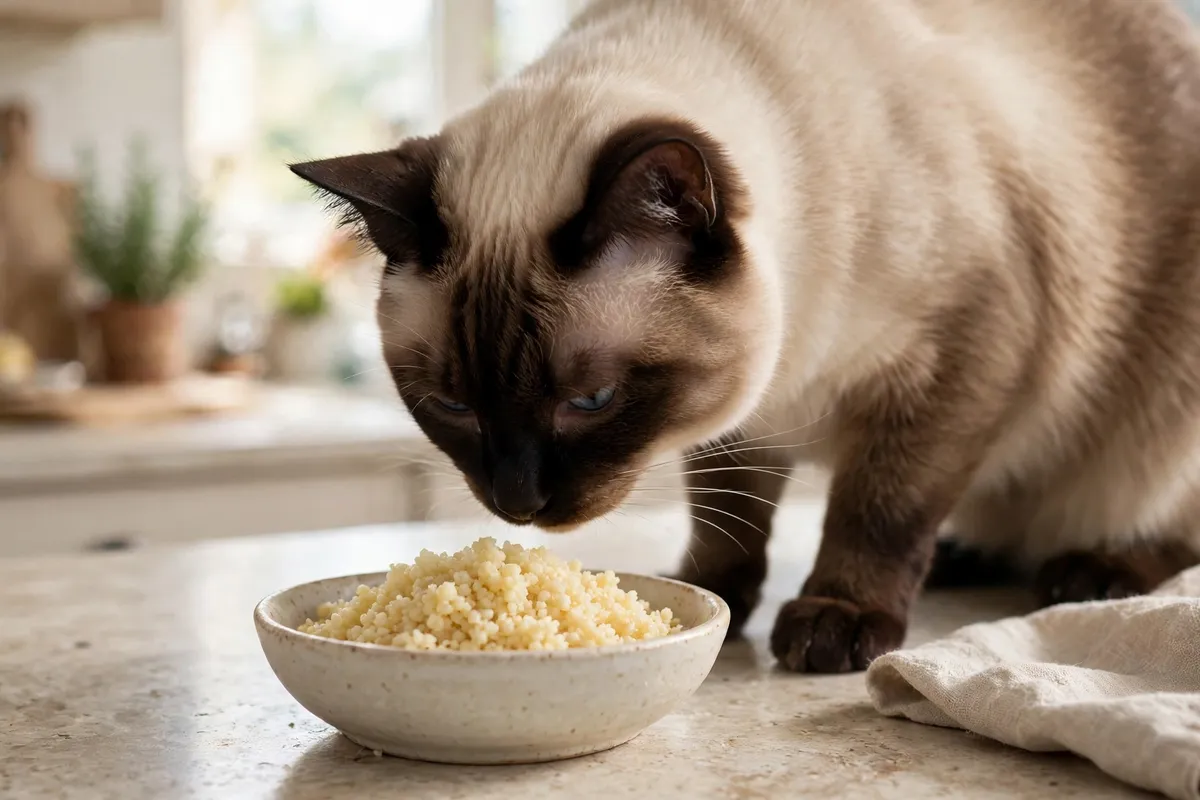
Yes — cats can eat couscous. Served cooked plain and in small amounts, couscous is safe for most healthy adult cats. It is a tiny pasta made from semolina wheat, and it follows the same rules as rice and oats: plain and cooked is fine, seasoned or broth-cooked is not. Like all grains, it is a filler rather than a food your cat needs — but a small spoonful shared from your plate is not something to worry about.
The catch is how couscous is usually made. Most people cook it in broth or stock, or buy flavored instant packets, and that is where the trouble starts. This guide explains what couscous is, why the plain-only rule matters, how much is safe, and what to do if your cat gets into a seasoned bowl.
The Verdict: Can Cats Eat Couscous?
Verdict: SAFE — cooked plain, in small amounts. Couscous contains nothing toxic to cats. It is a simple semolina pasta, similar in nutrition to rice or plain pasta: mostly carbohydrate, a little plant protein, and very little fat. A teaspoonful mixed into regular food, offered occasionally, is fine for a healthy adult cat.
As with all grains, couscous is an extra, not a meal. Your cat gets everything they need from a complete, meat-based cat food, and grains add nothing essential. Offer couscous once in a while if your cat likes it, but never as a regular part of the diet, and never as a way to bulk out meals. A cat-sized serving of couscous is a teaspoon, not a bowl.
What Is Couscous, and Why Is It Safe for Cats?
Couscous is not a grain in the botanical sense — it is tiny pasta, made from semolina wheat flour rolled into small granules and dried. It cooks in minutes by soaking up hot water, which is why it is so popular as a quick side dish. Nutritionally it sits right next to rice and pasta: mostly starch, a small amount of protein, and traces of B vitamins and minerals.
For cats, the important facts are straightforward: couscous contains no ingredient known to be toxic to cats, it is easy to digest when cooked until soft, and it is very low in fat. Pearl couscous (also called Israeli couscous) follows the same rules — it is simply a larger version of the same pasta. The safety of couscous depends entirely on what it was cooked in and what was added to it, which is the next section.
The Broth Problem: Why Plain-Only Matters
This is the part most owners miss. Couscous is almost always cooked in chicken or vegetable broth instead of plain water, and broth is where the risks hide. Shop-bought broth and stock cubes are very salty, and they frequently contain onion and garlic powder — two ingredients that damage a cat's red blood cells. A bowl of broth-cooked couscous can carry a meaningful dose of salt and alliums in a portion that looks harmless.
Flavored instant couscous is the same problem in a packet: lemon and herb, roasted garlic, and Mediterranean flavors are all seasoned with salt, onion, and garlic. Couscous salads add more risks — onion, raisins, nuts, and feta cheese are all common. The rule is simple: if the couscous was cooked in anything other than plain water, or if anything was stirred into it, do not share it.
Is Couscous Safe for Cats?
Yes, plain cooked couscous is safe for cats. The danger is never the couscous itself; it is the broth, the seasoning, and the salad ingredients around it. Water-cooked couscous with nothing added is fine in a small amount. Broth-cooked couscous, flavored instant couscous, and couscous salad are not.
One more thing: couscous is made from wheat, so it contains gluten. Most cats tolerate a little wheat without any problem, but if your cat has a known grain sensitivity or a food allergy diagnosed by your vet, check with your vet first. A cat with a sensitive stomach may do better without grains entirely — and that is fine, because no cat needs couscous.
Can Kittens Eat Couscous?
Yes, a tiny amount of plain cooked couscous is fine for a kitten that is weaned and eating solid food, but there is no reason to make it a habit. A kitten's stomach is small, and every mouthful should count toward growth — kitten food is carefully balanced for that, and couscous is not. A few soft grains as an occasional taste is the most a kitten should have.
Make sure the couscous is fully cooked and soft, and cooled to room temperature before offering. And the plain-only rule matters even more for kittens: no broth-cooked, flavored, or salad couscous, ever. If your kitten has a sensitive stomach or is on a special diet from your vet, skip new foods entirely and ask your vet first.
How Much Couscous Can a Cat Eat?
A good portion is a teaspoonful of cooked couscous, mixed into their regular food, once or twice a week at most. Treats and extras should stay a small part of the daily diet — roughly a tenth or less — and couscous counts as a treat, even though it is a plain and simple one. A small spoonful is plenty.
If it is your cat's first time trying couscous, start with just a few grains and watch their stools over the next day. If you see soft stools or a skipped meal, their stomach simply does not want it — and that is fine, because no cat needs couscous. Never force it, and never use it to replace any part of their normal food.
What Happens If My Cat Eats Couscous?
If the couscous was plain, cooked in water, and served in a small amount, almost certainly nothing at all. Most cats digest it with no sign they ate anything unusual. If the couscous was broth-cooked, your cat may be extra thirsty and could have a soft stool or a single vomit from the salt — these signs usually pass within a day.
Flavored or salad couscous is the version to watch most closely. If it contained onion or garlic, call your vet for advice, because signs of red blood cell damage such as lethargy or pale gums can show up a day or two later. Dry, uncooked couscous can swell in the stomach and cause vomiting, so never offer it dry. Raisins in a couscous salad are toxic to cats — any raisin ingestion is a reason to call your vet right away.
What to Do If Your Cat Already Ate Couscous
Work through these steps:
- Check how it was made. Plain and water-cooked? Broth-cooked? Flavored packet? Salad with extras? The answer decides how worried to be.
- Take the rest away so your cat cannot eat more, and offer fresh water.
- If it was plain and cooked, simply watch your cat for the next 24 hours. Mild soft stools usually settle on their own.
- If it was broth-cooked or flavored, watch for vomiting, diarrhea, lethargy, or pale gums over the next day or two, and call your vet if any of those appear.
- Call your vet right away if the couscous contained raisins, onion, or garlic in any meaningful amount, if your cat ate a large amount, or if the eater was a young kitten.
For most cats, a couscous incident ends with nothing more than a slightly puzzled owner and a perfectly fine cat. Cook it in plain water, keep it plain, and keep the portion small. For more grain guidance, see our guides to whether cats can eat rice and whether cats can eat chicken, or browse the full Cat Food section on the Purrfect Paws homepage.
Frequently Asked Questions
Is couscous safe for cats?
Yes. Plain couscous cooked in water is safe for cats in small amounts — it contains nothing toxic to cats. Avoid broth-cooked, flavored, or salad couscous, which often contains salt, onion, garlic, or raisins.
Can kittens eat couscous?
Yes, a tiny amount of plain cooked couscous is fine for a weaned kitten, but it is not necessary. Kitten food should be their main diet, and the couscous must be fully cooked and soft.
Can cats eat couscous cooked in broth?
No — do not share broth-cooked couscous. Shop-bought broth and stock cubes are very salty and often contain onion and garlic powder. Cook your cat's portion in plain water only.
How much couscous can a cat eat?
A teaspoonful of cooked couscous, mixed into regular food, once or twice a week is plenty. Treats and extras should stay a small part of the daily diet, and couscous is an extra, not a meal.
What happens if my cat eats couscous?
Plain cooked couscous usually causes no trouble. Broth-cooked couscous may cause extra thirst or a soft stool. If it contained onion, garlic, or raisins, call your vet — raisins are toxic to cats.