Can Cats Eat Cream?
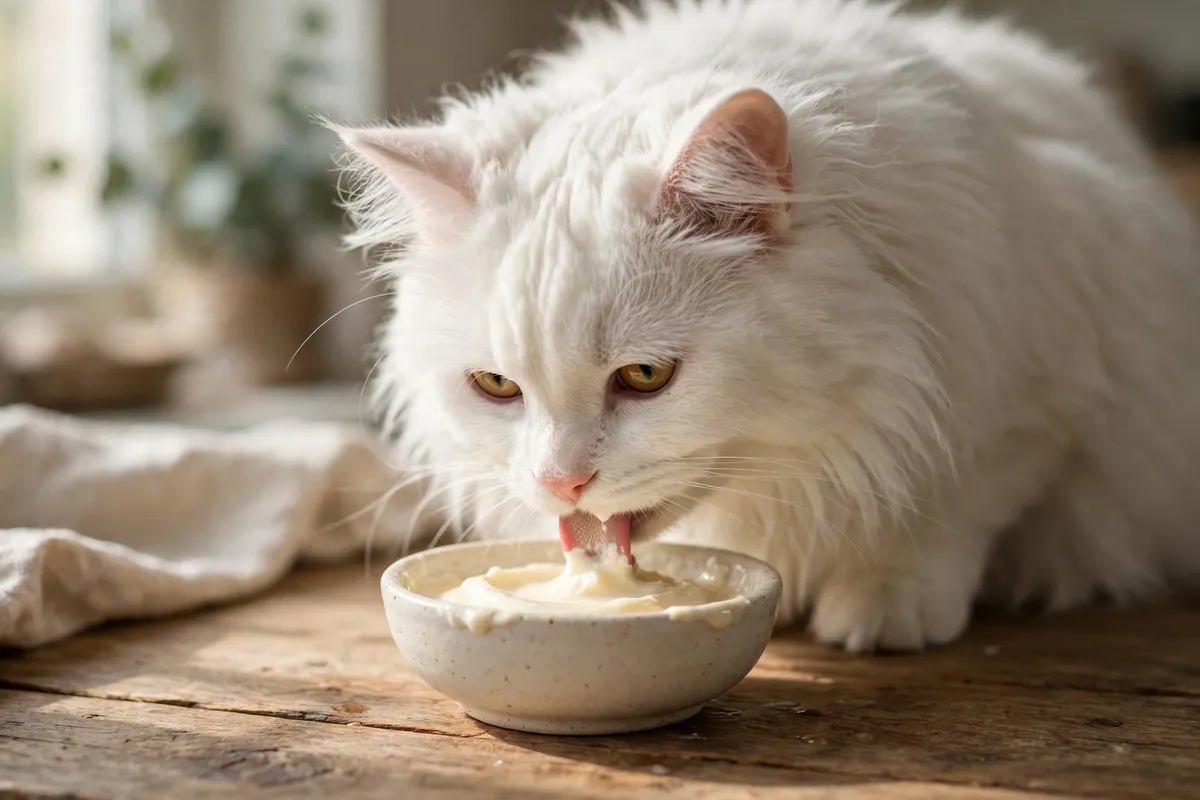
A tiny lick of plain cream will not harm most cats — but cream is a food to share with real caution, and some kinds should never reach your cat at all. The verdict is caution: cream is rich, fatty dairy, and most adult cats are lactose intolerant, so even a small serving can cause an upset stomach. And the whipped cream sold in cans and coffee shops carries an extra danger — sugar-free versions may contain xylitol, a sweetener that is toxic to cats.
The image of a cat lapping up a saucer of cream is one of the oldest clichés in children's books, and one of the most misleading. Real cats and cream have a complicated relationship, and this guide explains exactly where the line is: which cream is the least risky, how much is too much, and what to do if your cat has already had some.
Is Cream Safe for Cats? The Short Answer
Plain, unsweetened cream is not toxic to cats, and a small lick is unlikely to cause harm. But cream is very high in fat and still contains lactose, the milk sugar most adult cats cannot digest. That combination — fat plus lactose — is exactly what triggers vomiting, gas, and diarrhea in a lactose-intolerant cat.
The other problem is that cream is almost pure indulgence. It has no protein, vitamins, or minerals your cat needs, and it adds calories fast. A cat that gets cream regularly is a cat on its way to weight gain, and overweight cats face higher risks of diabetes and joint problems. So cream belongs in the "rare, tiny taste" category at best — never a regular treat, and never a saucerful.
Why Most Adult Cats Cannot Handle Cream
Kittens can digest milk because they produce plenty of lactase, the enzyme that breaks down lactose. As cats grow up, lactase production drops away — by adulthood, most cats are lactose intolerant. When a lactose-intolerant cat drinks cream, the undigested lactose ferments in the gut, drawing in water and producing gas. The result is usually soft stools or diarrhea within a few hours, sometimes with vomiting.
Some cats tolerate a little dairy better than others, and a few seem to handle cream with no obvious trouble. But tolerance varies from cat to cat and even from day to day, so a serving that caused no problem last month can still upset your cat today. There is no way to know your cat's tolerance without testing it — and testing it means risking a messy litter box. For a food that offers your cat nothing nutritionally, that is a poor trade. If you want the full story on dairy and cats, see our guides to whether cats can drink milk and whether cats can eat cheese, plus the whole Cat Food section on the Purrfect Paws homepage.
Which Kinds of Cream Are Risky — and Which Are Dangerous
Not all cream is equal, and the differences matter a lot for cats:
- Plain heavy or double cream. The least risky kind, but still high in fat and lactose. A tiny lick only, and never a regular treat.
- Whipped cream from a can. Risky. Besides the cream, canned whipped cream contains propellants, stabilizers, and usually sugar. A small lick is unlikely to cause serious harm, but do not offer it on purpose.
- Sugar-free whipped cream. Dangerous — avoid completely. Sugar-free products may be sweetened with xylitol (also called birch sugar), which is toxic to cats and can cause a dangerous drop in blood sugar and liver damage. Always check the label, and if you are not sure, assume it is unsafe.
- Flavored creamers and coffee cream. Avoid. These are often loaded with sugar, flavorings, and sometimes chocolate or caramel, none of which belong in a cat's diet.
- Sour cream. Avoid. It is fermented, high in fat, often contains added salt and flavorings, and is more likely to upset a sensitive stomach.
- Clotted cream. Avoid — extremely high in fat, and a small spoonful carries far more fat than a cat should eat in a treat.
The pattern is clear: the more processed, sweetened, or flavored the cream, the worse it is for your cat. Plain cream in a tiny amount is the only version that is even worth discussing, and even that is optional.
Can Kittens Eat Cream?
No, kittens should not eat cream. Although kittens digest lactose better than adult cats, cream is still a poor food for them: high in fat, low in nutrition, and displacing the balanced kitten food they need to grow. A kitten's stomach is very sensitive, and a rich food like cream easily triggers vomiting or diarrhea — which dehydrates a small kitten quickly.
A common myth says orphaned kittens should be fed cream or cow's milk — that is wrong and potentially dangerous. Orphaned kittens need a proper kitten milk replacer from a vet or pet store, never cow's milk or cream. If you have found a kitten and are unsure what to feed it, call your vet first.
How Much Cream Can a Cat Eat?
If you are going to share at all, keep it to a lick — literally a taste from your finger or the tip of a spoon — and only very occasionally. Do not pour cream into a saucer, do not add it to your cat's food, and do not let your cat lick the cream off your dessert. A saucer of cream might look charming in a storybook, but for a real cat it is a bowl of fat and lactose that the stomach is not equipped to handle.
If your cat loves cream and begs for it, offer a cat-safe alternative instead: a small piece of plain cooked chicken, a lick of meat-flavored cat treat paste, or simply fresh water. Cats are often drawn to the novelty and the smell, not the cream itself, and a healthier treat usually satisfies them just as well.
What Happens If My Cat Eats Cream?
A tiny lick of plain cream will usually cause nothing at all. A larger serving — a few spoonfuls, or a saucerful — commonly causes diarrhea, soft stools, gas, and sometimes vomiting within a few hours. These signs usually pass within a day, and most cats return to normal on their own.
The situation changes if the cream was sugar-free or flavored. Xylitol poisoning is a veterinary emergency: vomiting, weakness, wobbliness, trembling, and collapse, sometimes within an hour of eating. If you suspect your cat has eaten anything containing xylitol, call your vet or an emergency clinic immediately — do not wait for symptoms. Chocolate-flavored cream carries its own risk, since chocolate is toxic to cats. When in doubt, call your vet and describe the product.
What to Do If Your Cat Already Ate Cream
If your cat has just had cream, work through these steps:
- Check the label. Plain cream is low-risk. Sugar-free, chocolate, or coffee-flavored cream is a different matter — look for xylitol, birch sugar, chocolate, or caffeine on the ingredients list.
- Take the cream away. Remove the bowl, can, or dessert so your cat cannot eat more.
- Offer fresh water. Put down a clean bowl of fresh water and let your cat drink freely.
- Watch for 24 hours. Look for vomiting, diarrhea, lethargy, or loss of appetite. Mild stomach upset that settles quickly is usually not an emergency.
- Call your vet immediately if xylitol is possible. If the cream was sugar-free, or your cat is vomiting repeatedly, weak, wobbly, or refusing food, call your vet or an emergency clinic right away and bring the packaging if you can.
Do not try to make your cat vomit at home, and do not give milk to settle the stomach — more dairy will only make things worse for a lactose-intolerant cat.
Frequently Asked Questions
Is cream safe for cats?
Plain cream is not toxic, but it is high in fat and lactose, so most adult cats cannot digest it well. A tiny lick is usually fine; a larger serving often causes diarrhea or vomiting.
Can kittens eat cream?
No. Cream is high in fat and low in nutrition, and it can easily upset a kitten's sensitive stomach. Orphaned kittens need a proper kitten milk replacer, never cow's milk or cream.
Is whipped cream safe for cats?
Canned whipped cream is not a good idea — it contains sugar, stabilizers, and propellants. Sugar-free whipped cream can be dangerous because it may contain xylitol, a sweetener that is toxic to cats.
What happens if my cat drinks cream?
A small amount usually causes no trouble. A larger amount commonly causes soft stools, diarrhea, gas, or vomiting within a few hours — usually passing within a day.
Can cats eat sour cream?
No, sour cream is best avoided. It is high in fat, often contains added salt and flavorings, and is more likely to upset a sensitive stomach than plain cream.