Can Cats Eat Deli Meat?
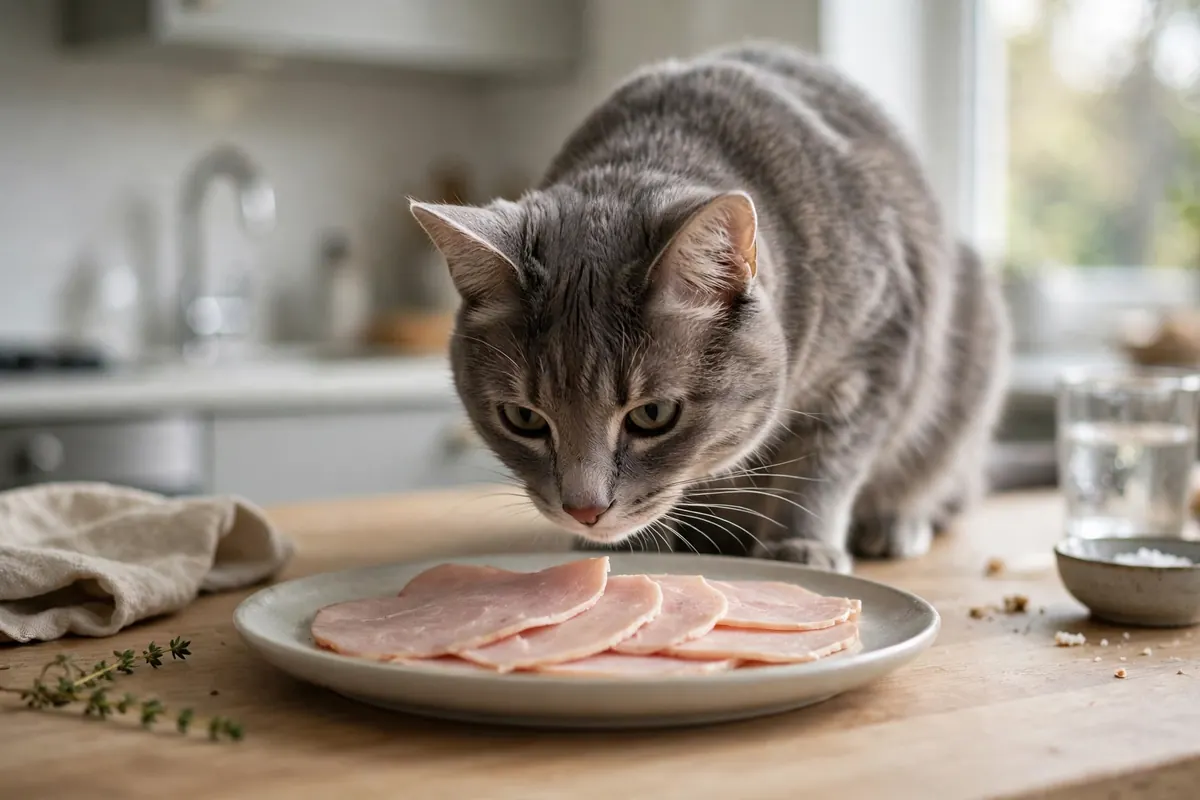
The Short Answer: Caution — A Rare Tiny Taste at Most, Never a Habit
Can cats eat deli meat? Most deli meat is a poor choice for cats, and some of it should be avoided entirely. A tiny taste of plain deli turkey on a rare occasion is unlikely to harm a healthy adult cat, but deli meat is almost always high in sodium, and many varieties are seasoned with garlic or onion powder, which are toxic to cats. Deli meat should never become a habit or a regular treat.
The safest rule is simple: if you would not be sure what is in it, do not share it.
Is Deli Meat Safe for Cats?
Most deli meat is not a safe food for cats. The first problem is sodium: deli meats are cured and brined, so a single slice can contain far more salt than a cat needs in a whole day. Too much salt can cause extreme thirst, vomiting, diarrhea, and, in large amounts, salt poisoning.
The second problem is seasoning. Many deli meats — especially salami, pepperoni, pastrami, and flavored turkey or ham — are seasoned with garlic powder, onion powder, or spice blends. Garlic and onion are toxic to cats because they damage red blood cells and can cause anemia, and the powdered forms are concentrated, so even a small amount matters. Our cat food safety guide covers the full list of foods that can harm cats.
How to Read a Deli Meat Label for Cats
If you are thinking of sharing a slice, read the label first. Look at the ingredients list, not just the front of the packet. Watch for these red flags:
- Garlic powder or onion powder. If either appears anywhere in the ingredients, do not share the meat. Garlic and onion are toxic to cats in every form.
- Spice blends or “natural flavors.” Vague flavorings can hide garlic or onion, so treat an unclear label as a no.
- High sodium. If one slice lists several hundred milligrams of sodium, it is far too salty for a cat.
- Smoke flavoring, nitrates, or nitrites. These are signs of a heavily processed meat that offers nothing a cat needs.
- Sugar, honey, or glaze. Sweetened deli meats add calories and sugar a cat does not need.
Plain, unseasoned deli turkey or chicken with the shortest ingredients list is the least risky option, and even then it should only be a rare, tiny taste. If the label is unclear or the meat is spiced, flavored, or smoked, skip it.
Which Deli Meats Are the Riskiest?
Salami, pepperoni, and other cured sausages are the worst deli meats for cats. They are very high in salt and fat, and they are almost always seasoned with garlic, paprika, and other spices. A single slice can upset a cat's stomach, and regular feeding raises the risk of vomiting, diarrhea, and pancreatitis.
Pastrami and corned beef are also heavily seasoned and salted, so they are not safe choices either. Flavored ham and turkey — honey-roasted, mesquite-smoked, or peppered — carry the same seasoning risks. Of all deli meats, plain unseasoned turkey or chicken is the least risky, and it is still only a rare-taste food, never a regular treat.
Can Kittens Eat Deli Meat?
No, kittens should not eat deli meat. A kitten's body is small and still developing, so the salt and seasoning in a single slice is a much bigger dose for them than for an adult cat. Kittens are also more likely to get diarrhea from salty, processed food.
Kittens need a complete and balanced kitten food that supports growth. Deli meat adds salt, fat, and sometimes toxic seasonings without adding the nutrients a kitten needs. If you want to reward your kitten, use a small treat made for kittens instead.
What Happens If My Cat Eats Deli Meat?
It depends on the type and the amount. A tiny piece of plain deli turkey will usually cause no problem. A few slices of salty deli ham may cause thirst, vomiting, or diarrhea within a few hours. If the meat contained garlic or onion powder, the signs can be slower: stomach upset first, then weakness, lethargy, and pale gums over the following days as the red blood cells are damaged.
Watch for vomiting, diarrhea, extreme thirst, unusual tiredness, and pale gums. If your cat ate a seasoned meat such as salami or pepperoni, or if it shows any of these signs, call your vet the same day and tell the vet exactly what your cat ate.
How Much Deli Meat Can a Cat Eat?
Ideally none. If you do share, keep it to a piece smaller than your thumbnail, of plain unseasoned turkey or chicken, only once in a very long while. There is no safe routine portion of deli meat for a cat, and spiced, smoked, or cured varieties such as salami and pepperoni should be zero.
Treats of any kind should stay under 10 percent of your cat's daily calories, and deli meat is a poor use of that allowance. A small piece of plain cooked chicken gives your cat the taste it wants without the salt, fat, and hidden seasonings.
What to Do If Your Cat Ate Deli Meat
If your cat grabbed some deli meat, stay calm and follow these steps:
- Take the meat away. Remove the sandwich, packet, or plate so your cat cannot eat any more.
- Check the label. Look for garlic powder, onion powder, and other seasonings, and note how much your cat ate.
- Offer fresh water. Make sure your cat has clean water nearby and can drink freely.
- Do not induce vomiting. Never try to make your cat vomit at home unless your vet tells you to.
- Watch for symptoms. Look for vomiting, diarrhea, extreme thirst, lethargy, or pale gums over the next few days, and call your vet if any appear — the same day if the meat was seasoned with garlic or onion.
Safe Alternatives to Deli Meat
If your cat begs while you make a sandwich, offer a small piece of plain cooked chicken or turkey instead — no skin, no seasoning, no sauce. It tastes like meat to your cat and carries none of the salt and hidden seasonings of deli meat. A small piece of plain cooked fish is another good option, offered only occasionally.
Cats are obligate carnivores, so meat belongs at the center of their diet, but it should be plain, lean meat in a complete cat food — not salty, seasoned slices from a packet.
Deli meat is convenient for people and risky for cats. The salt alone is reason enough to skip it, and the garlic and onion powder hidden in many seasoned varieties make some deli meats genuinely dangerous. Read the label, keep any taste tiny and rare, and never let deli meat become a habit. Plain cooked chicken is a safer way to share the meaty moment.
Can cats eat deli meat?
Most deli meat is a poor choice for cats. A tiny taste of plain deli turkey on a rare occasion is usually fine, but deli meat should never become a habit.
Is deli meat safe for cats?
Mostly no. Deli meat is high in sodium, and many varieties are seasoned with garlic or onion powder, which are toxic to cats.
Can cats eat deli turkey?
Plain, unseasoned deli turkey is the least risky deli meat, but only as a rare tiny taste. Flavored, smoked, or honey-roasted turkey should be avoided.
Can kittens eat deli meat?
No. Kittens are smaller and more sensitive to salt and seasonings, so deli meat is not suitable for them. Use kitten food and kitten treats instead.
What happens if my cat eats deli meat?
A tiny piece of plain deli meat usually causes no trouble, but salty or seasoned meat can cause vomiting, diarrhea, and thirst. Meat with garlic or onion powder can cause anemia over the following days.
How much deli meat can a cat eat?
Ideally none. At most a thumbnail-sized piece of plain unseasoned turkey or chicken, very rarely. Spiced or cured meats like salami should be zero.