Can Cats Eat Dog Food?
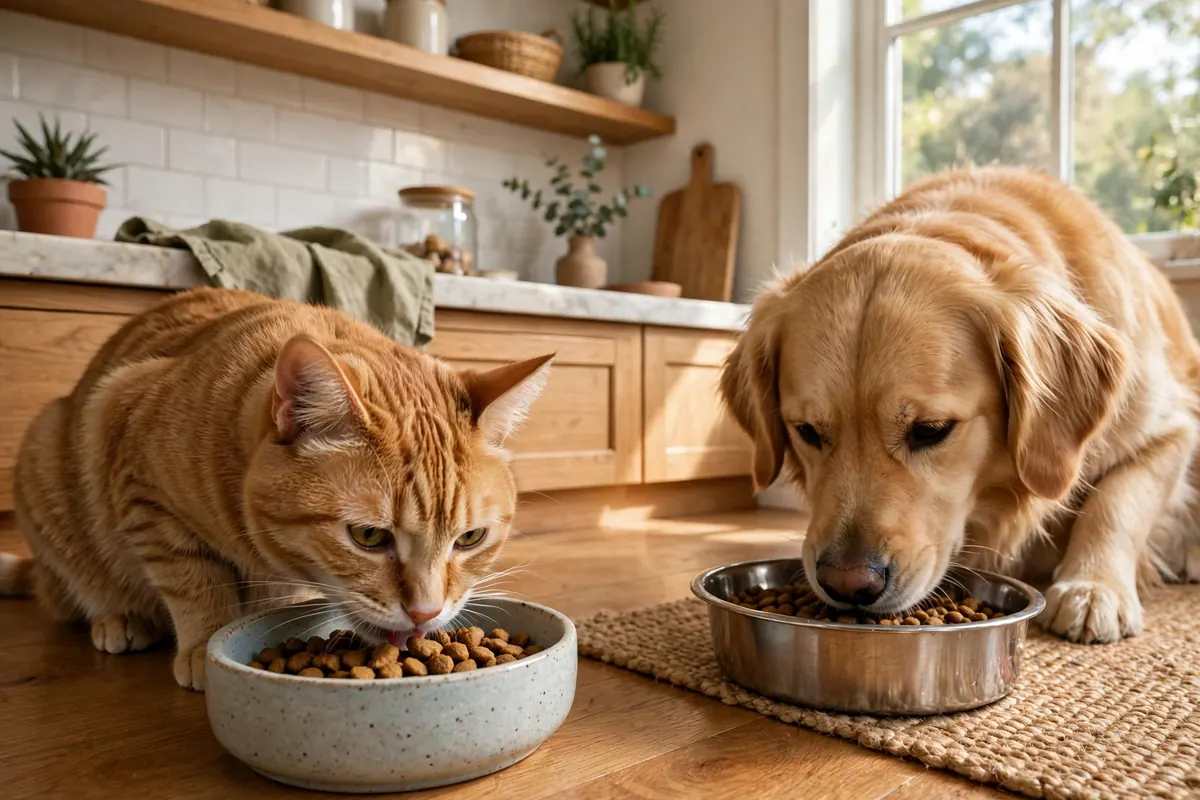
Yes — a cat can eat a mouthful of dog food without harm, and in a home with both a cat and a dog, it will probably happen. A single stolen bite is not an emergency. But dog food is not cat food, and a cat that eats it day after day will slowly run short of the nutrients cats need most — especially taurine, an amino acid cats cannot make for themselves, whose absence can damage the heart and eyesight.
The difference is not about quality: good dog food is fine food, for a dog. It is about biology — cats and dogs need different things. This guide explains exactly what dog food is missing, when a bite becomes a problem, how to keep the two bowls separate in a multi-pet home, and what to do if your cat has been eating dog food for a while.
The Verdict: Can Cats Eat Dog Food?
Verdict: CAUTION. Dog food is not toxic to cats, and one accidental bite is nothing to worry about. But dog food is not a complete diet for a cat, and a cat that eats it regularly will gradually become malnourished — short on taurine, short on animal protein, and short on vitamin A and other nutrients cats cannot make for themselves. Over months, that shortage can lead to heart disease and vision problems.
Think of dog food as an occasional accident, not a meal plan. If your cat steals a bite now and then, relax. If your cat is eating dog food every day — or has stopped eating its own food — that is a problem to fix, and the fix is practical: separate the bowls, feed the pets apart, and make the cat's own food the easy choice.
What Dog Food Is Missing: Taurine, Protein, and Vitamin A
Cats are obligate carnivores, which means their bodies are built to run on meat — and dog food is built for an animal that is not. The most important gap is taurine, an amino acid cats cannot produce in enough quantity on their own. Dogs can make their own taurine, so dog food does not need to add much of it. A cat without enough taurine can develop a serious heart condition called dilated cardiomyopathy, and can also lose its eyesight.
The other gaps add up too. Dog food generally contains less animal protein than cat food, because dogs do well on a more varied diet. It is lower in vitamin A and arachidonic acid, both of which cats must get from animal sources because they cannot make them. And dog food is usually higher in carbohydrates, which fill a cat up without giving it what it actually needs. None of this matters for one bite — but over weeks and months, the gaps become real deficiencies.
One Bite vs a Steady Diet
A single bite of dog food does nothing. A cat that finishes the dog's bowl once, out of curiosity, will be fine — you may see a slightly soft stool or a skipped meal, and that is about it. The problem starts when dog food becomes a habit: a cat that prefers the dog's bowl, a dog that leaves food down all day, or a household where the two pets simply share whatever is out.
Over weeks of eating dog food, a cat's coat may dull, its weight may drift up or down, and its energy may drop — and the deeper damage, to the heart and eyes, develops silently, without any obvious sign until it is advanced. That is why the question is never really about one bite. It is about whether dog food is a regular part of your cat's diet, and if it is, the answer is to stop it.
Is Dog Food Safe for Cats?
Dog food is not poisonous to cats, and it is safe in the sense that a bite will not harm your cat. But it is not safe as a diet. A cat that eats only dog food is being underfed in the nutrients that matter most to cats, even while its belly is full — and that slow malnutrition is the real risk.
Dog treats are the same story: a dog biscuit now and then is harmless, but dog treats are not formulated for cats either. If you want to share a treat between your pets, choose a treat made for cats — or better, keep each pet's treats in its own place. For more on what a cat's diet should actually contain, see our guide to wet vs dry cat food and our guide to how much to feed your cat.
Can Kittens Eat Dog Food?
No — kittens must not eat dog food, not even as an occasional snack. A kitten is growing fast and needs a complete kitten food with the right protein, taurine, and minerals for healthy development. Dog food cannot provide that, and a kitten that fills up on dog food is a kitten that is missing the building blocks of growth.
Kittens are also the most likely to wander over to the dog's bowl, because they are curious and they follow the smell of food. In a multi-pet home, feed kittens separately and pick the dog's bowl up between meals — a kitten that never gets a taste of dog food will never develop the habit.
How Much Dog Food Can a Cat Eat? Keeping the Bowls Separate
There is no recommended portion of dog food for a cat, because the right amount as a regular food is none. An occasional stolen bite needs no limit — but if your cat is eating dog food every day, the fix is not a smaller portion, it is separation. Here is what works in a multi-pet home:
- Feed the pets in different rooms, or at different times, and pick both bowls up when the meal is over. Food left down all day is food your cat will find.
- Feed your cat up high. Most cats will happily eat on a counter or a shelf that a dog cannot reach — and a cat that eats in its own safe spot is a cat that eats its own food.
- Use a microchip feeder if the stealing is persistent: it only opens for the cat whose chip it recognises, and it ends the problem overnight.
- Make the cat's own food the easy choice. Fresh food, in a clean bowl, in a quiet spot, at the same times each day — a cat that is happy with its own bowl has no reason to raid the dog's.
If your cat has been eating dog food for weeks and you are not sure it is getting what it needs, a vet check is a good idea.
What to Do If Your Cat Already Ate Dog Food
If your cat ate dog food once, there is nothing to do — just go back to its normal food and keep the dog's bowl out of reach next time. If your cat has been eating dog food regularly, work through these steps:
- Switch back to a complete cat food right away. If your cat has been eating dog food for a while, switch gradually over a week — mix a little more cat food in each day — so the change does not upset its stomach. Our guide to how to switch cat food walks through the steps.
- Separate the bowls using the tips above, so the habit does not come back.
- Watch for signs of deficiency. A dull coat, weight loss, low energy, or a cat that seems less interested in playing are all worth mentioning to your vet.
- Book a vet check if your cat has been eating dog food for weeks or months, or if you notice any of those signs. Your vet can check your cat's heart and overall condition and advise whether any supplements are needed.
Never give your cat taurine or other supplements without veterinary advice — the right fix is a complete cat food, not a supplement added to a dog's diet. For more food guidance, browse the full Cat Food section on the Purrfect Paws homepage.
Frequently Asked Questions
Is dog food safe for cats?
A bite of dog food is safe, but dog food is not safe as a regular diet for a cat. It is short on taurine, animal protein, and vitamin A — nutrients cats need and cannot make themselves. A cat that eats dog food every day can slowly become malnourished.
Can kittens eat dog food?
No. Kittens must not eat dog food — they are growing fast and need a complete kitten food with the right protein and taurine for healthy development. Feed kittens separately and pick the dog's bowl up between meals.
What happens if my cat eats dog food?
One bite usually causes nothing at all, perhaps a slightly soft stool. A cat that eats dog food every day can develop a dull coat, weight changes, and low energy, and over months the taurine shortage can damage the heart and eyesight.
How much dog food can a cat eat?
There is no recommended portion, because the right amount as a regular food is none. An occasional stolen bite is harmless, but if your cat is eating dog food daily, separate the bowls and switch back to a complete cat food.
How do I stop my cat eating the dog's food?
Feed the pets in different rooms and pick both bowls up after meals, feed your cat up high where the dog cannot reach, and consider a microchip feeder if the stealing continues. Making your cat's own food the easy, appealing choice is the simplest fix.