Can Cats Eat Ginger?
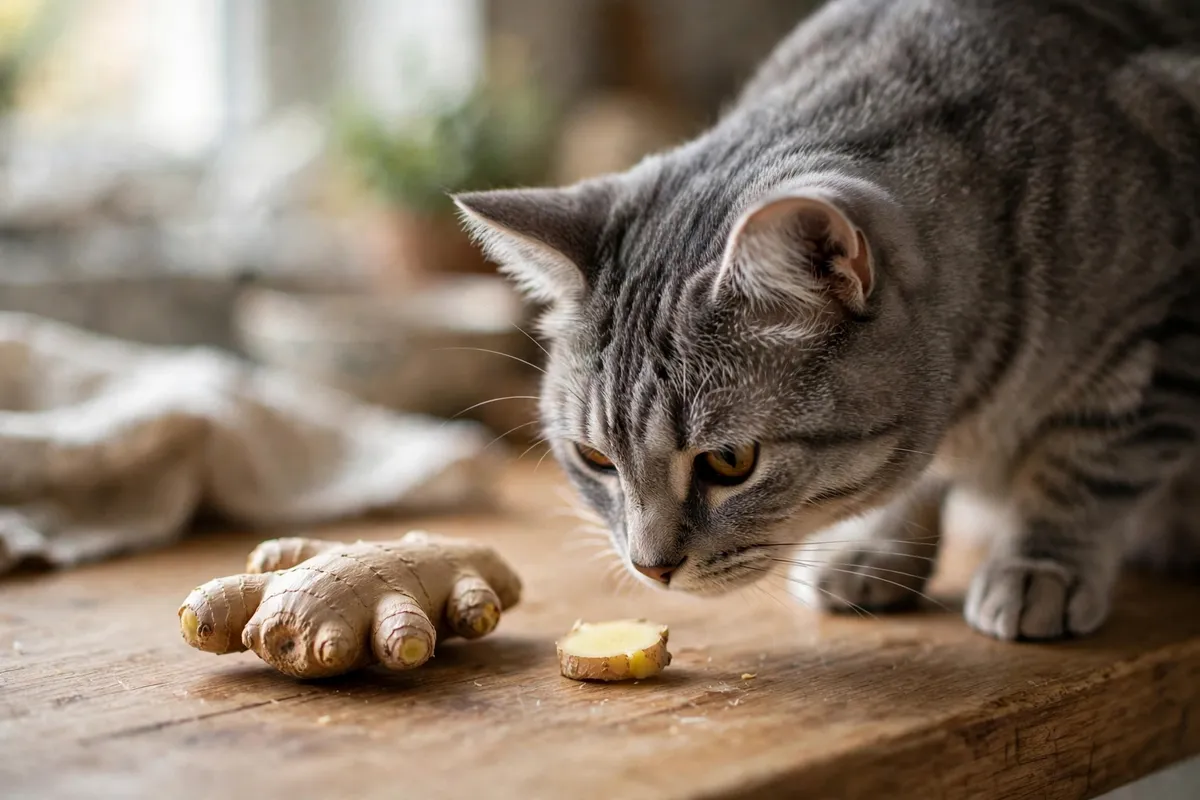
The Short Answer: Yes, Fresh Ginger in Small Amounts
Yes, cats can eat ginger — a small amount of fresh ginger is safe for cats. Fresh ginger root is not toxic to cats, and a tiny piece offered occasionally is fine. The rule that matters is the form: fresh ginger only. Pickled ginger, candied or sugared ginger, and ginger biscuits are all off the list, because the sugar, salt, vinegar, and extra ingredients in those versions are the problem, not the ginger itself.
Ginger is best known as a stomach settler, and it does have a long history of use for nausea — but a cat is not a small person, and ginger is a treat, not a medicine. Keep reading for the fresh-only rule, the right amount, the nausea question, and how to serve it safely. You can find more food guides on our Cat Food page.
Is Ginger Safe for Cats?
Yes. Fresh ginger contains no compounds that are toxic to cats. It is low in calories and carries gingerols, the compounds that give ginger its warmth and bite. A cat that eats a small piece of fresh ginger is not in any danger, and ginger is far safer than many foods owners worry about.
The safety rule is about the form, not the root. Fresh ginger is safe; the ginger in a jar of pickled sushi ginger sits in vinegar, salt, and sugar, and candied ginger is coated in sugar. Ginger biscuits and gingerbread add sugar, butter, and sometimes spices that are not safe for cats. Always use a piece of fresh root, peeled and plain.
Fresh vs Pickled vs Sugared Ginger: The Fresh-Only Rule
Fresh ginger is the only form to offer your cat. Peel a small piece of raw ginger root and cut off a sliver — that is the whole preparation. Fresh ginger has a strong, spicy smell, and many cats will only sniff it, which is fine; a sniff is a normal cat response.
Pickled ginger is out. The pink ginger served with sushi is soaked in vinegar with salt and sugar, and sometimes artificial coloring, and none of that belongs in a cat's diet. Sugared or candied ginger is out too — it is mostly sugar, and sugar has no place in a cat's diet. Ginger powder is not toxic, but it is very concentrated and easy to overdo, so fresh root is the safer, simpler choice.
The same rule applies to ginger-flavored foods. Ginger biscuits, gingerbread, ginger tea, and ginger ale all contain sugar and other ingredients, and some contain xylitol or other sweeteners that are dangerous. If the ginger did not come straight off a fresh root, do not offer it to your cat.
Ginger and Nausea: What It Can and Cannot Do
Ginger is widely used by people for nausea and motion sickness, and there is real research behind that use in humans. For cats, the picture is thinner: ginger is sometimes included in veterinary discussions of nausea support, but there is no agreed dose for cats, and it is not a substitute for veterinary care. A cat that is vomiting or refusing food needs a vet, not a kitchen remedy.
That said, a tiny piece of fresh ginger is not going to upset a healthy cat's stomach, and some owners offer it before a car journey in the hope it helps with travel sickness. If your cat gets carsick, talk to your vet first — there are safe, vet-approved options, and your vet can tell you whether ginger has any place in your cat's care. Never use ginger to treat ongoing vomiting, diarrhea, or loss of appetite on your own.
How Much Ginger Can a Cat Eat?
A very small amount — a sliver about the size of a pea, or a pinch of finely grated fresh ginger — is a good serving for an adult cat, offered occasionally, not daily. Ginger is strong, and a little goes a long way; more is not better, and a larger piece is likely to put your cat off or cause mild stomach upset.
Start with the tiniest piece the first time and watch your cat's reaction. Many cats will sniff fresh ginger and walk away — the spicy smell is intense for a cat's sensitive nose. If your cat eats it happily and its digestion stays normal, you can offer the same small amount another day. The ten-percent rule for treats still applies: all treats combined should stay under ten percent of your cat's daily calories.
How to Serve Ginger to Your Cat
Peel a small piece of fresh ginger root and cut a thin sliver, or grate a pinch of it finely. Serve it plain, at room temperature, with nothing added — no sugar, no salt, no honey, and no seasoning. A little goes a long way, so keep the piece tiny.
Offer the sliver on its own in a small bowl, or mix a pinch of grated ginger into your cat's regular food if your cat is suspicious of a new item. Do not cook ginger into a sauce or a dish with other ingredients, and never offer ginger from a jar, a packet of biscuits, or a bottle of ginger ale — if it is not a piece of fresh root, it is not for your cat.
Can Kittens Eat Ginger?
Kittens can have a tiny taste of fresh ginger once they are eating solid food, usually from around eight weeks old — a crumb-sized piece, no bigger. Kitten food should remain the center of a kitten's diet, and a kitten's stomach is small and sensitive, so keep the amount smaller than you would for an adult cat.
For kittens under eight weeks, skip ginger and all other extras entirely and stick to nursing or a kitten milk replacer as your vet advises. If a kitten is vomiting or refusing food, that is a vet visit, not a ginger experiment.
What Happens If My Cat Eats Ginger?
If your cat ate a small piece of fresh ginger, there is nothing to worry about. Most cats digest it without trouble, and the worst outcome is a mildly upset stomach if your cat ate more than a tiny amount. Offer fresh water and feed the next meal as normal.
If your cat ate pickled ginger, candied ginger, or ginger biscuits, check the ingredients. A small amount of sugar or vinegar usually causes only mild stomach upset, but if the product contained xylitol or another artificial sweetener, garlic, or onion, call your vet. If your cat ate a large amount of fresh ginger at once, expect a softer stool or a little vomiting and skip the next treat.
Ginger is a safe, simple extra for cats — fresh root, in a tiny amount, offered occasionally. A pea-sized sliver of peeled ginger is all it takes, and the fresh-only rule keeps the sugar, salt, and vinegar of pickled and candied ginger out of your cat's bowl. Ginger is not a medicine, and it is no substitute for a vet when a cat is unwell, but as a rare treat it is harmless. Serve it fresh, keep it tiny, and skip the jar and the biscuit tin. For more ideas, browse the Purrfect Paws home page or the full Cat Food section.
Can cats eat ginger?
Yes. A small amount of fresh ginger root is safe for cats. Offer a pea-sized sliver occasionally, and skip pickled or sugared ginger.
Is ginger safe for cats?
Yes. Fresh ginger contains nothing toxic to cats. The danger is in ginger products: pickled ginger, candied ginger, and ginger biscuits carry sugar, salt, vinegar, or sweeteners.
Can ginger help a cat with nausea?
Ginger is used by people for nausea, but there is no agreed dose for cats and it is not a substitute for veterinary care. A vomiting cat needs a vet; talk to yours before trying ginger.
Can cats eat pickled ginger?
No. Pickled ginger sits in vinegar, salt, and sugar, and sometimes artificial coloring. Only fresh ginger root is safe for cats.
Can kittens eat ginger?
Yes, from around eight weeks old — a crumb-sized piece of fresh ginger. Kitten food should remain the main diet.
How much ginger can a cat eat?
A pea-sized sliver of fresh ginger, occasionally. Larger amounts can cause mild stomach upset.