Can Cats Eat Ham?
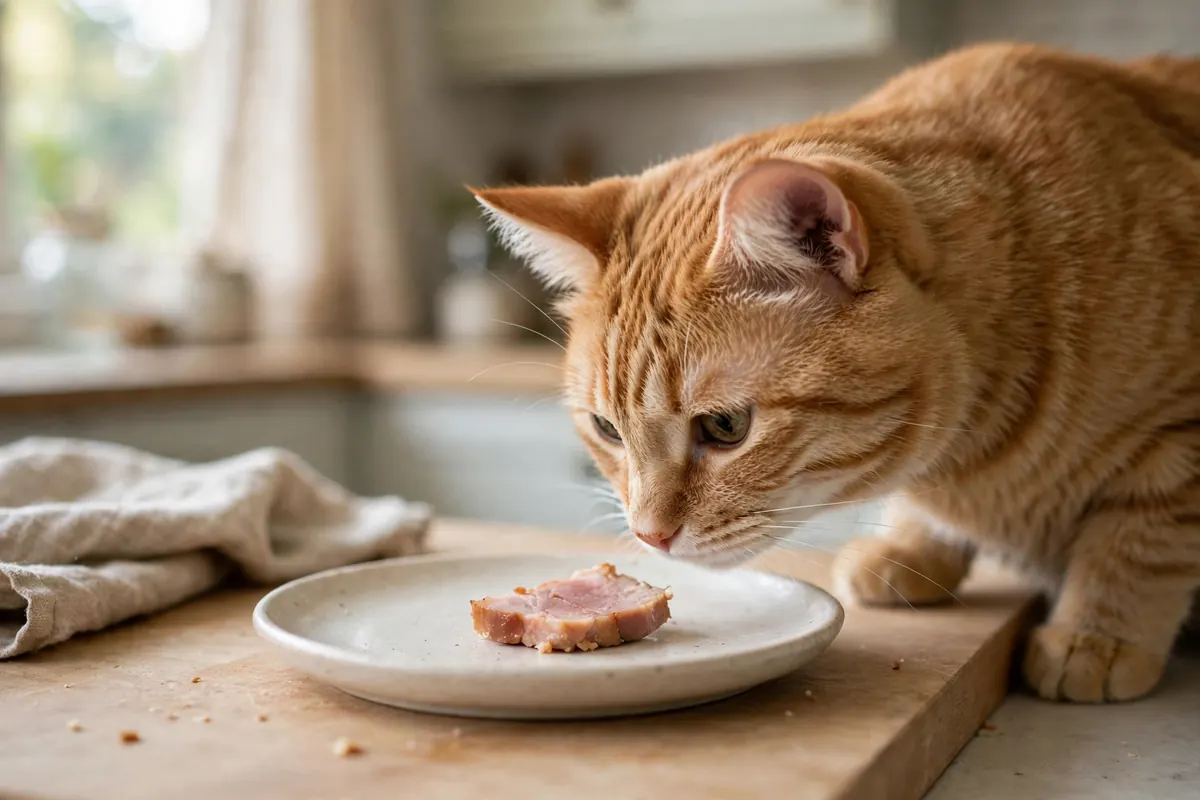
The Short Answer: Caution — Tiny Bits of Lean Cooked Ham Only
Yes, cats can eat ham — but only in tiny amounts, and only plain, lean, cooked ham. A fingertip-sized piece of unseasoned cooked ham is usually fine as a rare treat. Deli ham, honey-glazed ham, and heavily salted ham are a different story: they carry far too much sodium for a cat and should be avoided. Ham is never a meal, never a regular treat, and never a substitute for proper cat food.
The problem with ham is not the meat itself. Cats are obligate carnivores, and plain cooked pork is a protein they can digest. The problem is everything that comes with most ham: salt, curing chemicals, sugar glazes, and seasonings.
Is Ham Safe for Cats?
Plain, lean, cooked ham is safe for cats in very small amounts. That means ham that has been cooked through, with no glaze, no honey coating, no cloves, and no added seasoning. A small cube or a thin strip, offered once in a while, is unlikely to cause trouble for a healthy adult cat.
Most ham in the shops is not plain, though. Deli ham is cured and brined, which loads it with sodium. Glazed ham adds sugar, which cats do not need and cannot taste properly. Some cured hams also contain nitrates and nitrites used as preservatives. None of these extras are good for a cat, and the salt is the biggest concern of all. Our cat food safety guide covers the full list of foods that can harm cats.
The Sodium Problem: The Math for a 4 kg Cat
Salt is the main reason ham needs caution. A typical 4 kg adult cat needs only a small amount of sodium each day — a tiny fraction of what a person eats. A single thin slice of deli ham, about 28 grams, can contain roughly 250 to 300 mg of sodium. That one slice can deliver several times a 4 kg cat's whole daily sodium need in a single bite.
Too much salt at once can leave a cat very thirsty, and it may drink a lot of water and urinate more than usual. A large amount of salty food can cause vomiting, diarrhea, lethargy, and, in severe cases, salt poisoning, which affects the nervous system. Cats with kidney disease or heart problems are especially sensitive to salt, so they should not get ham at all.
Home-cooked ham is usually less salty than deli ham, but it is still a cured meat and still saltier than plain chicken or turkey. Even “low-sodium” ham is salty by cat standards.
Deli Ham vs Home-Cooked Ham
Deli ham is the worst option for cats. It is sliced thin, which makes it easy to overfeed, and it is cured in brine, so it is very high in sodium. Deli ham often contains added sugar, preservatives, and sometimes flavorings such as garlic or onion powder. A cat should not eat deli ham, even as a small taste.
Home-cooked ham is the better of the two, but only if it is plain. A small piece of lean meat cut from the center of a roast, away from any glaze or seasoned rind, is the only part worth sharing. Trim off all visible fat and the outer edge where the glaze or cure is strongest. If the ham was cooked with cloves, honey, brown sugar, or a spice rub, skip it entirely.
Can Kittens Eat Ham?
Kittens should not eat ham. A kitten's body is small and still developing, so even a tiny piece of salty ham is a much bigger dose for them than it is for an adult cat. Kittens also have sensitive stomachs and are more likely to get diarrhea from rich, salty food.
Kittens need a complete and balanced kitten food that supports growth. Human foods like ham add salt and fat without adding the nutrients a kitten needs. If you want to give your kitten a treat, choose a treat made for kittens and keep it to a tiny amount.
What Happens If My Cat Eats Ham?
It depends on how much your cat ate and what kind of ham it was. A tiny piece of plain cooked ham will usually cause no problem at all. A few slices of deli ham are more likely to cause thirst, vomiting, or diarrhea within a few hours, and your cat may drink much more water than usual.
A large amount of very salty ham can cause more serious signs: repeated vomiting, diarrhea, wobbliness, confusion, or seizures. These are signs of salt poisoning and need urgent vet care. Cats with kidney disease may also feel worse after salty food, even in smaller amounts.
How Much Ham Can a Cat Eat?
For a healthy adult cat, a piece about the size of your thumbnail — roughly one small cube — is the most you should offer, and only once in a while, not every day. Treats of any kind should stay under 10 percent of your cat's daily calories, and ham is a poor choice for that 10 percent because it is so salty.
Deli ham should be zero. There is no safe routine portion of deli ham for a cat. If your cat begs while you make a sandwich, offer a small piece of plain cooked chicken instead — it is far safer and your cat will enjoy it just as much.
What to Do If Your Cat Ate Ham
If your cat grabbed some ham, stay calm and follow these steps:
- Take the ham away. Remove the plate, sandwich, or packet so your cat cannot eat any more.
- Check what kind it was. Note whether it was deli ham, glazed ham, or plain cooked ham, and roughly how much your cat ate.
- Offer fresh water. Make sure your cat has clean water nearby, and let it drink freely.
- Do not induce vomiting. Never try to make your cat vomit at home unless your vet tells you to.
- Watch for symptoms. Look for vomiting, diarrhea, extreme thirst, lethargy, or wobbliness over the next 24 hours, and call your vet if any appear.
Safe Alternatives to Ham
If your cat loves the taste of meat from your plate, there are much safer ways to share. Plain cooked chicken or turkey, cut into small pieces with no skin, no seasoning, and no sauce, is the best option. A small piece of plain cooked fish, such as salmon, is another good choice, offered only occasionally.
Remember that cats are obligate carnivores: meat is the center of their diet, and treats should always be small extras on top of a complete cat food.
Ham is a food where the details decide everything. A fingertip-sized piece of plain, lean, cooked ham is a rare treat a healthy cat can enjoy, but deli ham and glazed ham are far too salty to share, and no ham should ever become a regular part of your cat's diet. Keep portions tiny, keep it plain, and when in doubt, offer a piece of plain cooked chicken instead.
Can cats eat ham?
Yes, but only tiny bits of plain, lean, cooked ham as a rare treat. Deli ham and glazed ham are too salty and should be avoided.
Is ham safe for cats?
Plain cooked ham is safe in very small amounts, but most ham is cured, salted, or glazed, which makes it a poor choice for cats.
Can cats eat deli ham?
No, deli ham should be avoided. It is very high in sodium and often contains preservatives and seasonings that are not safe for cats.
Can kittens eat ham?
No. Kittens are smaller and more sensitive to salt, so ham is not a suitable food for them. Stick to complete kitten food and kitten treats.
What happens if my cat eats ham?
A tiny piece of plain ham usually causes no trouble, but salty deli ham can cause vomiting, diarrhea, and extreme thirst. A large amount can lead to salt poisoning, which needs urgent vet care.
How much ham can a cat eat?
At most a thumbnail-sized piece of plain cooked ham, only occasionally. Deli ham should be zero — there is no safe routine portion.